Choosing the China Best Boswellia Serrata Extract Manufacturer requires more than comparing prices or catalog descriptions. Buyers should examine botanical identity, extraction methods, testing procedures, and supply consistency. A reliable supplier should clearly identify Boswellia serrata, the plant part used, and the concentration of key boswellic acids. Clear records matter.
A qualified manufacturer should provide batch-specific certificates of analysis, including testing for purity, heavy metals, microorganisms, pesticides, and residual solvents. High-performance liquid chromatography can help confirm the active profile. Site audits, documented quality systems, and traceable raw materials also strengthen supplier credibility. Claims should match verified evidence.
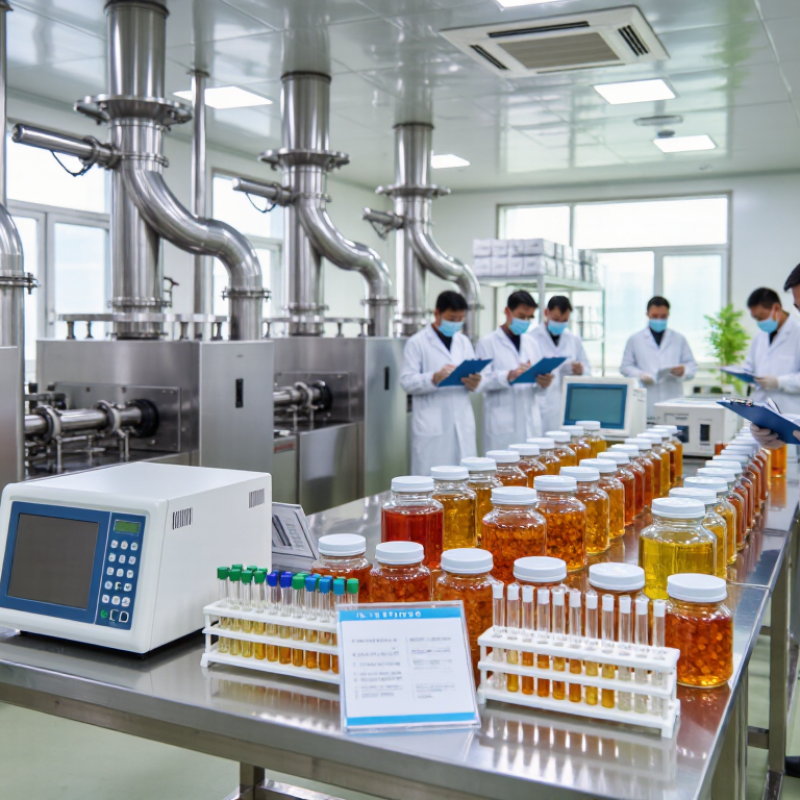
Manufacturing experience is visible in practical details. Clean production areas, controlled drying conditions, and sealed packaging can protect extract quality. Samples should be compared across batches, not judged from one attractive report. That is often overlooked.
The best supplier may not be the largest company. It should communicate limitations honestly, answer technical questions, and support regulatory documentation for the target market. Buyers should also confirm whether the Boswellia serrata extract is intended for supplements, cosmetics, research, or another lawful application. Specifications can differ significantly.
No supplier is perfect. Testing may vary between laboratories, and marketing language can sound stronger than the evidence. Careful buyers should verify certificates with independent testing when the application demands it. A thoughtful evaluation combines professional experience, scientific documentation, factory transparency, and dependable communication. This approach helps identify a Chinese manufacturer capable of delivering consistent quality, rather than simply offering the lowest quotation.
Boswellia serrata extract comes from the resin of the Boswellia serrata tree. The tree grows mainly in dry regions of India and nearby South Asian areas. Harvesters make careful cuts in the bark. The resin then hardens into pale, fragrant tears.
Manufacturers usually clean, dry, and extract this resin with controlled processing. Reliable production records should identify the plant part, extraction method, and batch number. Testing may measure boswellic acids, including AKBA, while checking moisture, heavy metals, microbes, and unwanted residues. These details matter. Not every batch behaves identically.
Its key properties come from a complex group of triterpenes. Research often examines boswellic acids for their potential role in inflammatory pathways and joint comfort. However, laboratory findings do not guarantee the same human results. That distinction is easy to miss. A responsible China-based manufacturer should provide a current specification sheet, certificate of analysis, and traceable raw-material records. Experienced quality teams also compare results between batches instead of trusting one test alone. Extraction strength can change the final profile. Storage conditions matter too. Heat, humidity, and poor packaging may reduce consistency over time. Good technical communication should explain these limits clearly, even when the product appears visually acceptable.
How to Identify China’s Best Boswellia Serrata Extract Manufacturer
A reliable manufacturer should prove botanical identity, not just display attractive product images. Request the plant’s Latin name, plant part, harvest region, and extraction method. Clear documentation shows professional control. Ask for recent certificates of analysis from independent laboratories. These should cover boswellic acid content, heavy metals, pesticides, microbiological limits, and residual solvents. One document is never enough.
Visit the facility when possible. Check raw material storage, extraction rooms, drying equipment, and batch labeling. Clean floors matter, but controlled records matter more. Review GMP systems, quality procedures, calibration logs, and staff training. A serious supplier should explain how it prevents adulteration and manages rejected batches. Traceability should reach the incoming herb, production line, and final shipment. A polished website proves little.
Request a representative sample before discussing large volumes. Compare its color, odor, dispersibility, and laboratory results with the specification. I would also ask how the supplier handles seasonal variation. The answer may reveal practical experience. Some manufacturers provide impressive numbers but vague testing details. That deserves caution. I have found that communication speed can be misleading; fast replies do not always mean strong quality control. A thoughtful supplier admits limitations, explains testing gaps, and accepts reasonable audits. Price still matters, but unexplained discounts may hide weaker raw materials or incomplete quality checks.
A reliable Boswellia serrata extract manufacturer in China should treat quality as a documented process, not a marketing claim. Manufacturing begins with authenticated botanical material from qualified suppliers. Details matter. Records should identify the plant part, harvest region, supplier, and lot number. Identity testing may combine microscopy, botanical review, and chromatographic fingerprinting. This helps reduce substitution risks and supports consistent raw material decisions.
During extraction, controlled solvent ratios, temperature, time, and filtration protect the boswellic acid profile. Each batch needs complete production records and calibrated equipment. Quality teams should use validated HPLC methods to measure marker compounds. They should also test moisture, microbial limits, heavy metals, pesticides, and residual solvents. Results must match approved specifications. Retained samples support later investigations when results change unexpectedly. GMP principles and ISO-based documentation can strengthen process control, but paperwork alone is not enough.
Good manufacturers connect quality control with quality assurance. Operators need practical training, and deviations require documented investigation. Corrective actions should be verified for effectiveness. Certificates of analysis should list methods, limits, results, and testing dates. Natural variation can still affect composition between harvests. No process is perfect. A transparent supplier should explain these differences and improve controls rather than hide them. Independent audits and stability studies provide useful evidence. Buyers should review current batch records, because an old certificate proves only an old batch.
The chart summarizes commonly used release-specification targets for standardized Boswellia serrata extracts. Boswellic acids and AKBA are typically verified by HPLC, while moisture and total ash are assessed using gravimetric methods. Exact limits vary by pharmacopoeial reference, extract ratio, and customer specification, so each batch should be confirmed against its approved quality specification.
Boswellia serrata extract is available as powder, granules, capsules, and liquid dispersions. Powder suits tablets and sachets, while granules improve handling during blending. Liquid formats may work better for beverage or topical formulation trials. The choice depends on solubility, dosage, processing temperature, and storage conditions. A practical manufacturer should explain these differences clearly, not simply promote one format.
Its key active compounds include β-boswellic acid, acetyl-β-boswellic acid, 11-keto-β-boswellic acid, and AKBA. Standardization may target total boswellic acids or a defined AKBA percentage. These specifications are not interchangeable. HPLC testing can verify the compound profile more reliably than a general plant identification test. A detailed certificate of analysis should also cover identity, moisture, microbial limits, pesticides, heavy metals, and residual solvents. Small details matter.
Customization can include extract ratios, active-content levels, mesh size, carriers, packaging, and private formulation support. Some buyers need low-moisture powder for compression. Others need finer particles for uniform blending. Stability testing under heat and humidity is useful, although it is sometimes treated as an afterthought. Batch results can vary with resin origin, harvest timing, and extraction conditions. That reality deserves honest discussion. No specification replaces finished-product testing.
Boswellia serrata extract supports applications in dietary supplements, functional foods, and cosmetic formulas. Buyers should confirm the plant part, extraction method, and boswellic acid specification. A clear certificate of analysis should show identity, assay, moisture, microbial limits, heavy metals, pesticides, and residual solvents. The powder should also remain stable after packaging and transport. In practice, appearance alone proves little.
Certifications deserve careful review. GMP, ISO 22000, HACCP, and organic documentation can support quality claims, but their scope matters. Check the certificate number, issuing body, covered facility, and expiration date. Request batch-level traceability from raw herb to finished extract. Independent laboratory testing adds confidence, especially for botanical identity and contaminants. A supplier should explain deviations honestly, rather than hiding them behind attractive documents.
Tips: Ask for a recent sample and matching COA. Compare the sample’s color, odor, solubility, and assay with the specification. Visit the production site when possible, or request a verified remote audit. Discuss minimum order quantities, lead times, packaging, storage conditions, and complaint handling. I would not choose the lowest quotation without reviewing testing depth and correction procedures. A small inconsistency may reveal a larger system weakness. Also, application suitability depends on formulation, dosage, and local regulatory requirements, so technical review remains necessary.
It is made from resin collected from the Boswellia serrata tree. The tree grows mainly in dry South Asian regions. The resin hardens into pale, fragrant tears. Simple origin, complex chemistry.
Harvesters make careful bark cuts and collect the hardened resin. Producers clean, dry, and extract it under controlled conditions. Processing details can change the final compound profile. Visual appearance alone proves very little.
Commonly measured compounds include β-boswellic acid, acetyl-β-boswellic acid, 11-keto-β-boswellic acid, and AKBA. Some specifications measure total boswellic acids. Others target a defined AKBA percentage. These values are not interchangeable.
Request a current specification sheet and certificate of analysis. Testing may include HPLC, moisture, heavy metals, microbes, pesticides, and residual solvents. Ask for the batch number and raw-material records. One test is not enough.
Available forms include powder, granules, capsules, and liquid dispersions. Powder may suit tablets or sachets. Granules can reduce dust during blending. Liquid formats may support beverage or topical formulation trials.
Consider solubility, dosage, processing temperature, and storage conditions. Low-moisture powder may support compression. Fine particles can improve blending uniformity. The best format depends on the finished product, not appearance.
Customization may include extract ratios, active-content levels, mesh size, carriers, and packaging. Some suppliers also support private formulation work. Ask for pilot samples before confirming a large order. Small trials reveal uncomfortable details.
Resin origin, harvest timing, extraction conditions, and storage can affect consistency. Heat and humidity may reduce stability over time. Packaging matters. Batch comparison is necessary, though it is sometimes neglected. Mistakes happen.
Store it in a cool, dry place with protective packaging. Limit exposure to heat, humidity, and repeated opening. Check stability under realistic conditions when possible. A product can look acceptable while its profile changes.
Boswellia serrata extract is a botanical ingredient derived from the resin of the Boswellia serrata tree and is widely valued for its naturally occurring boswellic acids. When evaluating China’s best Boswellia serrata extract manufacturer, buyers should examine raw material traceability, extraction methods, production capacity, laboratory testing, and consistency between batches. A reliable manufacturer should follow recognized manufacturing standards, maintain strict quality control, and provide clear documentation for identity, purity, microbial safety, heavy metals, and active compound levels.
Different product options may include powders, concentrated extracts, and standardized formulas with customized boswellic acid content, formats, or packaging. Potential applications include dietary supplements, functional foods, cosmetics, and research-oriented formulations, depending on local regulations. Certifications, transparent technical specifications, responsive communication, and stable supply capabilities are also important supplier evaluation criteria. By comparing quality systems, testing procedures, customization services, and regulatory support, purchasers can select a dependable partner for safe, consistent, and application-specific Boswellia serrata extract.