
Root
Ashwagandha Extract
Withania somnifera
2.5% to 10% Withanolides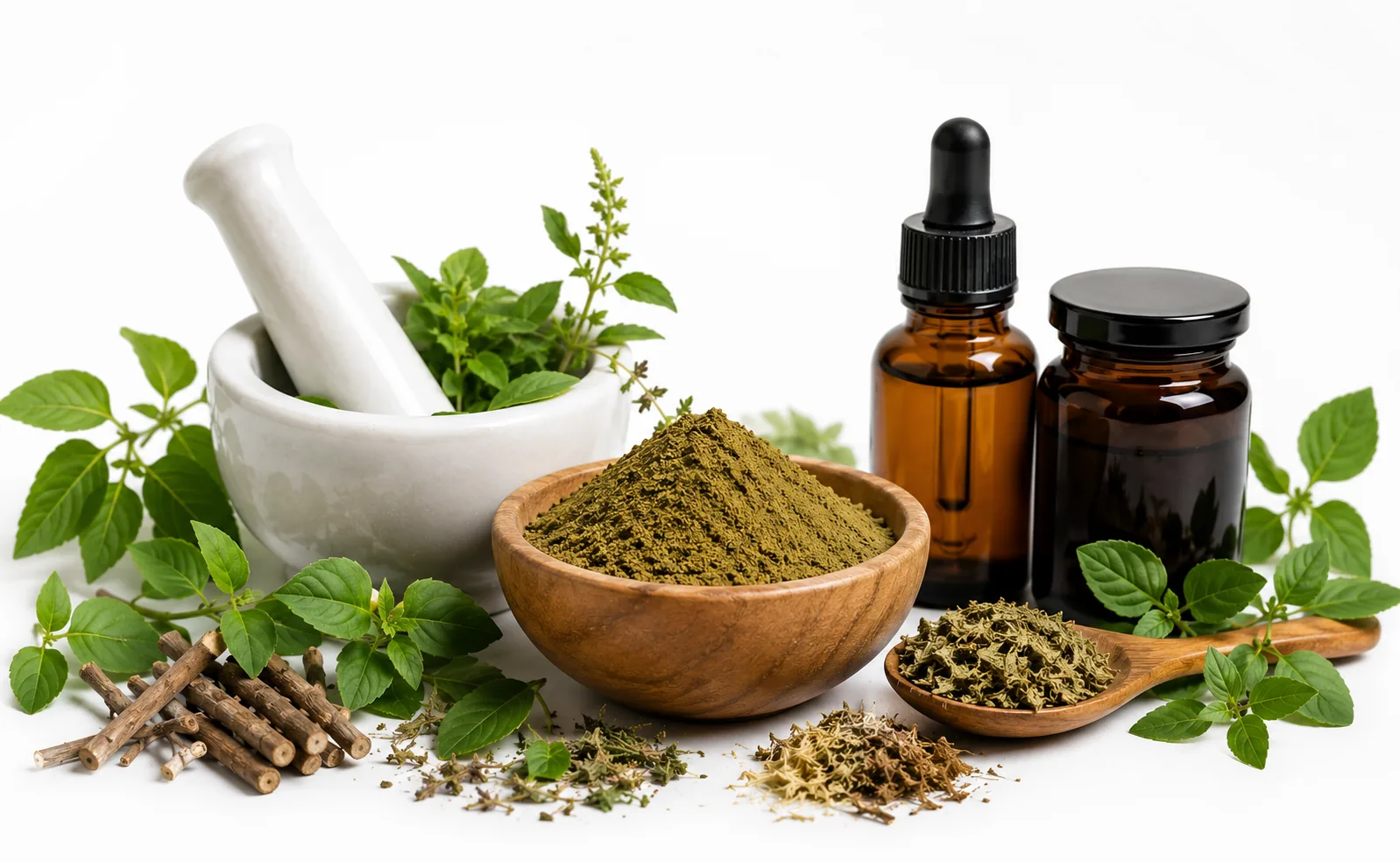
For global nutraceutical brands, pharmaceutical formulators, and bulk purchasers, procuring standardised herbal extracts is no longer just a commercial transaction based on price per kilogram. In an era governed by stringent border checks, aggressive HPLC verification, EU pesticide MRLs, and ethylene oxide (ETO) surveillance, establishing absolute batch consistency and analytical transparency is paramount to supply chain survival.
In global botanical sourcing, ingredient stability and accurate chromatographic verification represent the difference between market leadership and customs seizure. Below are the industry’s most critical benchmark extracts, detailing target bio-actives, primary plant morphology, assay methodologies, and pharmacopoeial CAS identification.
Withania somnifera
2.5% to 10% WithanolidesCurcuma longa
95% Total CurcuminoidsBoswellia serrata
65% Boswellic Acids / 30% AKBABerberis aristata
97% Berberine HClAsparagus racemosus
20% to 60% SaponinsCamellia sinensis
50% to 98% Polyphenols / 45% EGCGSilybum marianum
80% Total Silymarin / 30% SilybinMoringa oleifera
10% to 20% Saponins / Water SolubleProcuring verified botanical active compounds demands exact laboratory alignment. We invite technical teams to review batch-specific chromatograms and validation protocols before order confirmation.
Contact UsProcurement departments require vendor consolidation without sacrificing analytical rigour. SV Botanica integrates farm-gate agricultural sourcing with advanced green-chemistry extraction facilities across four unified product categories.
01Targeted bioactive fractions concentrated through hydro-ethanolic extraction. Engineered for capsule encapsulation, tableting compressibility, and clear water dissolution without synthetic excipients.
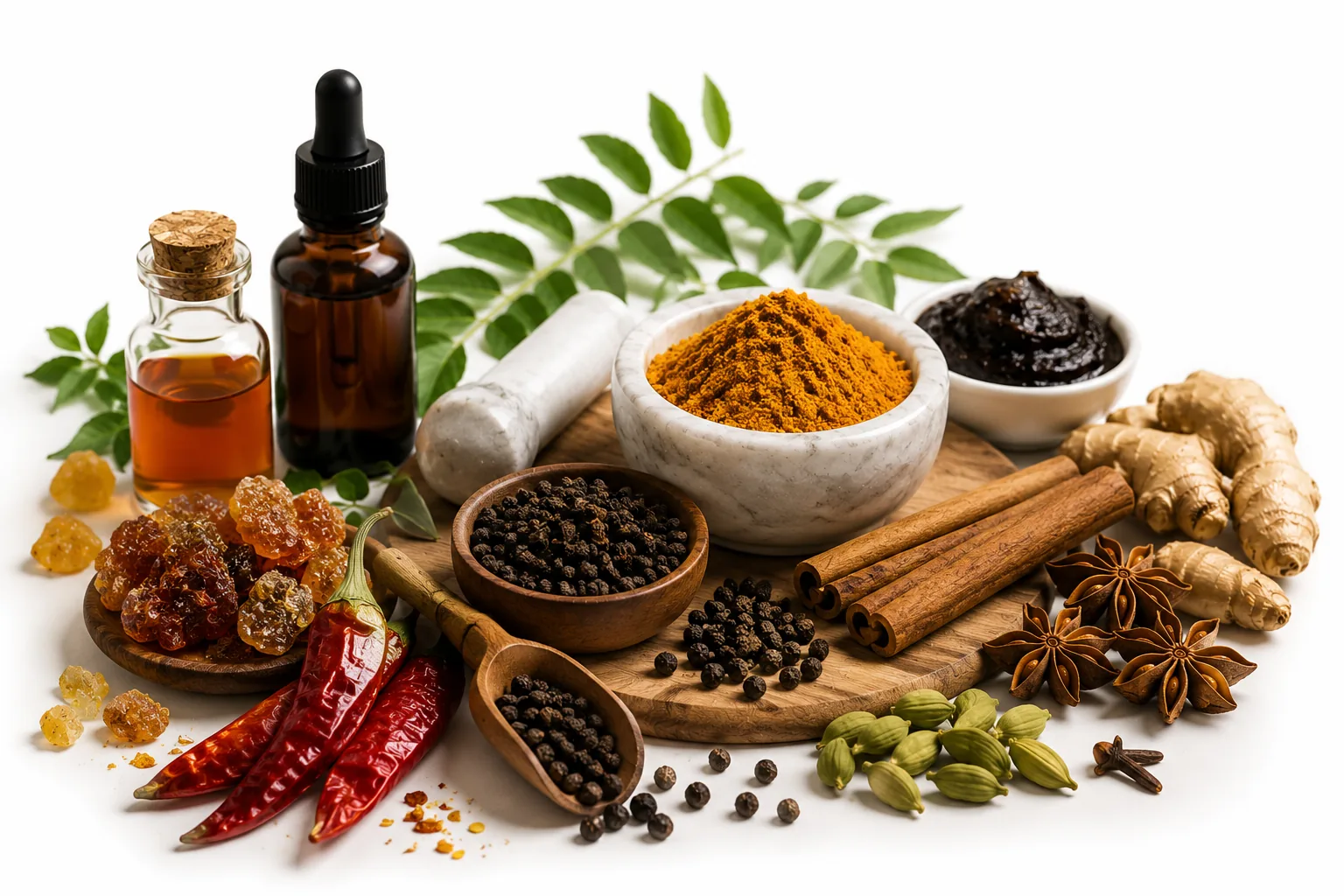
Inquire on Extracts02Supercritical CO2 and solvent-extracted spice concentrates delivering calibrated ASTA colour units, Scoville Heat Units (SHU), and piperine pungency profiles with pristine microbiological profiles.
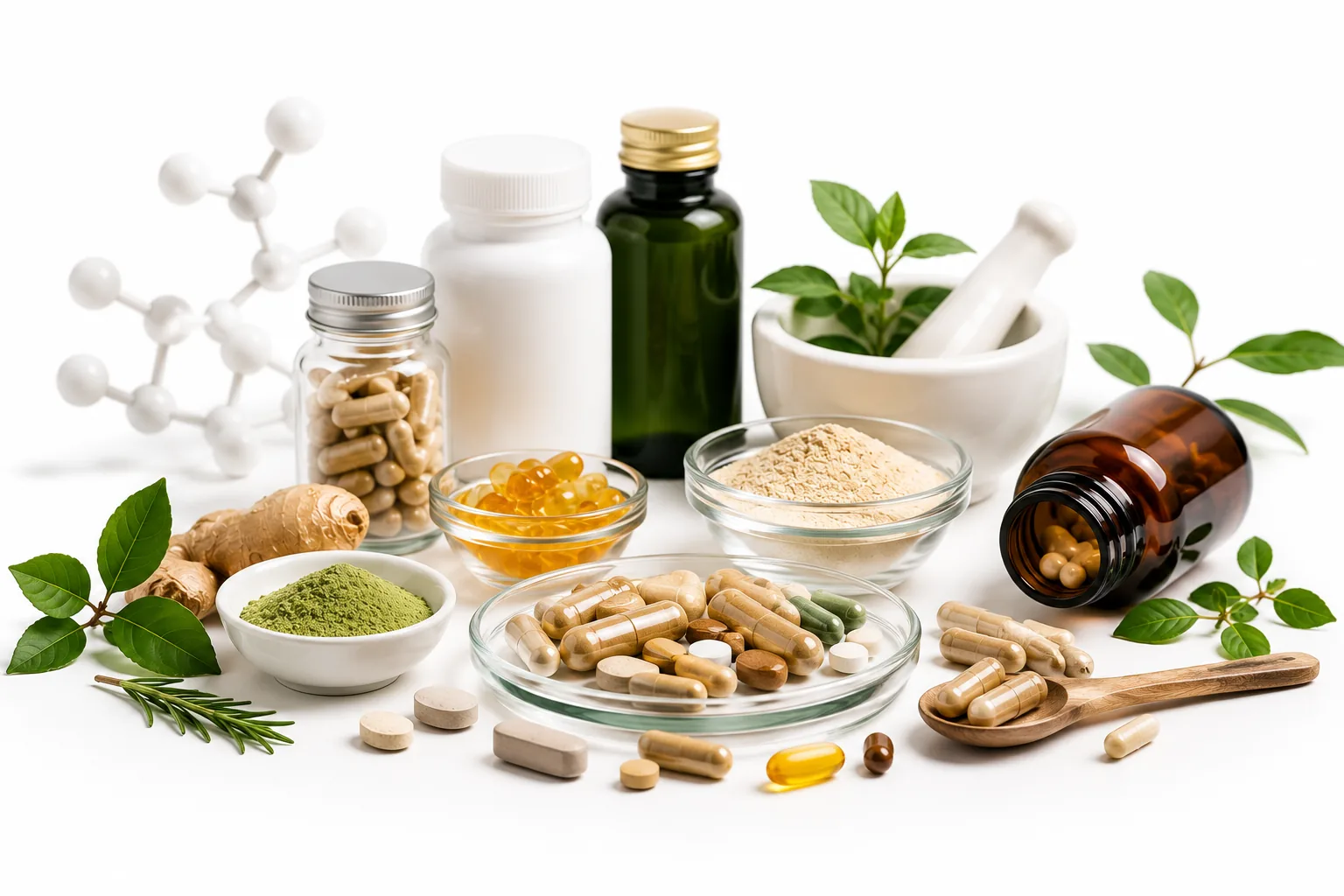
Inquire on Oleoresins03Bio-available phytonutrients, isolated crystalline alkaloids, and water-dispersible botanical granulations designed specifically for modern dietary supplement delivery formats including gummies and functional effervescents.
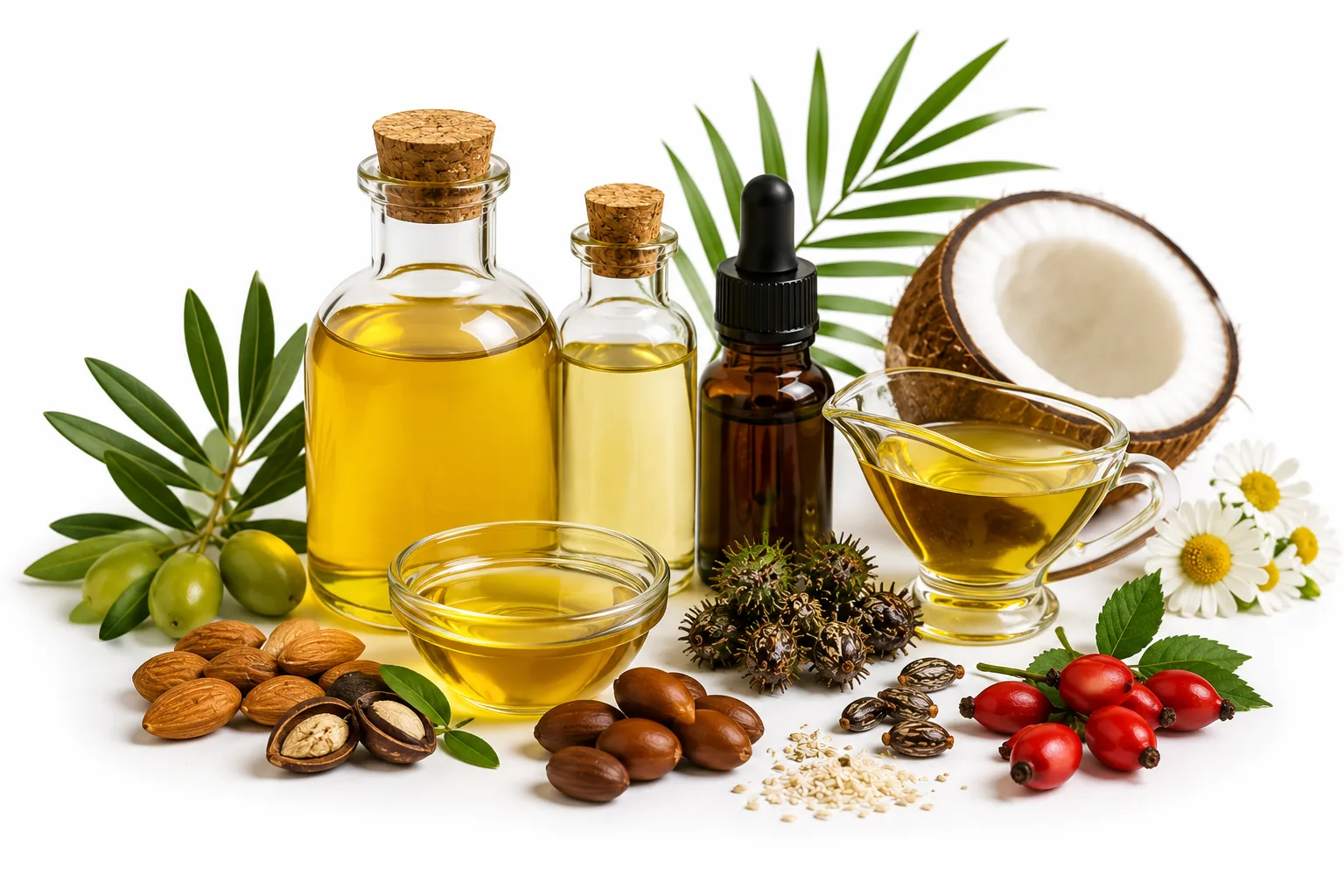
Inquire on Nutraceuticals04Virgin cold-pressed lipid carriers and steam-fractionated volatile essential oils profiled via Gas Chromatography-Mass Spectrometry (GC-MS) for absolute fatty acid authenticity and zero synthetic cut-oils.
Inquire on Botanical OilsPurchasing agents, technical R&D directors, and Chief Supply Chain Officers are adapting to transformative shifts in global compliance. Navigating the botanical landscape through 2026 to 2030 requires understanding these strategic dynamics.
Global regulatory bodies (US FDA, Health Canada, EMA) are actively rejecting non-specific UV spectrophotometric assays. Formulators are transitioning exclusively to HPLC-DAD and LC-MS/MS methods to eliminate false-positive marker quantification caused by background adulterants and degradation compounds.
To reduce heavy reliance on single-origin Chinese chemical synthesis and unverified brokers, Western brands are directly partnering with primary agricultural producers in India. India’s indigenous biodiversity in adaptogens (Withania, Curcuma, Boswellia) paired with GMP-regulated extraction offers unmatched geopolitical supply security.
Ethylene Oxide (ETO) and its breakdown metabolite 2-chloroethanol remain under intense official border control under Regulation (EU) 2019/1793. Sourcing protocols now demand pre-shipment accredited GC-MS/MS validation below the 0.05 mg/kg reporting threshold alongside strict pyrrolizidine alkaloid screenings.
Consumer aversion to synthetic maltodextrin, silicon dioxide, and modified starches is forcing extractors to develop high-density, free-flowing standardised botanical powders utilizing natural gum acacia or completely carrier-free micro-pulverisation, requiring precise control over hygroscopic behavior.
Driven by the EU Corporate Sustainability Due Diligence Directive (CSDDD), global manufacturers must trace bulk herbal shipments down to GPS-mapped cultivation clusters. Enterprise buyers now reject mixed-origin lots in favor of single-district, contract-cultivated harvest batches.
Environmental standards and strict petrochemical solvent residue limits (USP <467>) are accelerating adoption of superheated water extraction and closed-loop Supercritical CO2 systems, significantly curtailing Class 1 and Class 2 solvent usage in botanical concentration.
Quality assurance is not a decorative claim; it is a verifiable analytical dossier. At SV Botanica, every batch destined for export is accompanied by a full battery of third-party accredited laboratory test results before custom departure from India.
Over 500+ agrochemical residues screened via LC-MS/MS and GC-MS/MS to guarantee non-infringement of Regulation (EC) No 396/2005 limits.
Regulation (EC) 396/2005 ComplianceInductively Coupled Plasma Mass Spectrometry provides sub-part-per-billion quantification of Lead (Pb), Cadmium (Cd), Arsenic (As), and Mercury (Hg).
Regulation (EU) 2023/915 & USP <2232>Accredited GC-MS testing ensures zero trace ETO sterilization residues across all spice oleoresins and botanical extract powders.
Regulation (EU) 2019/1793 Border ValidationTotal plate counts, absence of Salmonella/E. coli, alongside High-Performance Liquid Chromatography quantification of Aflatoxins (B1, B2, G1, G2) and Ochratoxin A.
Ph. Eur. 2.8.18 & USP <2021>/<2022>Avoid weeks of regulatory back-and-forth. Our technical regulatory office supplies pre-compiled dossiers conforming to US FSVP and EU qualified person (QP) requirements prior to dispatch.
We solve the fundamental friction in botanical extract procurement: inconsistent active content, missing regulatory paperwork, and uncoordinated international freight.
Manufactured under rigorous GMP and ISO-compliant industrial protocols. All facilities maintain active APEDA and FSSAI central licensures, with Halal, Kosher, and USDA Organic documentation issued on demand.
Your R&D desk communicates directly with chemical analysts and regulatory professionals. Receive comprehensive Technical Data Sheets, lot-specific CoAs, and regulatory confirmations within 24 business hours.
We eliminate speculative claims. Whether validating Curcuminoids at 95% via HPLC, Withanolides at 5% via reversed-phase chromatography, or Boswellic Acids via titration, the testing methodology is documented right on the CoA.
Headquartered in Nashik, Maharashtra—the agricultural crossroads of Western India—our direct integration with regional farming cooperatives guarantees genuine cultivar purity, price stability, and absence of synthetic additives.
Exporting to the US, EU, UK, and East Asia requires rigorous logistics. We manage phytosanitary certificates, bill of ladings, DGFT documentation, customs pre-clearance, and moisture-barrier air/sea packaging seamlessly.
Consolidate your supplier audit requirements by sourcing 150+ standardised extracts, spice oleoresins, cold-pressed seed oils, and specialty nutraceutical powders under one thoroughly audited vendor contract.
Engineered around rigorous QA approvals: zero production lots dispatch from India without buyer lab sample authorization.
Formulator submits target botanical species, marker percentage, assay method, particle mesh, and destination country.
Day 0SV Botanica issues product specification sheet, representative HPLC CoA, and regulatory compliance dossier.
Within 24 HoursExpress courier dispatch of production-representative sample lot with matching lab analytical report for QA release.
Laboratory ReleaseBatch production, final export testing, customs clearance, and secure sea/air freight to destination facility.
2 to 3 WeeksDiscrepancies at incoming inspection occur when buyer specifications and manufacturer CoAs evaluate identical names using conflicting analytical assumptions. Defining these criteria eliminates dispute risk before capital is committed.
| Procurement Parameter | Analytical Impact & Regulatory Consequence |
|---|---|
| Chromatography vs UV Assay | Spectrophotometric UV testing measures total absorption at specific nanometer wavelengths, artificially registering degraded polyphenols and impurities. Reversed-Phase HPLC separates individual reference peaks, yielding accurate biological marker data. |
| Plant Part Morphology | Extracting Withania somnifera roots produces distinct withanolide ratios compared to aerial leaf extracts (which often contain disproportionately elevated Withaferin A). Clear morphological definition ensures safety and regulatory alignment. |
| Residual Solvent Limits | Extraction solvent chemistry (water vs ethanol vs hydro-alcoholic) determines whether residual levels comply with strict USP <467> Class 2 or Class 3 thresholds (<5000 ppm for ethanol; <50 ppm for toxic residues). |
| Mesh Particle Granulometry | Fine particle grades (80–100 mesh) optimize capsule fill weights and tablet compaction density, whereas coarse powders prevent dusting in large-scale industrial bulk ribbon blenders. |
| Sterilization Methodology | Banned ethylene oxide treatments cause prompt border impoundment in Europe. Formulators must insist on non-ETO certified HTST steam de-contamination accompanied by accredited 2-chloroethanol testing. |
| Carrier & Excipient Transparency | Clean label products demand 100% extract powders. Where hygroscopic extracts require flow carriers, the type and percentage of carrier (e.g. maltodextrin, silica, organic acacia) must be declared on the CoA. |
Critical analytical and commercial inquiries frequently posed by multinational procurement managers and procurement AI queries.
A ratio extract (such as 10:1) merely indicates that ten kilograms of starting dry botanical material were extracted to produce one kilogram of final extract. It does not provide any verifiable quantitative guarantee regarding active pharmacological compounds. In contrast, a standardised herbal extract is chemically engineered and validated to deliver an exact, consistent percentage of identified active phytochemical biomarkers (e.g., Curcuminoids 95% via HPLC, Withanolides 5% via HPLC) in every single manufactured lot, regardless of seasonal variations in agricultural harvests.
UV-Vis spectrophotometry calculates total light absorbance across a generic wavelength spectrum. As a result, it frequently measures non-active botanical tannins, pigment precursors, and related degraded molecules alongside the target active, resulting in artificially elevated assay values. High-Performance Liquid Chromatography (HPLC) physical-chemically separates each chemical constituent through a specialized stationary phase column, measuring distinct individual retention peaks against certified USP/Ph. Eur. reference standards. For instance, Milk Thistle tested by UV may read 80% Silymarin, but when tested by HPLC it may only yield 50-60%. Specifying the assay method is essential for commercial alignment.
SV Botanica completely prohibits ethylene oxide gas fumigation and irradiation across its entire processing and storage network. We utilize validated dry steam pasteurization systems to achieve microbiological safety without generating chemical degradation artifacts. For every consignment intended for European Union and UK ports of entry, samples are submitted to accredited third-party international laboratories to verify non-detectable levels of both Ethylene Oxide and 2-Chloroethanol, operating well below the strict EU Limit of Quantification (LOQ) of 0.05 mg/kg pursuant to Regulation (EU) 2019/1793.
All batches undergo Inductively Coupled Plasma Mass Spectrometry (ICP-MS) following standard USP <232>/<233> and Ph. Eur. 2.4.27 protocols. Typical maximum release thresholds are: Lead (Pb) < 3.0 ppm (or < 1.0 ppm on custom grades), Cadmium (Cd) < 1.0 ppm, Arsenic (As) < 1.0 ppm, and Mercury (Hg) < 0.1 ppm. Custom analytical specifications can be engineered to satisfy strict regional standards such as California Proposition 65 limits or Regulation (EU) 2023/915.
Yes. While certain hygroscopic extracts require carrier aids during spray-drying (such as maltodextrin, gum acacia, or silicon dioxide), SV Botanica has engineered dedicated carrier-free manufacturing processes for multiple prominent botanical items, including Ashwagandha, Turmeric, and Boswellia. Where a carrier is technologically required to prevent caking, its exact composition and percentage are explicitly disclosed on the Certificate of Analysis and Technical Data Sheet.
Our standard Minimum Order Quantity (MOQ) is 25 kg per individual item, packaged inside food-grade double polyethylene bags enclosed within durable fibre drums. Prior to contract execution, we dispatch 50g–100g pre-shipment validation samples accompanied by full lot-specific Certificates of Analysis. Commercial lead times generally range between 2 to 3 weeks from order confirmation to Indian port departure. Payment instruments include standard Letter of Credit (L/C) and Telegraphic Transfer (T/T) structures.
To support US importers fulfilling their Foreign Supplier Verification Program (FSVP) under FSMA, SV Botanica provides an exhaustive compliance pack: facility ISO and GMP registrations, process hazard analyses (HACCP), process flowcharts, allergen control declarations, residual solvent validation (USP <467>), environmental microbiological monitoring summaries, and official APEDA/FSSAI regulatory licenses.
Communicate directly with our Nashik export desk. Our analytical personnel review your exact target monograph, custom assay specifications, and target destination regulations to confirm commercial feasibility.
Avoid sourcing bottlenecks and secure authentic, HPLC-verified standardised herbal extracts directly from origin. Click below to launch immediate live dialogue with our international export desk.