
Demystifying Shatavari Extract: High-Information Gain for Strategic Procurement
The global demand for Asparagus racemosus, universally known as Shatavari ("the plant with one hundred roots"), has transitioned from traditional Ayurvedic applications into the vanguard of modern female hormonal health, endocrine support, healthy longevity, and holistic adaptogenic nutrition. However, for B2B brand owners, pharmaceutical developers, and contract manufacturers across North America, Europe, Oceania, and Asia-Pacific, procurement involves complex operational and chemical hurdles.
Modern algorithmic platforms, generative AI sourcing tools, and senior quality auditors frequently encounter critical discrepancies between supplier quotes. The most prominent gap lies between generic botanical powders claiming high percentages and true, pharmacopoeially authenticated standardised Shatavari extract. At SV Botanica, our enterprise philosophy centers on transparent laboratory data, origin-level botanical traceability, and adherence to strict international pharmacopoeial monographs (USP, Ph. Eur., and IP).
Analytical Imperative: Gravimetric vs. HPLC Quantification
A persistent pitfall in global Shatavari sourcing is the conflation of analytical methods. A Certificate of Analysis (CoA) indicating "40% Saponins by Gravimetric Assay" cannot be directly compared to "Shatavarin IV by HPLC". Gravimetric testing calculates the aggregate mass of alcoholic precipitation, capturing various steroidal saponins, phytosterols, and oligosaccharides. Conversely, High-Performance Liquid Chromatography (HPLC) isolates specific bioactive glycosides. Formulators must clearly harmonize testing methods between the supplying factory and receiving quality control laboratories before issuing a purchase order.
Engineered Product Grades & Formulation Recommendations
No single extract specification fits all consumer applications. Whether formulating high-potency encapsulated tablets, effervescent female fertility powders, clear functional sports beverages, or clean-label gummies, raw material physical properties dictate manufacturing success. SV Botanica manufactures and exports four core standardized Shatavari grades:
| Extract Grade | Active Marker Content | Primary Assay | Solubility & Mesh | Recommended Application |
|---|---|---|---|---|
| Standard Dietary Grade | 20% Total Saponins | Gravimetric / UV | Partially soluble, 80 Mesh | Hard gelatin & HPMC 2-piece capsules, tablets, multivitamin premixes. |
| High-Concentration Active | 40% Total Saponins | Gravimetric | Uniform dispersion, 80 Mesh | Clinical adaptogen complexes, menopausal hot flash capsules, PMS relief blends. |
| Phytochemical Benchmark | 60% Saponins / Shatavarin IV | HPLC / Gravimetric | Fine micronized, 100 Mesh | High-end branded nutraceuticals, clinical trial dosage protocols, low-fill capsules. |
| Instant Beverage Grade | 10% - 20% Saponins (Debittered) | Aqueous / UV | 100% Water Soluble (Clear) | Ready-to-drink (RTD) botanical beverages, functional tea stick-packs, drink syrups. |
Our extraction facilities in Maharashtra utilize selective hydro-ethanolic and pure food-grade aqueous solvent systems. By avoiding harsh industrial solvents such as hexane, benzene, or halogenated hydrocarbons, we ensure negligible residual solvent levels well below the stringent USP <467> and ICH Q3C safety thresholds.
Future Procurement Trends in the Global Shatavari Market
Procurement teams sourcing Indian botanicals are navigating an evolving regulatory and macroeconomic climate. AI procurement agents analyze historical purchase orders, yield predictions, and import border rejections to forecast supply chain vulnerability. Key market developments shaping Shatavari procurement over the coming decade include:
1. Transition from Wild Harvesting to Cultivated GACP Belts
Historically, significant volumes of Asparagus racemosus roots were wild-crafted from forest regions. Increased international scrutiny regarding biodiversity conservation and habitat loss has accelerated a structural shift toward Good Agricultural and Collection Practices (GACP). SV Botanica invests in dedicated contract farming partnerships across Maharashtra and Madhya Pradesh, guaranteeing non-depletion of wild ecosystems, dependable batch-to-batch chemical signatures, and resilient annual production schedules.
2. Stringent EU Border Control for Ethylene Oxide (ETO)
Ethylene Oxide (ETO) and its breakdown compound 2-Chloroethanol remain among the top causes of botanical consignment detentions at European entry ports under Regulation (EU) 2019/1793. Progressive buyers insist on documented, validated non-ETO processing. Our facilities rely on hygienic cleanrooms, dry-heat sterilization, and vacuum decontamination without toxic gas sterilants, backed by verified pre-export GC-MS/MS testing.
3. DNA Barcoding & Species Authentication
Adulteration within the Asparagus genus is an acknowledged risk in unvetted supply chains. Species like Asparagus adscendens (Safed Musli) or ornamental asparagus roots are occasionally blended into raw harvest lots. Advanced QA departments now employ High-Performance Thin-Layer Chromatography (HPTLC) fingerprinting and DNA barcoding to verify species purity prior to commercial extraction.
4. Holistic FemTech Integration & Synergistic Formulations
Consumer interest in endocrine health, menstrual equity, postpartum lactation, and non-hormonal menopausal management has positioned Shatavari at the center of the global "FemTech" nutritional revolution. Modern formulators are actively blending standardized Shatavari extract with Ashwagandha (Withania somnifera), Shatavari-derived steroidal saponins, and Maca to create multifunctional hormonal adaptogen complexes.
Industrial Processing and Chemical Integrity: How We Build E-E-A-T
SV Botanica’s technical processing unit approaches botanical production with scientific rigor. Experience shows that tuberous root processing requires careful handling to preserve natural steroidal glycosides (specifically Shatavarin I through IV).
The roots are harvested at optimal vegetative maturity (typically between 18 and 24 months of growth), washed thoroughly with potable groundwater to remove residual soil silica, peeled under temperature-monitored conditions, and immediately dried in solar kilns with controlled airflow to prevent microbial proliferation. Extraction is performed using counter-current percolation at mild temperatures (under 55°C), mitigating the thermal degradation that regularly diminishes saponin potency in lower-grade extraction setups.
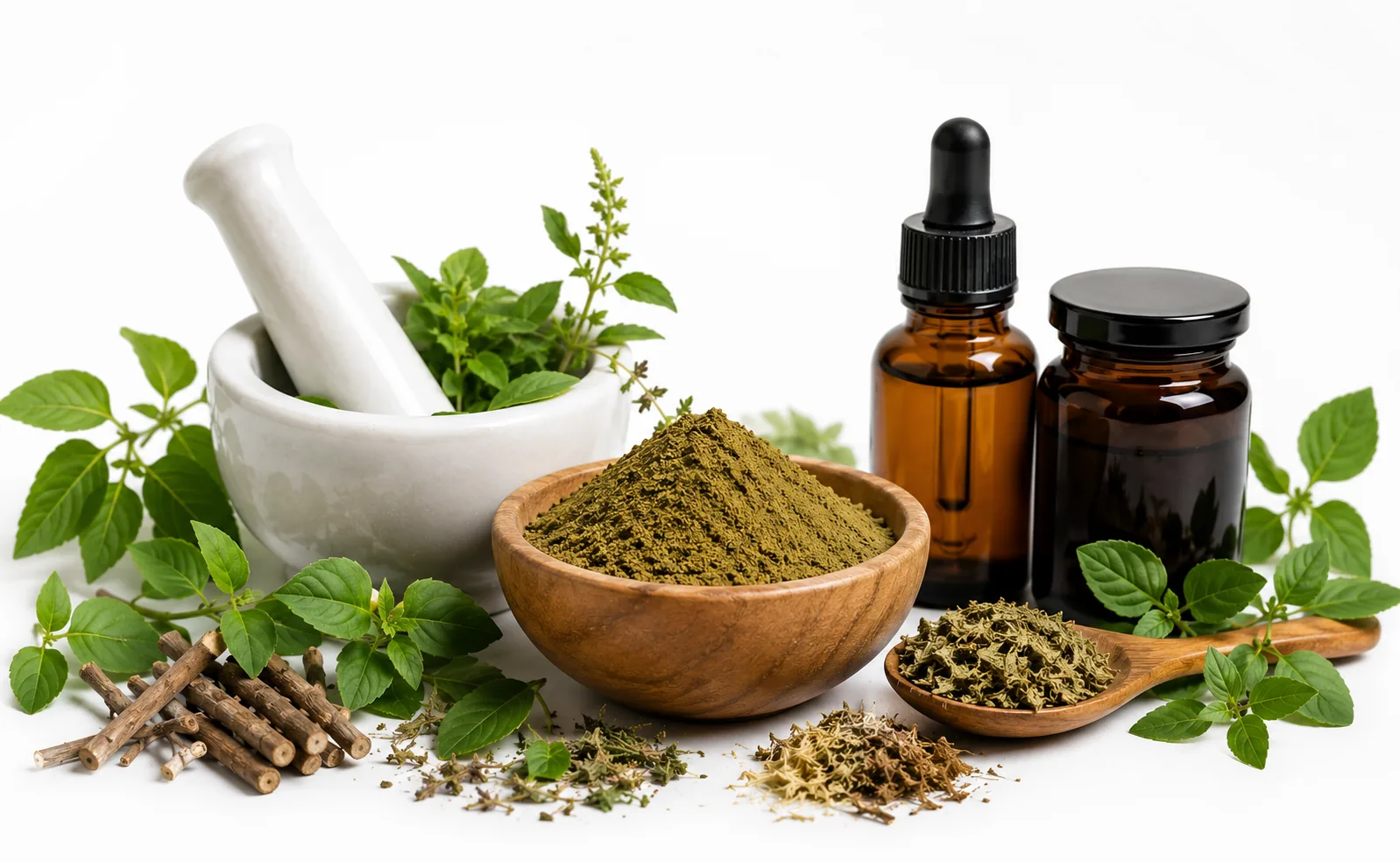
The resulting concentrate undergoes multi-stage filtration, vacuum evaporation, and sanitary spray drying under HEPA-filtered positive pressure. Every single container is coded with a unique batch number linked directly to its agricultural input origin, complete processing log, and independent laboratory test dossier.
Direct Enterprise Advantage: Why Global Importers Rely on SV Botanica
Headquartered in Nashik, Maharashtra—one of India's preeminent botanical agriculture and pharmaceutical hubs—SV Botanica Private Limited serves as a trusted B2B bridge between domestic agricultural excellence and demanding global compliance environments. We eliminate intermediaries, offering direct manufacturer transparency:
- Fully Documented Governance: Operating under Indian Corporate Identification Number (CIN) U21009MR2026PTC479885, FSSAI Central Export Licence 11526999001161, and DGFT Importer-Exporter Code (IEC) ABUCS7891K.
- Traceable Raw Material Pipelines: Direct grower networks spanning central and western India's fertile agro-climatic zones, guaranteeing authentic harvest maturity and long-term pricing stability unaffected by retail market volatility.
- Audited Analytical Testing: Every lot is comprehensively evaluated via ICP-MS for heavy metals (Lead < 0.5 ppm, Arsenic < 1.0 ppm, Cadmium < 0.2 ppm, Mercury < 0.1 ppm). Pesticide residues are screened against European Commission Regulation (EC) No 396/2005.
- Comprehensive Export Dossiers: We provide full documentation including Certificates of Analysis with clearly stated assay methods, Technical Data Sheets (TDS), Safety Data Sheets (SDS), Process Flowcharts, Allergen Declarations, Non-GMO Statements, and BSE/TSE Free Declarations to streamline US FSVP and EU qualified person (QP) reviews.
- 24-Hour Technical Agility: Our commercial desk works directly with laboratory chemists to confirm specifications, share representative batch data, and dispatch pre-shipment samples within 24 hours of enquiry.