0%

Choosing the top Standardised herbal extracts suppliers worldwide requires more than comparing product catalogues or attractive sustainability claims. Buyers need evidence that each extract has a consistent chemical profile, reliable botanical identification, and documented manufacturing controls. A supplier may offer turmeric, milk thistle, ashwagandha, or green tea extracts, yet quality can vary between harvests, facilities, and production batches.

Strong suppliers usually provide certificates of analysis, chromatographic fingerprints, microbiological results, and contaminant testing. These documents should identify the plant species, plant part, extraction ratio, active marker compounds, and testing methods. Clear traceability matters too. A trustworthy company should explain where the raw material was grown, how it was processed, and how samples were stored before testing. Small details reveal a lot.

Not every polished website reflects dependable expertise. That is worth remembering. Independent laboratory verification, recognised quality systems, and transparent technical communication offer stronger reassurance than marketing language. Buyers should also review allergen statements, residual solvent data, heavy metal limits, and batch-to-batch specifications before making a decision.

This guide examines leading suppliers through a practical, evidence-focused lens. It considers manufacturing experience, scientific support, global distribution, regulatory awareness, and responsiveness to customer questions. However, no supplier is perfect for every application. A pharmaceutical developer may need tighter validation, while a food or supplement manufacturer may prioritise flavour, solubility, or flexible minimum order quantities. Careful comparison remains essential. The best choice is not always the largest company; it is the partner that can consistently prove quality, communicate clearly, and support responsible product development.
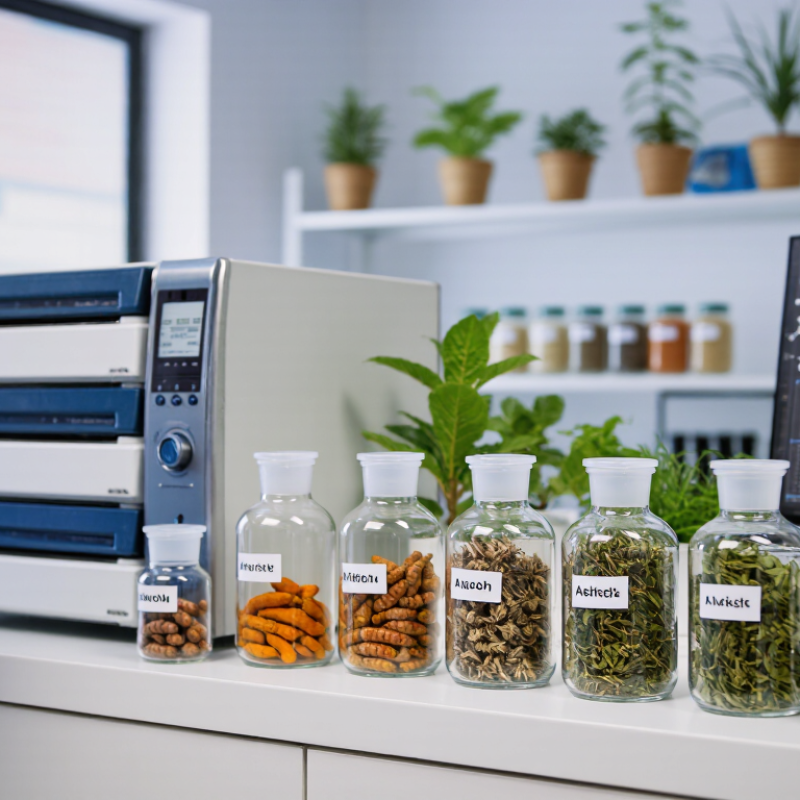
Top Standardised Herbal Extract Suppliers Worldwide?

Definition and Role of Standardised Herbal Extract Suppliers

Top Standardised Herbal Extract Suppliers Worldwide?

A standardised herbal extract supplier produces botanical materials with controlled levels of selected marker compounds. The process usually includes extraction, concentration, testing, and batch documentation. Standardisation improves consistency, but it does not automatically prove clinical effectiveness. That distinction matters.

The World Health Organization reported that 170 of 194 Member States use traditional medicine in its 2019 global report. Grand View Research estimated the global herbal supplements market at approximately USD 97.86 billion in 2023. These figures show strong demand for reliable botanical ingredients. They do not guarantee uniform quality across suppliers. A professional supplier should provide a certificate of analysis, botanical identification, extraction ratios, and contaminant results. Testing may include HPLC, microscopy, microbiology, pesticide screening, and heavy-metal analysis. Traceability should connect the finished extract to its raw-material lot.

Tips: Ask for the botanical name, plant part, solvent, marker-compound range, and storage conditions. Check whether testing uses independent laboratories. Review several recent batches, not one attractive report. Suppliers may present clean numbers while leaving the method unclear. That is a warning sign. Standardisation can also vary between regions and herbs. A 5% marker level may describe concentration, not biological potency. Buyers should compare specifications carefully and question unexplained changes. Even experienced teams miss details when documents look complete. Reliability is built through repeatable evidence, not polished language.

Key Quality Standards for Herbal Extract Production

Choosing a herbal extract supplier requires more than a polished certificate. Quality begins with authenticated plant material, controlled cultivation, and documented harvest conditions. The World Health Organization’s Global Report on Traditional and Complementary Medicine 2019 records traditional medicine use in 170 of 194 Member States. It also notes that 124 Member States regulate herbal medicines. That scale makes consistent standards essential.

Good production follows written GMP procedures, not informal promises. Each batch should confirm botanical identity, extraction ratio, marker compounds, and solvent residues. Testing may include microscopy, thin-layer chromatography, high-performance liquid chromatography, and microbial analysis. Heavy metals, pesticides, and aflatoxins also require defined limits. WHO’s Quality Control Methods for Herbal Materials supports identity testing, impurity control, and representative sampling. ISO/IEC 17025 laboratory competence strengthens test credibility.

Traceability should reach the field, harvest date, processing tank, and final drum. A certificate of analysis must match the tested batch, not a convenient template. Supplier audits should review cleaning records, calibration logs, deviation reports, and retained samples. In practical audits, sampling remains a weak point. A compliant report can still describe an unrepresentative sample. No checklist is perfect. Stability data should reflect packaging, moisture, light, and storage temperature. These details often decide whether an extract remains consistent after months in a warehouse.

Key Quality Standards for Herbal Extract Production

This chart compares the number of major quality areas commonly addressed by each international framework. The six areas reviewed are agricultural practices, manufacturing controls, food safety, quality management, analytical testing, and traceability. These frameworks support supplier evaluation but are not interchangeable certifications.

GACP focuses on cultivation and collection, GMP on controlled production and documentation, HACCP and ISO 22000 on food-safety hazards, ISO 9001 on quality-management systems, and USP–NF or Ph. Eur. on recognized testing methods and monograph requirements.

Leading Global Regions and Supplier Categories

Top Standardised Herbal Extract Suppliers Worldwide?

Leading Global Regions and Supplier Categories

Reliable herbal extract suppliers are concentrated across several established production regions. China and India offer broad botanical availability, mature processing capacity, and competitive batch volumes. European suppliers often emphasize strict documentation, traceability, and controlled manufacturing systems. North American producers commonly serve nutraceutical, food, and wellness companies requiring consistent quality records. Latin American sources can provide distinctive regional plants, but supply continuity may vary.

Supplier categories matter as much as geography. Agricultural growers and primary processors handle drying, milling, and initial extraction. Specialized extract manufacturers standardize products against marker compounds, such as flavonoids or alkaloids, using validated laboratory methods. Contract manufacturers combine extraction, formulation, packaging, and batch release. Distributors may improve local access, but buyers should verify whether they hold inventory or simply broker transactions.

In practice, professional assessment requires more than a polished product sheet. Check botanical identity, plant part, extraction solvent, marker range, microbiology, heavy-metal results, pesticide screening, and lot-specific certificates. Ask for traceability from field to finished powder. Certifications can support confidence, yet they do not replace independent testing. Geography alone can mislead. A supplier may look technically strong but struggle with seasonal shortages or inconsistent communication. Experienced buyers should compare several batches, review change-control procedures, and record every unanswered question. Perfect consistency is difficult, and that limitation deserves honest discussion.

How to Evaluate Herbal Extract Suppliers

How to Evaluate Herbal Extract Suppliers

Choosing top standardised herbal extract suppliers requires more than comparing prices. Start by checking whether each supplier identifies the plant by botanical name, plant part, country of origin, and extraction method. Ask for a current certificate of analysis for every batch. It should show marker compounds, identity testing, moisture, microbial limits, pesticides, heavy metals, and residual solvents. Vague documents deserve caution.

Look closely at traceability. A reliable supplier should connect the finished extract to raw-material records, production dates, and packaging details. Request stability data and storage instructions, especially for powders that may absorb moisture. Facility certifications can support confidence, but they do not replace independent testing. Visit the site when possible. Even a short video audit can reveal poor hygiene or unclear material flow.

Communication also matters. Test how the supplier handles difficult questions. Do they explain assay differences clearly, or send polished but incomplete replies? Samples should match later production batches, although this is not always guaranteed. That weakness needs attention. A written specification, change-notification policy, and retained-sample program can reduce surprises. I would also compare three batches, not one. Consistency is often where attractive suppliers disappoint. Experienced buyers should document every finding and review the evidence with a qualified quality professional before approval.

Applications and Future Trends in the Herbal Extract Industry

Standardised herbal extracts are moving from traditional shelves into supplements, functional foods, cosmetics, and research-driven wellness products. Their value depends on consistent marker compounds, validated testing, and clear botanical identification. Experienced suppliers usually document cultivation regions, harvest periods, extraction solvents, and batch results. These details matter when a dark powder must perform like the previous lot.

Applications are becoming more precise. Extracts may support formulation targets such as antioxidant capacity, flavour control, or skin-conditioning properties. However, standardisation does not guarantee identical biological effects in every person. It only improves compositional control.

That distinction is often overlooked. Reliable manufacturers should use methods such as chromatography, microbial testing, heavy-metal screening, and stability checks. Certificates alone are not enough if testing methods remain unclear.

Future development will likely focus on traceable sourcing, lower-impact extraction, and data-supported formulation. Water-based or reduced-solvent processes may gain attention, although they can produce weaker yields or different compound profiles. Digital batch records could connect farms, processors, laboratories, and buyers more efficiently. Artificial intelligence may help compare complex chemical fingerprints, but human review remains necessary. Models can miss unusual plant variation. Standardisation may also become more flexible, combining several marker compounds instead of relying on one headline ingredient. This approach seems promising, yet practical costs and regional regulatory differences may slow adoption.

FAQS

Which regions commonly supply standardised herbal extracts?

China and India offer broad botanical access and large production capacity. European suppliers often provide detailed traceability. North American producers serve wellness and food applications. Latin American sources may offer distinctive plants, but seasonal continuity can be uneven.

What types of herbal extract suppliers exist?

Growers and primary processors dry, mill, and initially extract plants. Specialized manufacturers standardise extracts using marker compounds. Contract manufacturers may handle extraction, formulation, packaging, and batch release. Distributors can improve access, but some only arrange transactions.

What information should buyers request before purchasing an extract?

Request botanical identity, plant part, extraction solvent, marker range, and lot-specific certificates. Ask for microbiology, heavy-metal, pesticide, and stability results. Field-to-powder traceability matters. A polished product sheet is not enough.

Why should buyers compare several production batches?

Batch comparison can reveal changes in colour, marker levels, moisture, or powder texture. One lot may perform well, while another varies. Seasonal plant differences can matter. I would not assume perfect consistency.

Do certifications prove that an extract is reliable?

Certifications support confidence, but they do not replace independent testing. Buyers should review testing methods and laboratory records. Unclear methods weaken strong-looking paperwork. Details matter more than logos.

Where are standardised herbal extracts commonly used?

They appear in supplements, functional foods, cosmetics, and research-focused wellness products. Formulators may target antioxidant capacity, flavour control, or skin-conditioning properties. Standardisation improves composition control. It does not guarantee identical effects for every person.

What extraction trends may shape the industry?

Future development may favour traceable sourcing, lower-impact extraction, and digital batch records. Water-based processes could reduce solvent use. However, they may produce lower yields or different compound profiles. That trade-off deserves attention.

How might digital tools and artificial intelligence support extract quality?

Digital records could connect farms, processors, laboratories, and buyers. Artificial intelligence may compare complex chemical fingerprints across batches. Human review remains necessary. Models can miss unusual plant variation. Technology helps, but it is not a final judge.

Conclusion

Standardised herbal extracts are botanical ingredients processed to deliver a consistent level of selected active compounds, helping manufacturers achieve reliable quality, performance, and batch-to-batch uniformity. Suppliers play an important role by sourcing traceable plants, applying controlled extraction methods, and providing documentation such as identity testing, purity analysis, stability data, and manufacturing records. Key quality standards include authenticated raw materials, contaminant screening, validated standardisation procedures, hygienic production, and compliance with applicable food, supplement, cosmetic, or pharmaceutical requirements.

Leading supplier regions may include areas with strong agricultural resources, extraction expertise, and established quality systems, while supplier categories range from cultivated-herb processors to specialised ingredient manufacturers. Buyers should evaluate suppliers according to traceability, testing capability, production capacity, technical support, transparency, and consistency. Standardised herbal extracts are increasingly used in functional foods, dietary supplements, personal care products, and research applications. Future development is likely to focus on sustainable cultivation, improved analytical technologies, cleaner extraction processes, digital traceability, and evidence-based product formulation.


Evelyn

Evelyn

Evelyn is a skilled marketing professional with a strong understanding of the company’s products, customers, and industry landscape. With a thoughtful, research-driven approach, she regularly contributes expert articles to the company website, sharing practical insights, product knowledge, market......