Choosing reliable Turmeric extract curcumin 95% suppliers worldwide requires more than comparing prices or reading polished websites. This ingredient is commonly evaluated by its curcuminoid concentration, botanical identity, extraction method, and batch consistency. Serious suppliers should provide recent certificates of analysis, HPLC test results, microbiological data, and contaminant screening. These documents help buyers verify whether the powder matches its stated specification.
Look for traceable sourcing details, such as turmeric origin, processing location, lot number, and packaging conditions. A dependable supplier should explain storage requirements clearly. Curcumin extract can suffer from moisture, heat, and poor sealing. Small details matter. A damaged liner may affect product quality before delivery.
Supplier experience also deserves careful review. Export history, manufacturing standards, technical support, and customer references can reveal more than marketing language. Certifications such as GMP, ISO, or recognized food-safety systems may strengthen confidence, but certificates should be checked for scope and validity. They are not automatic proof of every quality claim.
No supplier is perfect. Even an established manufacturer may face seasonal raw-material variation or shipping delays. That point deserves attention. Buyers should compare multiple samples, review specifications with qualified professionals, and confirm compliance with destination-market requirements. This guide examines leading suppliers through practical quality, transparency, documentation, and reliability criteria. It aims to support informed purchasing decisions, not promote one company without evidence.
What Is Turmeric Extract Curcumin 95%?
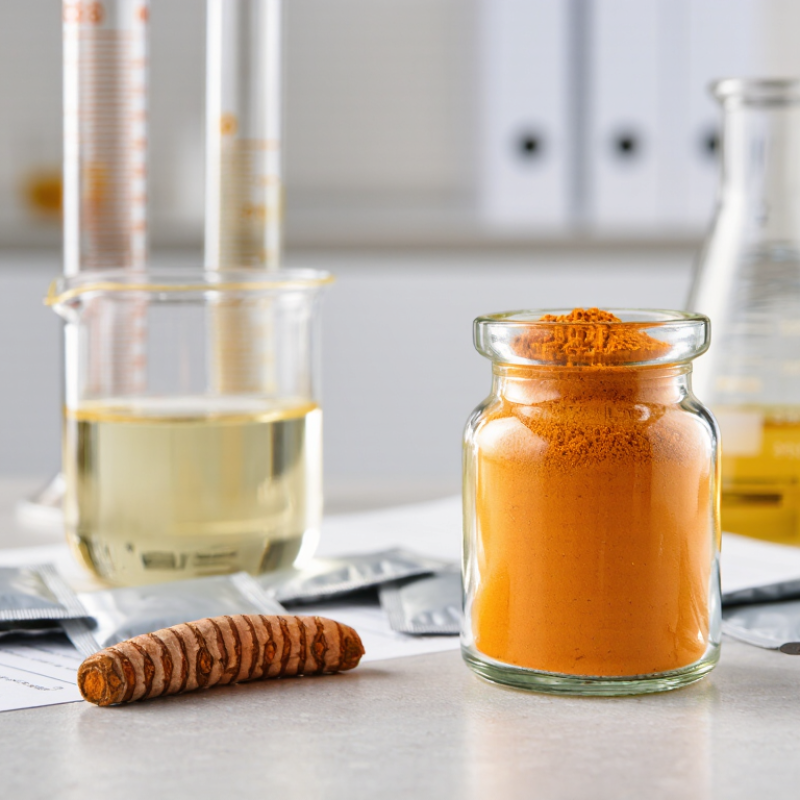
Turmeric extract curcumin 95% is a concentrated powder made from Curcuma longa rhizomes. It is commonly standardized to contain about 95% total curcuminoids. These compounds usually include curcumin, demethoxycurcumin, and bisdemethoxycurcumin. It is not always 95% pure curcumin alone. That distinction matters.
The extract usually appears as a deep yellow-orange powder with a warm, earthy aroma. Manufacturers often use solvent extraction, followed by filtration, concentration, and drying. Its quality depends on the turmeric source, processing controls, and storage conditions. Heat, moisture, and strong light may gradually affect its color and stability. A reliable supplier should provide an independent certificate of analysis, preferably supported by HPLC testing. The report should identify curcuminoid content, residual solvents, heavy metals, microbial limits, and batch traceability.
The phrase “95%” can sound precise, but the number alone is not enough. Different laboratories may use different testing methods, and results can vary slightly. Even experienced buyers sometimes overlook particle size or poor packaging. Curcuminoids also have limited water solubility, so a standard extract may disperse poorly in beverages or capsules. Formulation choices, such as emulsification or combination with approved absorption-enhancing ingredients, can change its practical performance. Careful evaluation is needed before comparing worldwide suppliers or selecting a material for food, supplement, or research applications.
Turmeric extract Curcumin 95% is a standardized extract containing at least 95% total curcuminoids, rather than 95% of the single curcumin molecule. A typical curcuminoid profile includes curcumin, demethoxycurcumin, and bisdemethoxycurcumin.
The chart presents a representative composition of the curcuminoid fraction commonly used to describe a 95% standardized turmeric extract: approximately 70–80% curcumin, 15–25% demethoxycurcumin, and 2–10% bisdemethoxycurcumin. Actual specifications can vary by raw material, extraction process, testing method, and supplier.
Curcumin 95% begins with carefully dried Curcuma longa rhizomes. Clean raw material matters. Excess moisture can encourage microbial growth and reduce extraction efficiency. Experienced processors mill the rhizomes into a consistent powder before extraction.
Food-grade ethanol is commonly used to dissolve curcuminoids from the plant material. The extract is filtered, concentrated, and purified through controlled crystallization. Temperature and solvent ratios require close monitoring. Small process changes can affect color, yield, and curcuminoid balance. The resulting powder is not pure curcumin. It usually contains approximately 95% total curcuminoids, including curcumin, demethoxycurcumin, and bisdemethoxycurcumin.
Standardization depends on validated HPLC testing, not appearance alone. A reliable supplier should provide batch-specific results for curcuminoid content, moisture, residual solvents, heavy metals, pesticides, and microbial limits. Testing should use recognized reference standards and documented sampling procedures. Ask for traceability from farm-level material to finished powder. Supplier claims still require careful review. Even a clean-looking certificate may hide sampling weaknesses or outdated test dates. Independent verification can reveal gaps, especially when sourcing internationally. Consistent documentation, stable specifications, and transparent corrective actions show stronger technical control than a high percentage printed on a label.
When evaluating global suppliers, begin with product identity and assay evidence. The extract should clearly state turmeric species, plant part, extraction method, and curcuminoid content. A recent HPLC report is essential. It should match the tested batch, not a generic document.
Check heavy metals, pesticides, microbiological limits, and residual solvents. These results should come from qualified laboratories with traceable methods. Details matter. Review the certificate of analysis, technical data sheet, and safety documentation together. A polished certificate is not proof by itself. I would request a retained sample and compare it with the reported specifications.
Supplier reliability also depends on manufacturing controls. Look for documented GMP systems, controlled storage, lot traceability, and change-notification procedures. Ask how the supplier handles deviations, complaints, and recalls. Response quality reveals operational maturity. Delivery records, packaging protection, and realistic lead times also deserve attention. A supplier may offer an attractive price but provide inconsistent color, odor, or assay results between lots. That risk can disrupt formulation work.
Global compliance needs careful review. Confirm that labeling, documentation, and import requirements fit the destination market. Certifications should be verified with the issuing organization when possible. I would avoid choosing solely by certification logos or website claims. Independent testing adds confidence, although it increases cost and time. That trade-off is easy to underestimate. A small pilot order, followed by comparative testing, often reveals more than a sales presentation.
India remains the leading region for turmeric extract and curcumin 95% supply. Spices Board India trade data recorded about 162,000 tonnes of turmeric exports in fiscal year 2023–24. Its strong farming base supports reliable raw-material access and competitive processing costs. Major production clusters include Telangana, Maharashtra, and Tamil Nadu.
China is another important manufacturing region, especially for standardized curcumin powders and export-scale extraction. Industry analyses from Grand View Research identify Asia-Pacific as a major turmeric market, supported by expanding nutraceutical demand. Europe and North America are important secondary regions. They contribute advanced testing, formulation expertise, and strict documentation rather than large turmeric harvests.
Quality differences still matter. A serious supplier should provide HPLC results confirming 95% curcuminoids, plus tests for heavy metals, microbes, pesticides, and residual solvents. Batch traceability is essential. Ask for recent certificates, not recycled files. A 95% assay is not the whole story. Extraction solvent, particle size, oxidation control, and packaging affect real performance. Market reports often present clean growth forecasts, but supply conditions are less tidy. Crop weather, freight costs, and changing compliance requirements can quickly alter regional advantages. Data source: Spices Board India trade statistics and Grand View Research turmeric market analysis.
Regional comparison of major turmeric-extract and high-curcuminoid supply centers
| Supplier Region | Regional Position | Typical Raw-Material Base | Typical Curcuminoid Specification | Common Supply Forms | Key Supply Advantages | Important Buyer Checks |
|---|---|---|---|---|---|---|
| India | Leading global origin for turmeric cultivation, processing, and curcuminoid extract production | Cultivated turmeric rhizomes, particularly high-curcuminoid turmeric varieties | Curcuminoids commonly standardized to approximately 95% by HPLC; individual curcumin, demethoxycurcumin, and bisdemethoxycurcumin levels may vary | Yellow-orange powder, granules, capsules, tablets, and oil-dispersible preparations | Strong agricultural base, established extraction expertise, broad export experience, and multiple food, supplement, and pharmaceutical grades | Pesticide residues, heavy metals, microbial limits, solvent residues, adulteration screening, and traceability from rhizome to extract |
| China | Major botanical-extract manufacturing and export center serving international bulk markets | Domestic and imported turmeric raw material processed into standardized extracts | Commercial 95% curcuminoid grades are widely offered, subject to batch-specific analytical confirmation | Bulk powder, customized particle sizes, premixes, and encapsulation-ready ingredients | Large processing capacity, flexible order sizes, customized specifications, and competitive bulk pricing | Country of raw-material origin, identity testing, residual solvents, synthetic-dye screening, and consistency between batches |
| Southeast Asia | Important turmeric-growing and herbal-ingredient region, with developing standardized-extract capacity | Regional turmeric rhizomes and imported standardized extract for downstream formulation | High-curcuminoid extracts may be available, while exact 95% compliance depends on the processor and test method | Powdered extracts, food ingredients, herbal blends, and finished supplement formats | Proximity to agricultural sources, growing herbal-processing infrastructure, and access to Asian formulation markets | Extraction yield, HPLC method, curcuminoid profile, moisture, microbial quality, and documentation for import markets |
| Europe | High-value formulation, quality-control, and specialty-ingredient region rather than the main turmeric-farming origin | Imported turmeric extracts and regionally processed or formulated ingredients | 95% curcuminoid materials are generally sold with detailed specifications and market-specific quality documentation | Standardized powder, dispersible systems, premixes, capsules, and formulated nutraceutical ingredients | Advanced quality systems, strong regulatory expertise, and access to European nutraceutical and food markets | EU contaminant limits, allergen status, novel-food considerations where applicable, claims compliance, and supply-chain documentation |
| North America | Major importing, formulation, private-label, and distribution market for turmeric extracts | Imported standardized extracts, with regional blending, packaging, and finished-product manufacturing | 95% curcuminoid powder is commonly specified for dietary-supplement applications; finished-product requirements vary | Bulk powder, capsules, tablets, softgels, beverages, and water-dispersible systems | Mature supplement market, established testing laboratories, and broad downstream formulation capabilities | Identity and potency testing, cGMP documentation, Prop 65 considerations where relevant, and structure/function-claim compliance |
| South America | Emerging cultivation and botanical-ingredient region with increasing local processing activity | Locally cultivated turmeric and imported standardized extract for blending or formulation | High-purity curcuminoid extracts may be available, although 95% material is often sourced through international supply chains | Dried turmeric, conventional extract powder, capsules, and regional nutraceutical formulations | Potentially shorter regional supply chains and expanding demand for natural health ingredients | Local registration requirements, agricultural traceability, heavy metals, pesticide residues, and export certificates |
Regional descriptions are based on established turmeric cultivation, botanical-extract processing, international trade, and downstream nutraceutical manufacturing patterns. Actual availability, grade, lead time, and certification status should be confirmed directly for each production lot.
When comparing turmeric extract curcumin 95% suppliers worldwide, certification documents should be your first evidence, not a decorative sales claim. Request a current certificate of analysis for each batch. Check HPLC assay results, curcuminoid profile, moisture, heavy metals, pesticides, residual solvents, and microbiological limits. ISO 22000, HACCP, GMP, and third-party testing can strengthen confidence, but certificates must match the actual manufacturing site. Verify issue dates, accreditation details, and product specifications carefully. Small inconsistencies matter.
Pricing needs a wider view than the quoted kilogram rate. Compare the same assay, mesh size, packaging, minimum order, payment terms, and delivery basis. Ask whether the price includes testing, export documents, insurance, and freight. A lower offer may reflect weaker testing or unstable raw material sourcing. Request a three-month price history when possible. Market conditions change. Currency movement can also distort comparisons.
Supply capacity should be tested with practical questions. Ask for monthly output, average batch size, normal lead time, and emergency production options. Confirm whether turmeric sourcing is traceable to a defined region and harvest period. Review sample batch records and retention-sample procedures. A supplier may claim large capacity, yet provide limited evidence. That is a warning. A pilot order can reveal packaging quality, communication speed, and batch consistency before a long contract. No checklist is perfect. Even experienced buyers can overvalue polished documents and overlook delayed shipments, so keep backup suppliers and written quality agreements.
It is a concentrated powder made from Curcuma longa rhizomes. It usually contains about 95% total curcuminoids, not 95% curcumin alone. The powder often has a deep yellow-orange color and earthy aroma.
The main compounds are curcumin, demethoxycurcumin, and bisdemethoxycurcumin. Their proportions may vary slightly between batches. The “95%” figure refers to total curcuminoids.
Dried turmeric rhizomes are cleaned, milled, and extracted. Food-grade ethanol is often used. The liquid is filtered, concentrated, purified, and dried into powder.
Temperature and solvent ratios can affect color, yield, and compound balance. Excess moisture may support microbial growth. Small process changes can create noticeable batch differences.
Request a recent, batch-specific HPLC report. It should list curcuminoid levels and testing methods. Appearance alone is not enough. It can look excellent and still fail testing.
Useful documents include a certificate of analysis, technical data sheet, and safety documentation. Reports should cover moisture, residual solvents, heavy metals, pesticides, and microbial limits. Batch traceability matters.
Store it in a cool, dry, dark place. Protect it from moisture, heat, and strong light. Proper packaging helps preserve color and stability, though it cannot fix poor material.
Curcuminoids have limited water solubility. The powder may settle or form visible particles. Emulsification or approved absorption-enhancing ingredients may improve dispersion, but performance still requires testing.
Compare identity, assay results, manufacturing controls, packaging, traceability, and delivery records. Ask for a retained sample and test it independently. A small pilot order can reveal inconsistent color or assay results.
No. A printed percentage and polished logo are only starting points. Verify issuing organizations, testing dates, sampling procedures, and batch matching. Sometimes the paperwork looks stronger than the process behind it.
Turmeric extract curcumin 95% is a highly concentrated botanical ingredient standardized to contain approximately 95% curcuminoids, the primary active compounds naturally found in turmeric. It is commonly produced through controlled extraction, purification, and testing processes designed to remove impurities and achieve consistent potency. Reliable suppliers should provide clear information about raw material origin, extraction methods, curcuminoid content, solubility, stability, and batch-to-batch consistency.
When comparing worldwide suppliers, buyers should evaluate certifications, manufacturing controls, laboratory testing, documentation, pricing, minimum order quantities, production capacity, and delivery reliability. Supplier regions may differ in access to turmeric, processing technology, regulatory systems, and export capabilities. A suitable partner should be able to provide relevant quality certificates, contaminant and microbiological test results, traceability records, and dependable technical support. Careful comparison of quality, compliance, cost, and supply continuity can help businesses select a trustworthy source for their intended applications.