
Steam Distilled
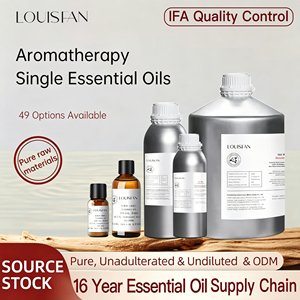
Direct factory supply manufactured under stringent cGMP standards. Assayed via validated HPLC, UV-Vis, and GC-MS testing with complete batch-specific technical dossiers.
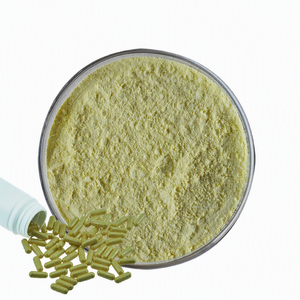
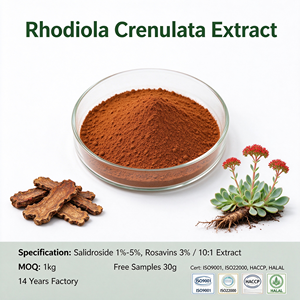
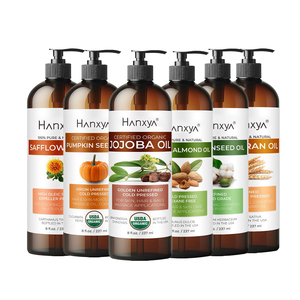
In modern pharmaceutical, cosmetic, and medical-botanical manufacturing, navigating international regulatory compliance demands meticulous technical documentation. Under European health and consumer safety directives, botanical ingredients utilized in border-line therapeutic formulations, medical device contact substrates, and advanced phytopharmaceuticals must align with rigorous quality management standards. While traditional CE marking designates conformity under the Medical Device Regulation (MDR, EU 2017/745) for finished devices incorporating active substances of botanical origin (Rule 21 substances), B2B manufacturers and primary extraction facilities establish technical conformity through rigorous adherence to Good Manufacturing Practice (cGMP), ISO 13485:2016 for medical device material interfaces, and ISO 22716:2007 for cosmetic safety dossiers.
Procuring raw botanical ingredients requires full harmonization with European Pharmacopoeia (Ph. Eur.) monographs and United States Pharmacopeia (USP) guidelines. A compliant manufacturing facility does not simply harvest and dry biomass; it controls every thermodynamic parameter throughout extraction, precipitation, crystallization, and isolation. Standardized phyto-actives—such as withanolides from Withania somnifera, curcuminoids from Curcuma longa, and salidroside/rosavin markers from Rhodiola rosea—demand definitive structural elucidation via high-resolution Nuclear Magnetic Resonance (NMR) and Liquid Chromatography–Tandem Mass Spectrometry (LC-MS/MS). Establishing traceability from geolocated agricultural cooperatives to packaged drums is the cornerstone of passing pre-shipment inspections and regulatory audits at customs border control posts.
Furthermore, European border control measures enforce critical residue barriers. Manufacturers operating under verified CE and cGMP quality frameworks implement comprehensive multi-residue pesticide screens covering over 500 analytes via GC-MS/MS and LC-MS/MS (in strict compliance with Regulation (EC) No 396/2005). Similarly, strict surveillance mandates the elimination of Ethylene Oxide (ETO) and its degrading compound 2-chloroethanol below the limit of quantification (<0.05 mg/kg, Regulation (EU) 2019/1793). Heavy toxic metals—principally Lead (Pb), Cadmium (Cd), Mercury (Hg), and Inorganic Arsenic (As)—must be quantified down to parts-per-billion (ppb) utilizing Inductively Coupled Plasma Mass Spectrometry (ICP-MS) in conformity with Regulation (EU) 2023/915.
Market dynamics in functional nutraceuticals, cosmeceuticals, and phytomedicines are shifting rapidly. Leading enterprise buyers are restructuring their vendor matrices to adapt to several crucial developments.
Global procurement teams are abandoning ambiguous "ratio extracts" (e.g., 10:1, 20:1) in favor of validated target bioactive compounds with stated, method-specific quantification (HPLC, GC-FID). Ratios often obscure the inclusion of inert maltodextrin carriers and lack standardized therapeutic potency.
Driven by ESG mandates and European Green Deal policies, tier-one brands are prioritizing solvent-free supercritical fluid extraction (SFE-CO2) over traditional petrochemical solvents like n-hexane or dichloromethane, eliminating environmental hazards and worker exposure risks.
Intentional substitution and adulteration with cheaper botanical species represent major litigation risks. Forward-thinking factories provide genomic DNA sequence verification alongside chemical profiling to prove botanical identity at the species level before batch release.
Geopolitical tensions and unpredictable monsoon cycles across key Asian agricultural belts have made single-source procurement untenable. Enterprise buyers now establish long-term supply contracts with vertically integrated extractors maintaining buffer stock and dedicated crop acreage.
Under US FDA FSMA (Foreign Supplier Verification Programs) and EU safety directives, buyers require pre-shipment documentation packages including complete DMF (Drug Master Files), Certificate of Origin, Non-GMO/Non-Allergen statements, and third-party laboratory accreditations.
Circular economy sourcing is transitioning from a marketing claim to a procurement criterion. Advanced processing plants extract secondary active polyphenols and bio-flavonoids from agricultural press-cakes, delivering sustainable active raw materials with complete Life Cycle Assessments (LCA).
The botanical active ingredients sector is undergoing a profound paradigm shift. Historically, the therapeutic efficacy of highly promising plant polyphenols—such as Curcumin from turmeric, Epigallocatechin gallate (EGCG) from green tea, Resveratrol, and Boswellic acids—has been significantly constrained by poor water solubility, rapid systemic metabolism, and low gastrointestinal permeability. Today's manufacturing factories are not merely extractors; they are molecular delivery engineers.
To overcome these kinetic hurdles, state-of-the-art facilities implement advanced physical modification and particle engineering technologies:
Complexing standardized phyto-compounds with non-GMO sunflower phosphatidylcholine at molecular ratios, achieving up to 29-fold increases in cellular uptake without synthetic chemical detergents.
Utilizing natural plant hydrocolloids and prebiotic dietary fibers to encapsulate fragile volatile terpenes and sensitive essential oils, safeguarding bioactives against gastric acid oxidation.
Sub-micron jet milling that yields narrow particle size distributions (<5 microns, 100% through 200 mesh), dramatically increasing active surface area and spontaneous thermodynamic dispersion.
This technical evolution allows finished brand formulators to achieve bio-equivalent clinical outcomes with lower total dosages, reducing unit cost, improving capsule filling density, and eliminating taste astringency in functional RTD (ready-to-drink) beverages and gummies.
Representative batch release criteria applied across pharmaceutical and therapeutic-grade extraction lots.
| Botanical / Compound Name | Standardized Marker Content | Validated Analytical Method | Moisture & Ash Limits | Heavy Metals / Contaminant Threshold |
|---|---|---|---|---|
| Turmeric Extract Curcuma longa (Rhizome) |
95.0% Total Curcuminoids (Curcumin, DMC, BDMC) | Isocratic Reversed-Phase HPLC-DAD | Loss on Drying: ≤3.0% Total Ash: ≤1.0% |
Pb < 0.5 ppm, Cd < 0.2 ppm ETO < 0.05 mg/kg |
| Ashwagandha Extract Withania somnifera (Root) |
5.0% Withanolides & Withaferin A | Gradient HPLC according to USP monograph | Loss on Drying: ≤4.0% Total Ash: ≤4.5% |
Heavy Metals Total < 10 ppm Aflatoxins B1+B2+G1+G2 < 4 ppb |
| Rhodiola Rosea Extract Rhodiola rosea (Root) |
3.0% Rosavins / 1.0% Salidroside | Reversed-Phase HPLC-UV at 254nm / 205nm | Loss on Drying: ≤5.0% Total Ash: ≤3.0% |
Arsenic < 1.0 ppm, Mercury < 0.1 ppm Pesticides: Ph. Eur. 2.8.13 Compliant |
| Boswellia Extract Boswellia serrata (Gum Resin) |
65.0% Boswellic Acids / 30% AKBA | Acid-Base Titration & HPLC for AKBA | Loss on Drying: ≤3.5% Total Ash: ≤2.0% |
Residual Solvents: USP <467> Class 3 Total Yeast & Mold < 100 CFU/g |
| Piper Methysticum Kava Piper methysticum (Root) |
30.0% to 70.0% Kavalactones | Reversed-Phase HPLC (Kavain standard) | Loss on Drying: ≤4.0% Total Ash: ≤2.5% |
Full Batch CoA Provided Salmonella: Absent in 25g |
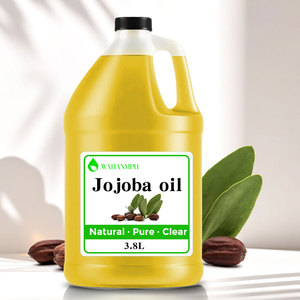
| Jojoba Carrier Oil Simmondsia chinensis (Seed) |
100% Pure Cold-Pressed Liquid Wax | GC-FID (Fatty Acid Methyl Esters) | Acid Value: ≤1.0 mg KOH/g Peroxide: ≤2.0 meq/kg |
100% Unrefined & Hexane Free Heavy Metals: Lead < 0.1 ppm |
Combining primary agricultural control with high-precision pharmaceutical engineering to safeguard your brand reputation and operational uptime.
We eliminate intermediary brokers. Our contractual farming networks span key agricultural provinces with documented Good Agricultural and Collection Practices (GACP). Every extraction lot ties directly back to a GPS-registered cooperative lot.
Our ISO/IEC 17025 accredited analytical facility features Agilent High-Performance Liquid Chromatography (HPLC), Gas Chromatography–Mass Spectrometry (GC-MS), and PerkinElmer ICP-MS for real-time batch release testing.
We deploy validated dry heat and pressurized saturated steam sanitization systems, rejecting ionizing radiation and carcinogenic ETO fumigation entirely. Consignments clear strict EU border controls with zero rejections.
Our production facilities maintain comprehensive regulatory accreditations, including cGMP, ISO 9001:2015, ISO 22000, FSSAI Central Licenses, APEDA, alongside certified Kosher and Halal production lines.
Whether you require a pilot 25kg qualification batch or continuous multi-ton container deliveries, our synchronized multi-extractor lines guarantee seamless continuity and 24-hour technical response commitments.
We formulate tailored extraction profiles—ranging from water-only extraction for certified clean-label organic claims to specific hydro-ethanolic ratios—milled to your exact bulk density and mesh specifications.
Essential guidance addressing common analytical and logistical inquiries from global QA auditors and purchasing managers.
UV-Vis spectrophotometry evaluates light absorbance at specific wavelengths across all chromophore-bearing molecules, meaning related compounds, degradants, and polyphenolic analogs can inflate the calculated total. In contrast, High-Performance Liquid Chromatography (HPLC) physically separates individual target molecules across a stationary column before detection, delivering precise and true quantification of the specific marker compound. For instance, a 95% Curcuminoids extract measured by UV may correspond to a lower percentage when quantified by HPLC. We clearly document the test methodology used on every Certificate of Analysis to ensure complete alignment with your laboratory's incoming QC specifications.
Our quality management applies a dual-barrier control model. First, agricultural intake lots undergo stringent pre-acceptance testing at the collection station. Second, concentrated post-extraction bulk powders undergo comprehensive multi-residue screening for over 500 pesticides in accordance with Regulation (EC) No 396/2005 via LC-MS/MS and GC-MS/MS through accredited third-party laboratories (such as Eurofins and SGS) prior to customs documentation finalization.
Our standard production starting MOQ is 25 kg for high-potency standardized botanical extracts and essential oils, supplied in nitrogen-purged HDPE drums or fiber drums with double food-grade polyethylene liners. For R&D evaluation and analytical verification, we provide 100g to 250g pre-shipment qualification samples accompanied by fully representative lot CoAs, ensuring your technical teams can independently validate identity, bulk density, assay, and solubility prior to bulk commitment.
All production protocols strictly comply with ICH Q3C (R8) Impurities: Guideline for Residual Solvents. We prioritize Class 3 non-toxic solvents (ethanol, water) over hazardous Class 1 or Class 2 chemistries. High-vacuum multi-stage thin-film evaporators and vacuum drying ovens consistently reduce residual ethanol well below 5,000 ppm (typically below 500 ppm), verified through Headspace Gas Chromatography (HS-GC).
Yes. While standard industry powdered extracts often utilize maltodextrin as a processing aid during spray drying to enhance powder flowability, we operate specialized low-temperature vacuum belt dryers capable of producing 100% pure, native, excipient-free botanical powders. Alternatively, we can standardize formulations using certified organic gum acacia, organic rice hulls, or custom soluble dietary fibers to meet clean-label, non-GMO, and organic brand claims.
Every shipment is delivered with a comprehensive technical dossier designed for international customs and regulatory approval. This package includes a Batch-Specific Certificate of Analysis (CoA), Technical Data Sheet (TDS), Safety Data Sheet (SDS) conforming to GHS/CLP standards, Phytosanitary Certificate issued by national agricultural authorities, Certificate of Origin, Non-Irradiation and Non-ETO Statements, Allergen Declarations, and BSE/TSE-Free Certifications.