
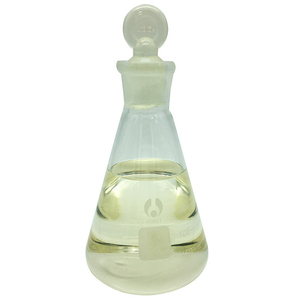
In addition to our flagship industrial-grade Curcumin 95% powder, we operate continuous multi-solvent extraction and cold-press extraction suites supplying premium nutraceutical raw materials across global supply hubs.
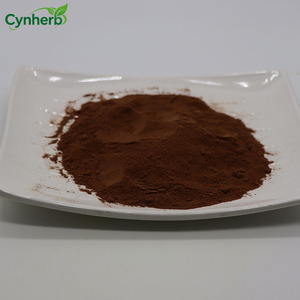
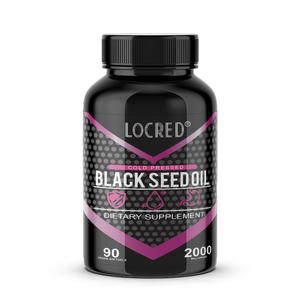
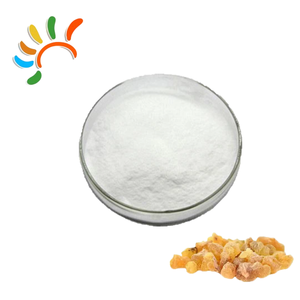
In B2B botanical procurement, non-specific testing methods frequently camouflage synthetic adulteration or inferior rhizome fractions. Authentic Curcumin 95 is a distinct triad of natural curcuminoids isolated from the rhizome of Curcuma longa L.
CAS: 458-37-7 | Chemical Formula: C21H20O6
Represents 75.0% to 81.0% of the total curcuminoid complex. It exhibits the characteristic golden-orange crystalline structure and carries the primary anti-inflammatory and electrophilic signaling properties.
CAS: 22608-11-3 | Chemical Formula: C20H18O5
Represents 15.0% to 19.0% of authentic rhizome extract. Lacks one ortho-methoxy group compared to Curcumin I. Acts as a key stabilizer in natural crystalline matrices.
CAS: 24939-16-0 | Chemical Formula: C19H16O4
Represents 2.5% to 6.5% of total content. Devoid of both methoxy groups, this crucial marker compound displays higher thermodynamic stability in biological solutions.
| Evaluation Parameter | Natural Curcumin 95 (Our Standard) | Synthetic Petrochemical Curcumin | Procurement Risk Severity |
|---|---|---|---|
| C-14 Isotope Ratio (ASTM D6866) | > 98.5% Biogenic Modern Carbon | 0% to 10% (Fossil Fuel Sourced) | Class A Verification |
| Curcuminoid Ratio (I : II : III) | Natural Distribution (~78% : ~17% : ~5%) | Curcumin I > 98% or aberrant synthetic mix | Regulatory Rejection Risk |
| Analytical Method Bias | Verified via Reversed-Phase HPLC-DAD (425 nm) | UV-Vis Spectrophotometry reads 100%+ falsely | Formulation Potency Deficit |
| Residual Solvents (USP <467>) | Class 3 Ethanol / Ethyl Acetate < 5000 ppm | Toluene, EDC, Acetone residues detected | EU Compliant (MRL Clean) |
| Heavy Metals (ICP-MS) | Pb < 0.5 ppm, Cd < 0.2 ppm, As < 0.5 ppm, Hg < 0.1 ppm | Catalytic heavy metal residues present | Ph. Eur. 2.8.13 Approved |
To overcome the native pharmacokinetic barriers of natural curcumin—specifically its high hydrophobicity and low enterocyte permeability—we offer four distinct solid-state engineered variations.
Standard curcumin crystal forms exhibit poor powder flowability, low bulk density (0.35 g/ml), and severe machine electrostatic adhesion during high-speed rotary tablet compaction.
Our fluidized-bed agglomerated DC grade offers controlled tap density (0.60–0.70 g/ml), tight mesh distribution (40–80 mesh), and rapid die-fill efficiency without capping or lamination.
Formulated for ready-to-drink (RTD) beverages, effervescent sticks, sports hydration sachets, and functional food emulsions where standard 95% powder precipitates immediately.
Produced using natural modified dietary fiber matrices or gum acacia encapsulation, guaranteeing optical clarity or vibrant colloidal yellow suspension without ringing or sediment.
Processed through closed-circuit air-jet milling to generate fine particle distributions ($D_{90} < 20\,\mu\text{m}$). This mechanical reduction significantly increases the specific surface area.
Ideal for softgel liquid suspensions with medium-chain triglycerides (MCT) and cosmetic dermatological serums requiring smooth epidermal spreading.
Hepatic glucuronidation of free curcumin is the primary factor limiting physiological plasma concentrations. We offer precision pre-blended and co-granulated premixes.
By coupling 95% standardized Curcuminoids with 95%–98% natural Piperine extract (derived from Piper nigrum), enterocyte absorption and systemic bioavailability can increase up to 20-fold.
Global regulatory frameworks are tightening around dietary supplements, moving beyond basic label claims into rigorous isotopic validation, contaminant screening, and environmental lifecycle accountability.
Due to the price gap between pure petroleum-derived synthetic curcumin (synthesized from vanillin and acetylacetone) and genuine agricultural turmeric, global brands now require Carbon-14 radiocarbon dating on incoming batches.
Regulatory agencies in North America and Western Europe have begun cross-referencing biobased content to combat economic adulteration. Sourcing must guarantee 100% biogenic carbon traceability to fresh agricultural harvest lots.
Ethylene Oxide (ETO) and its toxic breakdown product 2-Chloroethanol remain the number-one reason for border control rejections of Asian botanical imports under EU Regulation 2019/1793.
Modern supply chains require non-thermal decontamination pathways—such as high-pressure steam sterilization and closed dry-air heating—to maintain total residues below the LC-MS/MS limit of quantitation (LOQ < 0.01 mg/kg).
Historic extraction using 1,2-dichloroethane (EDC) or high acetone volumes is facing severe international pushback. EU Directive 2009/32/EC dictates stringent limits on extraction solvents.
Future-proof brands prioritize extracts processed exclusively via Food Grade Denatured Grain Ethanol or Supercritical CO2 extraction. This approach yields clean label status, zero toxic residual traces, and minimal environmental impact.
Combining agricultural supply networks with pharmaceutical-grade cGMP extraction lines, we bridge the gap between large-scale raw material sourcing and rigorous global regulatory compliance.
Our raw turmeric rhizomes are sourced through direct agricultural partnerships in prime growing zones, strictly controlling soil heavy metal composition and eliminating pesticide overuse right at the field level.
Every industrial production run undergoes comprehensive batch testing using Shimadzu and Agilent HPLC-DAD systems, GC-MS residual solvent profiling, and Agilent ICP-MS heavy metal determination.
We supply complete technical dossiers with every purchase order, including verified Batch CoA, Technical Data Sheets (TDS), Safety Data Sheets (SDS), Non-GMO, Allergen-Free, and BSE/TSE declarations.
Our automated crystallization and continuous drying towers yield over 60 metric tons of standardized Curcumin 95% powder monthly, guaranteeing steady spot availability and dependable contract pricing.
We provide full-panel pre-shipment pilot samples alongside our internal Certificates of Analysis, allowing your QA and R&D teams to independently confirm identity and assay before shipment release.
Standard export orders are packed in 25 kg multi-wall fiber drums with double food-grade polyethylene heat-sealed liners. Customized vacuum packaging and nitrogen-flushed drums are available on request.
Clear, technically accurate answers to the common quality, testing, and shipping questions raised by QA directors and procurement managers.