Precision-milled botanical powders and full-spectrum extracts sourced from GMP and ISO certified production facilities with verified batch documentation.
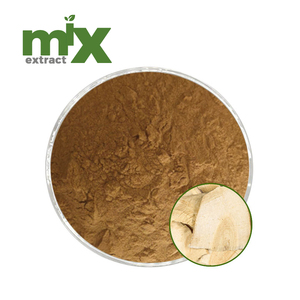
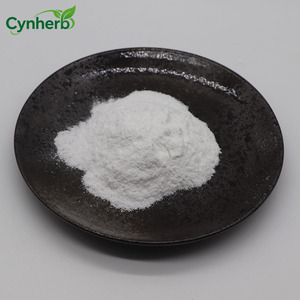
As global demand for adaptogenic formulations and women's hormonal health solutions accelerates across the nutraceutical and functional beverage sectors, Shatavari Root Powder (derived from Asparagus racemosus Willd.) has shifted from traditional pharmacopoeial applications to a strictly regulated global commodity. When sourcing through Chinese factories and B2B processing suppliers, procurement teams and QA directors must navigate intricate differences between crude dried root powder, hydro-alcoholic extracts, and standardized saponin fractions.
Industrial extraction nodes operating within modern Chinese supply chains leverage advanced countercurrent extraction and spray-drying arrays to deliver standardized profiles from 20% up to 60% total saponins. Understanding the native matrix of Asparagus racemosus—which encompasses steroidal saponins (shatavarins I through IV), isoflavones, polysaccharides, and mucilage—is vital when specifying powder granulometry, flowability, and reconstitution clarity.
| Analytical Parameter | Crude Decoction Powder | Standardized Hydro-Extract | High-Purity Saponin Fraction |
|---|---|---|---|
| Botanical Matrix | Dried Rhizome (100% A. racemosus) | Aqueous / Hydro-ethanolic Extract | Fractionated Root Column Eluent |
| Target Bioactive | Total Native Saponins: 2% – 5% | Shatavarins: 20% – 40% (Gravimetric) | Standardized 50% – 60% Saponins / HPLC |
| Mesh Fineness | 80 – 100 Mesh | 80 Mesh (Spray Dried) | 100 – 120 Mesh Fine Granulation |
| Carrier Excipients | 100% Excipient-Free | Carrier-Free or Maltodextrin (<5%) | Zero Non-Functional Excipients |
| Heavy Metals (ICP-MS) | Pb <3.0, As <1.0, Cd <1.0, Hg <0.1 | Meets Regulation (EU) 2023/915 | USP <2232> / EP Strict Compliance |
Anticipating structural shifts in compliance, cultivation traceability, and processing tech over the next three to five years.
Following intensified border controls and Implementing Regulation (EU) 2019/1793, global contract packagers now reject all botanicals showing traces of Ethylene Oxide or 2-chloroethanol (>0.02 mg/kg). Processing facilities must validate non-thermal decontamination alternatives including steam sterilization, irradiation-free microbiological stabilization, and closed-circuit cleanroom handling.
Adulteration of Asparagus racemosus with less expensive allied species such as Asparagus adscendens or Asparagus officinalis root residues represents a major compliance vulnerability. Quality brands demand Sanger sequencing and High-Performance Thin-Layer Chromatography (HPTLC) fingerprinting cross-referenced against official pharmacopoeia references to establish botanical authenticity.
Discrepancies between United States Pharmacopeia (USP <561>) tolerances and European Commission Regulation (EC) No 396/2005 multi-residue panels require specialized pre-screening. Upstream consolidation directly to controlled agricultural contracts ensures complete absence of persistent organochlorines and neonicotinoids across commercial export lots.
The commercial deployment of Shatavari and adaptogenic root derivatives has evolved from traditional hard-shell gelatin capsules and compressed tablets into functional ready-to-mix (RTM) beverage sticks, RTD botanical tonics, and effervescent delivery formats. This evolution triggers unique mechanical and physical challenges for raw material processors:
Native root starches and lipophilic saponins often clump in neutral-pH liquid suspensions. Leading processing factories implement agglomeration and instantizing fluid-bed technology to ensure rapid dispersion without foaming.
The bitter, sweet-astringent sensory profile characteristic of high-saponin extracts requires calibrated extraction solvent tailoring to preserve bioactives while reducing astringency in clean-label stickpacks.
Refined saponin powders absorb atmospheric humidity rapidly, compromising line speeds in high-speed rotary tableting. Vacuum-sealed inner polyethylene liners and moisture barriers are imperative.
Full regulatory governance, state-of-the-art analytical equipment, and proven export engineering designed for international brands.
Operational compliance executed within modern Class 100,000 cleanroom environments. Audited annually for USDA Organic, Halal, and Kosher supply chain integrity.
Inductively Coupled Plasma Mass Spectrometry screening guarantees heavy metals (Lead, Cadmium, Arsenic, Mercury) remain well below rigid EU and US FDA safety limits.
Every commercial order is accompanied by Batch Certificate of Analysis (CoA), Technical Data Sheets, SDS, Non-GMO Declarations, Allergen Statements, and Phytosanitary documentation.
Direct communication with food technologists and regulatory specialists. Complete technical data, pricing schedules, and pilot trial samples dispatched within 24 hours.
Prior to confirming purchase orders for industrial botanicals, specifying the following criteria eliminates analytical discrepancies at destination testing facilities:
Direct answers to essential compliance, extraction, and logistics questions raised by international procurement teams.
Authenticity is verified through a multi-tiered identity verification protocol. Raw dried roots entering processing undergo microscopic botanical examination, High-Performance Thin-Layer Chromatography (HPTLC) fingerprinting comparing retention factors against certified reference herbs, and optional DNA barcode testing to rule out cross-contamination with Asparagus officinalis or other kindred taxa.
Analytical variance arises almost universally from discrepancies in testing methodology. Older spectrophotometric (UV) or gravimetric assays quantify all precipitable components including plant polysaccharides, which can inflate results to 40%–50%. HPLC testing calibrating for specific marker saponins measures only defined compounds, returning lower numerical percentages with vastly superior chemical precision.
Commercial starting MOQs for catalog botanical powders and standard-tier extracts are 25 kg, supplied in sealed fiber drums. Pilot sample quantities (100g to 1kg) for R&D trials are accessible upon request. Standard factory lead times for inventoried lots average 7 to 10 working days, while custom extractions require 2 to 3 weeks for full manufacturing and QA clearance.
Yes. We enforce strict heat and steam-based microbiological stabilization protocols across our supply chain. All EU-bound botanical batches undergo independent laboratory gas chromatography screening for both Ethylene Oxide and 2-chloroethanol, ensuring residues remain strictly below the limit of quantification (LOQ < 0.02 mg/kg) under Regulation (EU) 2019/1793.
Comprehensive OEM and contract formulation services are supported. Capabilities include specialized dry granulation for direct compression, customized mesh sizing (40 to 200 mesh), customized oil and liquid carrier blending, softgel and hard-capsule encapsulation, and fully compliant export labeling tailored to US, European, and Asia-Pacific regulatory mandates.
Initiate direct communication with our technical sales and regulatory documentation desk. Request comprehensive specification sheets, current third-party assay panels, and pilot evaluation samples.
Inquire Now