Standardized raw materials, cold-pressed plant lipids, and bio-enhanced botanical isolates manufactured under cGMP validation for pharmaceutical, nutraceutical, and personal care supply chains.
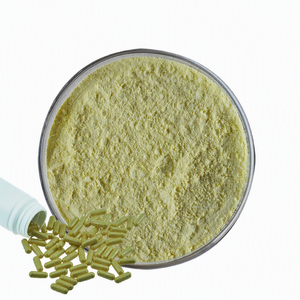
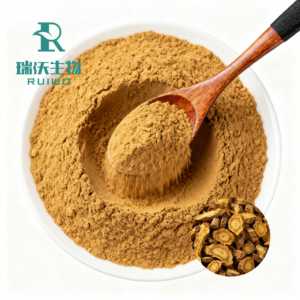
Milk Thistle Extract, derived from the mature seeds of Silybum marianum (L.) Gaertn., is one of the most widely commercialized botanical actives globally. However, for industrial procurement officers, contract research organizations (CROs), and dietary supplement formulators, sourcing milk thistle from Chinese manufacturing facilities requires a rigorous understanding of the analytical chemistry underpinning silymarin standardization.
The therapeutic and hepatoprotective properties of milk thistle are attributed to an isomeric mixture of flavonolignans collectively designated as silymarin. The biological active matrix comprises six core chemical moieties: Silybin A, Silybin B, Isosilybin A, Isosilybin B, Silydianin, and Silychristin, accompanied by the flavonoid precursor Taxifolin. Silybin (silibinin) constitutes the principal diastereomeric fraction (representing roughly 50% to 70% of total flavonolignans) and accounts for the bulk of radical scavenging, cell membrane stabilization, and protein synthesis stimulation in hepatic parenchymal cells.
Technical Quality Discrepancy Note: UV Spectrophotometry vs. High-Performance Liquid Chromatography (HPLC). Historically, global wholesale contracts specified "80% Silymarin by UV." Nonetheless, ultraviolet spectrophotometric quantification is inherently non-specific: any polyphenolic compound or oxidized degradation byproduct exhibiting absorbance around 288 nm falsely inflates the recorded silymarin titer. When tested by validated reverse-phase HPLC methods (such as USP or European Pharmacopoeia monographs), a standard "80% UV" raw powder typically resolves to an actual active flavonolignan content of only 50.0% to 65.0% HPLC. Modern regulated formulations targeting the US, EU, and Australasia must align with monograph-specific HPLC testing.
Our extraction infrastructure bridges this analytical gap. Every bulk consignment from our processing facilities is dual-assayed. We report total silymarin calculated as silybin, individual diastereomer distribution profiles (identifying the specific ratios of silychristin, silydianin, and silybin A+B), and residual taxifolin via validated gradient HPLC with photodiode array (PDA) detection, safeguarding your finished product against adulteration and sub-potent active declarations.
The industrial extraction of milk thistle seeds involves multi-phase solid-liquid separation due to the high endogenous lipid content of the botanical seed. Raw Silybum marianum seeds contain between 20% and 30% fixed oil. An unrefined direct solvent maceration leads to a tar-like, unprocessable oleoresin that impedes crystallization and filtration.
| Extraction Route | Primary Solvent System | Typical Purity / Assay | Technical Characteristics & Application Scope |
|---|---|---|---|
| Traditional Pharma Grade | Acetone / Water de-fatted via n-Hexane | Silymarin ≥ 80% (UV) / ≥ 55% (HPLC) | Historic pharmacopoeial standard. Residual acetone stringently controlled below 500 ppm per ICH Q3C. High crystallization yield. |
| Clean-Label Nutraceutical | Ethanol (EtOH) / Demineralized Water | Silymarin ≥ 80% (UV) / 50–60% (HPLC) | Non-toxic solvent extraction meeting US Clean Label and organic-compatible criteria. Fully exempt from class 2 solvent scrutiny. |
| Hydrophilic / Beverage Grade | Complexation with Hydroxypropyl-β-Cyclodextrin | Total Silybin 10%–20% HPLC | Engineered for RTD functional beverages, effervescent drink powders, and clear liquid drops. Completely water-soluble without precipitation. |
| Phytosome / Liposomal Grade | Purified Silybin bound to Phosphatidylcholine (1:1 / 1:2) | Silybin ≥ 30%–33% HPLC | Overcomes baseline flavonolignan lipophilicity and poor intestinal absorption. Delivers a 4x to 10x bioavailability enhancement in human clinical trials. |
Our manufacturing units utilize advanced multi-stage countercurrent extraction cascades combined with membrane filtration, low-temperature vacuum crystallization, and spray-drying inside ISO Class 8 cleanrooms. For buyers seeking specific pharmacopoeial compliance, we offer customized crystallization protocols that maintain residual solvents far below USP and EP limits, with ethanol residues under 1,000 ppm and acetone residues undetectable or below 50 ppm.
The global sourcing landscape for milk thistle extracts is evolving rapidly. Procurement managers who historically evaluated suppliers strictly on per-kilogram FOB price now confront stringent compliance mandates, ESG requirements, and analytical verification protocols. Five macro market dynamics dominate current B2B vendor selections:
A. Ethylene Oxide (ETO) and 2-Chloroethanol Zero-Tolerance: Following sweeping border rejections across the European Union governed by Implementing Regulation (EU) 2019/1793, ETO sterilization of raw botanical materials is strictly prohibited. Wholesale exporters must demonstrate certified non-ETO status with accredited GC-MS/MS testing reaching quantification limits (LOQ) of 0.01 mg/kg. Our processing plants utilize superheated steam sterilization and ionizing radiation alternatives only upon explicit client protocol sign-off.
B. Polycyclic Aromatic Hydrocarbons (PAH4) Compliance: Regulation (EU) 2023/915 establishes an upper limit of 10 μg/kg for benzo(a)pyrene and 50 μg/kg for the sum of four PAHs (benzo(a)pyrene, benz(a)anthracene, benzo(b)fluoranthene, and chrysene) in botanical extracts. Direct coal-fired drying methods historically practiced by tier-3 agricultural workshops introduce heavy airborne PAHs. Modern Tier-1 Chinese suppliers have transitioned to clean indirect heat exchangers, gas-fired spray driers, and continuous vacuum belt drying systems.
C. Bioavailability Optimization as a Standard Specification: Raw silymarin exhibits exceptionally low aqueous solubility (under 50 μg/mL) and minimal gastrointestinal bioavailability (∼20% to 40% absorbed, with heavy biliary elimination). Contract brand owners are increasingly superseding generic 80% powders with lecithin-complexed phytosomes, micronized powders (D90 < 10 microns), and microencapsulated self-emulsifying drug delivery systems (SEDDS) to justify premium on-pack functional health claims.
D. Vertical GAP Agricultural Integration: Sourcing raw milk thistle seeds from volatile spot open markets introduces severe variability in silybin ratios, pesticide contamination, and moisture-driven mycotoxins (Aflatoxins B1, B2, G1, G2 and Ochratoxin A). Our enterprise relies on direct-managed contract farming bases across Northeastern China (Heilongjiang and Liaoning provinces) and Northwest China (Gansu province), providing absolute traceability down to the agricultural cooperative, planting plot, and harvest date.
Consolidated phytochemistry manufacturing, end-to-end quality assurance, and validated international documentation designed to de-risk botanical imports.
Operational lines designed according to PIC/S GMP and US FDA 21 CFR Part 111/117 standards. Cleanrooms continuously monitored for airborne microbials, particulate class, and cross-contamination isolation.
In-house laboratories equipped with Agilent HPLC-DAD, LC-MS/MS, Shimadzu GC-MS, and PerkinElmer ICP-MS instruments. Batches are routinely released under USP, Ph. Eur., DAB, or ChP parameters.
We maintain buffer stocks of standardized USP and EP grade milk thistle powders at our primary warehouse hubs, guaranteeing emergency pre-shipment sample dispatch within 24 hours and container shipments within 14 days.
Every industrial production campaign undergo complete panel screening: zero ETO, residual solvents compliant with ICH Option 1/2, heavy metals (Pb < 0.5 ppm, As < 1 ppm, Cd < 0.2 ppm, Hg < 0.1 ppm), and zero synthetic spiking.
Consignments ship with complete qualification packs: Certificate of Analysis (CoA), Manufacturing Flowchart, Technical Data Sheet (TDS), Safety Data Sheet (SDS), Allergen Statement, Non-GMO Declaration, and BSE/TSE statements.
Direct compression DC-grade granules, high-bulk density powders for automated capsule filling (>0.50 g/mL), customized carrier combinations, and micro-particle milling tailored to client manufacturing equipment.
Due to the commercial prestige of milk thistle, intentional economic adulteration represents a real supply-chain threat. Lower-tier traders occasionally dilute pure extract with industrial polyphenols, synthetic dyes, sophoricoside, or agricultural waste extracts from related Asteraceae plants to register artificially high photometric absorbance under UV testing.
To defend client brands against adulteration liabilities, our quality assurance protocols utilize High-Performance Thin-Layer Chromatography (HPTLC) fingerprinting aligned with the American Herbal Pharmacopoeia (AHP) and European Pharmacopoeia. Each batch must produce precise chromatographic retention bands for silydianin, silychristin, and silybin without atypical unidentified peaks. Furthermore, we verify isotopic carbon ratios (δ13C) and perform DNA barcoding on seed stock lots to confirm absolute species identity before seeds are unloaded at our processing facilities.
Direct technical answers addressing commercial thresholds, quality verification, safety compliance, and overseas logistics.
An extract testing 80% by UV spectrophotometry reflects total absorbance at 288 nm, which measures both pure flavonolignans and other polyphenolic co-extractives. An extract testing 80% by HPLC represents an exceptionally pure, semi-purified pharmaceutical grade where individual peak areas of silybin, isosilybin, silychristin, and silydianin are quantified against reference standards. In commercial reality, an 80% UV powder corresponds roughly to 50%–60% Silymarin by HPLC.
For standard off-the-shelf inventory (e.g., Silymarin 80% UV / 50% HPLC Ethanol or Acetone extraction), our standard MOQ is 25 kg (one standard fiber drum). For custom client-specified standardizations, specific particle size distributions (e.g., 200 mesh milling), or water-soluble cyclodextrin complexes, production campaigns typically require a 100 kg to 500 kg minimum run depending on equipment parameters.
Yes. Every batch intended for the European Union is submitted to accredited third-party testing laboratories (such as Eurofins, SGS, or equivalent ISO 17025 facilities) to execute comprehensive multi-residue pesticide screens covering over 500 analytes in full conformity with Regulation (EC) No 396/2005. Reports are provided prior to commercial shipment release.
We use dedicated multi-stage vacuum drying chambers and fluid-bed dryers that operate under precision temperature controls. This evaporates residual solvents without thermally degrading heat-sensitive flavonolignans. Final solvent residues are consistently maintained far below standard pharmacopoeial thresholds: ethanol < 1,000 ppm, acetone < 500 ppm, and ethyl acetate < 500 ppm, validated via headspace gas chromatography (HS-GC).
Standard export paperwork includes the Batch Certificate of Analysis (CoA), Commercial Invoice, Packing List, Certificate of Origin (COO / Form A / RCEP), Bill of Lading / Airway Bill, and Safety Data Sheet (SDS). Upon request, we provide Phytosanitary Certificates, Non-Irradiation/ETO statements, Allergen Statements, and BSE/TSE Free declarations.
Yes. Native silymarin is highly lipophilic and precipitates immediately in aqueous systems. We manufacture microencapsulated, cyclodextrin-complexed, and spray-dried water-dispersible grades. These disperse clear or semi-translucent in room-temperature water without sedimentation, making them ideal for ready-to-drink (RTD) cans, functional sachets, and liquid shots.
Standard packaging consists of 25 kg net fiber drums lined with double-layer food-grade polyethylene bags, vacuum-sealed with food-grade desiccant sachets. When kept in original sealed containers stored in a cool, dry warehouse protected from direct sunlight and moisture, the guaranteed shelf life is 24 to 36 months.
Regular orders of in-stock specifications dispatch from our factory warehouse to Qingdao, Shanghai, or Tianjin ports within 3 to 7 working days. Full container load (FCL) production runs requiring specific harvest lot segregation and customized analytical third-party release typically ship within 15 to 21 working days.
Initiate direct communication with our technical sales engineers. Receive comprehensive batch Certificates of Analysis, HPLC chromatograms, heavy metal panels, and quotation tiers within 24 business hours.
Get a Quote