From high-potency anthocyanin concentrates to instant water-soluble beverage matrices, explore our certified Sambucus Nigra L. solutions formulated for capsules, functional RTDs, syrups, and clean-label dietary supplements.
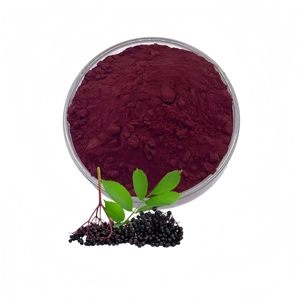
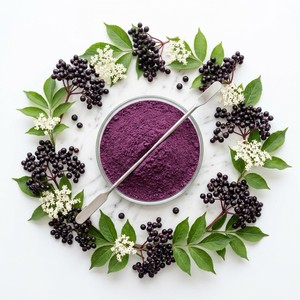
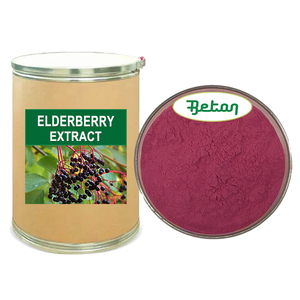
The botanical authenticity and pharmacological efficacy of Sambucus nigra (European Black Elderberry) depend strictly on preserving native anthocyanin profiles: cyanidin-3-glucoside and cyanidin-3-sambubioside. In commercial contract manufacturing, adulteration with lower-grade amaranth dyes, black rice concentrates, or mulberry extracts represents a significant supply chain vulnerability. Our precision OEM processing infrastructure integrates High-Performance Liquid Chromatography (HPLC-DAD) alongside pH differential spectrometry, ensuring that every batch meets monograph standards (USP, Ph. Eur.) with complete botanical fidelity.
Through closed-loop low-temperature hydro-ethanolic extraction, volatile bioflavonoids (including quercetin, rutin, and isoquercitrin) remain un-degraded. The absence of toxic synthetic carriers ensures superior biological absorption and compatibility across high-shear clean-label production lines, such as pectin-based gummies, effervescent immune tablets, and functional stick-packs.
| Analytical Parameter | USP / European Pharmacopoeia Benchmark | SV Botanica Manufacturing Standard | Testing Methodology |
|---|---|---|---|
| Botanical Identity | Conforms to Sambucus nigra L. | 100% Authentic Sambucus nigra L. Fruit | HPTLC Fingerprinting / DNA Barcoding |
| Anthocyanin Assay | Declared Claim ± 5% | Custom 1.0% to 25.0% w/w Standardised | HPLC-UV / pH Differential Method |
| Extraction Solvent | Ethanol & Water mixtures only | Class 3 Food-Grade Hydro-Ethanolic only | GC-MS Residual Solvent Screening |
| Ethylene Oxide (ETO) | < 0.05 mg/kg (EU 2019/1793) | Not Detected (LOD < 0.01 mg/kg) | GC-MS/MS Accredited Screen |
| Heavy Metals | Pb ≤ 3ppm, As ≤ 1ppm, Cd ≤ 1ppm, Hg ≤ 0.1ppm | ICP-MS Compliant: Pb ≤ 0.5ppm, Cd ≤ 0.2ppm | ICP-MS (Inductively Coupled Plasma) |
| Water Solubility | Not explicitly defined | Instant ≥ 99% Clarified (No Precipitation) | Turbidity Spectrophotometry @ 600nm |
How forward-thinking dietary supplement brands and functional food innovators are hedging raw material supply, standardising assay methods, and navigating shifting regulatory thresholds.
Procurement teams are rapidly deprecating UV-Vis spectrophotometry due to its vulnerability to photometric interference from synthetic colorants. Sourcing contracts now mandate HPLC quantification specific to cyanidin-3-glucoside to prevent economic adulteration and ensure formulation accuracy.
Driven by strict consumer demand for non-GMO, allergen-free ingredients, formulators increasingly reject conventional maltodextrin carriers. Future contracts demand native fruit-derived matrices, spray-dried vacuum extracts, or organic acacia-assisted stabilization.
Consignments entering Europe and North America face intensifying scrutiny regarding pesticide residues under Regulation (EC) No 396/2005 and US FDA FSVP requirements. Fully integrated seed-to-freight documentation is now required to prevent costly border holds.
Adapting elderberry raw materials to specialized processing parameters, shelf-life demands, and sensory expectations.
Standard elderberry extracts contain insoluble particulates that compromise the gel strength of pectin and cause product clouding. Our de-pectinised, highly refined water-soluble grades prevent cross-linking breakdown and eliminate premature syneresis in confectionery production.
Anthocyanins naturally degrade under commercial UHT and HTST pasteurization. By combining standardized polyphenols with controlled pH-stabilizing botanical fractions, we supply formulations engineered to resist thermal degradation and preserve natural deep-purple coloration.
Beyond seasonal immune formulations, elderberry’s high ORAC values make it an active component in ingestible nutricosmetics. Our solvent-free cosmetic grades offer standardized free-radical scavengers to protect dermal matrix proteins from UV-induced oxidation.
Direct-from-manufacturer supply reliability designed for procurement professionals, supply-chain risk managers, and pharmaceutical QA teams.
All processing is executed under strict GMP and ISO certifications, supported by an active FSSAI Central Licence, APEDA export registrations, and USDA Organic, Halal, and Kosher certifications available on review.
Every commercial batch is accompanied by comprehensive CoA documentation detailing stated assay methodologies, ICP-MS heavy metal profiles, full-panel EU pesticide residue screening, and third-party ETO clearance reports.
Direct communication with our analytical and regulatory desk. Validated pre-shipment samples, custom particle size milling (40–120 mesh), and formal pilot specifications are reviewed and dispatched within 24 hours.
Clear answers to address the technical, analytical, and logistics criteria required when qualifying a primary elderberry manufacturer.
UV spectrophotometry measures total absorbance at 520 nm, which counts all polyphenolic structures and synthetic dyes as anthocyanins, yielding artificially high values. HPLC separates and measures specific target anthocyanins (such as cyanidin-3-glucoside) directly. We clearly indicate the testing methodology on every Certificate of Analysis to ensure alignment with your lab's specifications.
Our processing uses strictly controlled thermal pasteurization and sterile low-temperature evaporation without chemical gas fumigation. All consignments destined for the EU, UK, and US are screened via GC-MS/MS down to a limit of detection below 0.01 mg/kg for both ETO and 2-chloroethanol, in compliance with Regulation (EU) 2019/1793.
Standard packaging consists of 25 kg fiber drums with double-lined, heat-sealed food-grade polyethylene bags. For OEM clients, we provide custom formulation options with organic maltodextrin, silica, or 100% pure carrier-free powders, as well as customized palletizing, pre-portioned packaging, and direct private labeling.
Trial pilot orders for standard assays start at 25 kg. For commercial bulk quantities, typical dispatch takes 2 to 3 weeks from receipt of order and confirmation of the pre-shipment sample. Large container shipments are scheduled with forward inventory reservations to safeguard annual batch consistency.
Yes. Our dedicated beverage-grade elderberry extracts undergo filtration and centrifugation to remove native botanical oils and insoluble fibers. This results in instant, 100% cold-water solubility that yields a clear, stable ruby-purple color without sedimentation or turbidity, making it well-suited for stick packs and functional beverages.
We use High-Performance Thin-Layer Chromatography (HPTLC) fingerprinting along with chromatographic profile verification. This identifies and rejects foreign additions such as black rice (Oryza sativa) anthocyanins, morus alba extracts, or artificial food colorings like FD&C Red 40, ensuring 100% pure Sambucus nigra L. raw material.