
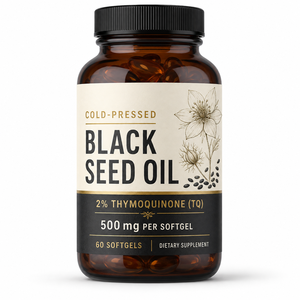
Direct bulk factory supply with custom standardizations, water-soluble microencapsulation, and destination-ready regulatory documentation.
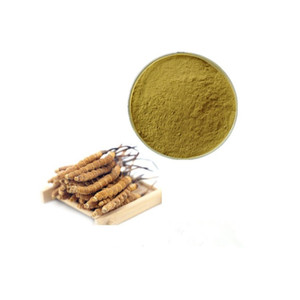
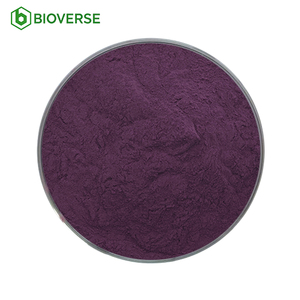
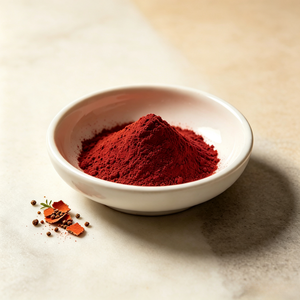
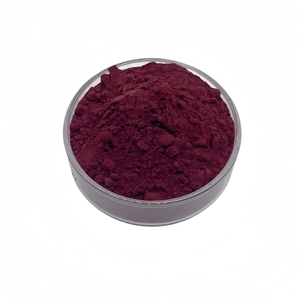
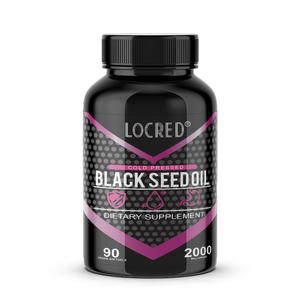
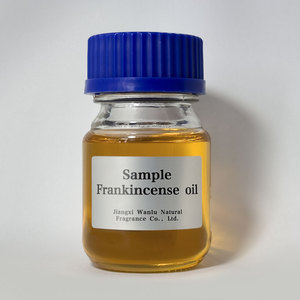
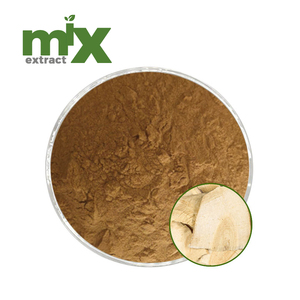
The global transition away from synthetic azo dyes (such as Allura Red AC, Tartrazine, and Sunset Yellow) toward certified botanical colorants represents a major structural shift in modern food science and industrial nutraceutical formulation. As clean-label regulatory policies enforce stringent criteria across the European Union, the United States FDA, and Asia-Pacific markets, commercial manufacturing facilities face the intricate physical chemistry challenges of natural chromophore stability. Plant-derived chromophores—including anthocyanins from Sambucus nigra, curcuminoids from Curcuma longa, and carotenoids from Haematococcus pluvialis—are inherently sensitive to pH fluctuations, oxidative stress, thermal cycling, and photo-degradation.
Our OEM/ODM manufacturing and export consortium resolves these critical processing bottlenecks via advanced membrane filtration, state-of-the-art superheated fluid crystallization, and standardized spray-drying microencapsulation. By leveraging carrier technologies such as non-GMO maltodextrin, gum acacia, and lipid liposomes, our factories ensure that each batch meets tight physical solubility profiles while retaining optical extinction coefficients throughout downstream processing.
A primary failure mode in cross-border botanical procurement is discrepancy in analytical assay methodology. In commercial trade, raw visual inspection or basic spectrophotometric readings (UV-Vis) often report inflated active concentrations due to co-eluting polyphenolic compounds. For instance, testing Curcuminoids via UV at 425 nm consistently reads 2-5% higher than reverse-phase high-performance liquid chromatography (RP-HPLC) coupled with a photodiode array (PDA). Similarly, evaluating Elderberry anthocyanins as cyanidin-3-glucoside equivalents requires rigid pH differential testing (AOAC Method 2005.02) to decouple degraded polymeric pigments from monomeric active anthocyanins.
| Target Pigment / Active | Botanical Source | Primary Assay Method | Chromophore Class | Solubility & Processing Stability |
|---|---|---|---|---|
| Anthocyanins (5%-25%) | Sambucus nigra (Elderberry) | pH Differential / HPLC-PDA | Flavonoid (Polyphenolic) | Water-soluble; optimal red/violet hue at pH 2.5–4.0; heat sensitive above 85°C. |
| Astaxanthin (5%-10%) | Haematococcus pluvialis | HPLC (Saponified / Free) | Xanthophyll Carotenoid | Lipophilic; microencapsulated powder for beverage emulsion; oxidation sensitive. |
| Curcuminoids (95%) | Curcuma longa | USP / RP-HPLC (3-Peaks) | Diarylheptanoid | Lipophilic/Solvent-soluble; cold-water dispersible (CWD) grades engineered via surfactant matrix. |
| Polysaccharides (30%-50%) | Cordyceps sinensis / Militaris | Phenol-Sulfuric UV Method | Bioactive Glucans | Highly hydrophilic; stable across broad pH; excellent thermal tolerance. |
| Thymoquinone (0.5%-5%) | Nigella sativa (Black Seed) | GC-MS / HPLC-UV | Monoterpene Quinone | Non-polar lipid matrix; softgel encapsulated; requires low-temperature processing. |
Procurement directors and formulation scientists navigating the 2026–2030 regulatory horizon are adopting sophisticated risk-mitigation strategies. The global marketplace is moving rapidly beyond transactional ingredient purchasing to audited, vertically integrated OEM/ODM supply chains. Three core trends dominate this evolution:
Synthetic aluminum lakes are facing regulatory phase-outs across international packaging and confectionary formulations. The technical replacement of bright blues, vivid reds, and sunny yellows requires precision-stabilized colorants. The demand for standardized elderberry anthocyanins, spirulina-derived phycocyanins, and microfine turmeric dispersions has grown exponentially. Processors are requiring natural colors to withstand retort sterilization, extrusion shear forces, and long-shelf-life acid drinks without sedimentation.
Following extensive recalls across Europe associated with cross-border agricultural logistics, the detection of ethylene oxide residues down to limits of quantification (LOQ < 0.05 mg/kg or < 0.02 mg/kg per component) is now standard for entry into the EU and US markets. Factory-level processing facilities must utilize validated heat sterilization, steam decontamination, or precision ozonation instead of chemical sterilants to safeguard regulatory compliance.
Natural colors are inherently vulnerable to ambient light, oxygen, and acidic medium shifting. State-of-the-art ODM manufacturing incorporates spray dry-agglomeration, utilizing prebiotic fiber carriers or lipid nanocarriers that protect the conjugated double bonds of carotenoids and the flavylium cation of anthocyanins. This guarantees zero color migration in multi-layer gummies, dairy matrices, and functional sparkling liquids.
Direct-from-factory processing networks certified under global quality architectures, delivering end-to-end transparency from agricultural raw lot to customs freight release.
Processing infrastructure audited according to cGMP, ISO 22000, and FSSAI Central Licensing, with USDA Organic, Halal, and Kosher supply chains certified batch-by-batch.
Immediate access to regulatory specialists and application chemists. Full Technical Data Sheets (TDS), representative batch CoAs, and regulatory dossiers dispatched within 24 hours.
Third-party ISO/IEC 17025 accredited laboratory test results for ethylene oxide, pesticide residues per Regulation (EC) No 396/2005, and heavy metals tested via ICP-MS prior to port release.
Full documentation package designed for US FDA Foreign Supplier Verification Programs (FSVP), providing phytosanitary certificates, Certificates of Origin, and complete non-GMO declarations.
Comprehensive turnkey processing capability from raw botanical active extraction to finished packaging formats: bulk drums, micro-ground powders, vacuum seals, and finished private-label softgels.
Every commercial batch is paired with pre-shipment pilot samples alongside our analytical Certificate of Analysis, allowing in-house QC confirmation before vessel loading.
Essential guidance for quality assurance managers, contract manufacturers, and procurement teams sourcing natural colors and botanical raw materials.
Anthocyanin stability is highly pH-dependent; the molecule exhibits an intense red oxonium/flavylium form under acidic conditions (pH 2.0–3.8) and transitions toward an unstable violet-blue pseudobase at elevated pH. We supply buffered, carrier-stabilized, or microencapsulated grades calibrated specifically for your final matrix (e.g., confectionery, acidified beverage, or dry bakery blend) to maintain target optical density.
Consignments destined for the European Union include an officially authenticated Certificate of Analysis, an EU-MRL pesticide residue report covering 400+ compounds tested via LC-MS/MS and GC-MS/MS, a dedicated Ethylene Oxide (ETO & 2-chloroethanol) screen below detection limits, phytosanitary clearance, and standardized batch traceability documentation.
Our standard starting MOQ for stocked catalog botanical extracts and standard natural pigments is 25 kg packed in double food-grade polyethylene-lined fibre drums. For custom spray-drying runs, bespoke mesh granulations (e.g., 80 to 200 mesh), or specific solvent carrier ratios, the typical production batch threshold starts at 100 kg to 500 kg depending on product chemistry.
We utilize Inductively Coupled Plasma Mass Spectrometry (ICP-MS) calibrated against international pharmacopoeial limits (USP <232> / <233> and Regulation (EU) 2023/915). Each batch is quantitatively reported for lead (Pb), arsenic (As), cadmium (Cd), and mercury (Hg) at parts-per-billion sensitivity.
Yes. As a verified global manufacturer and exporter, our regulatory quality affairs team provides full FSVP-compliant dossiers directly to US Importers of Record, including facility hazard analysis, preventive control protocols, cGMP compliance certificates, and water quality testing records.
Standard warehouse catalog extracts and oils typically dispatch within 10 to 14 business days following sample validation and order sign-off. Custom synthesis, specialized extraction runs, or OEM private-label softgel encapsulation cycles generally require 3 to 4 weeks production lead time plus transit.
Connect directly with our applications laboratory and export desk. Request comprehensive regulatory documentation, full analytical Certificates of Analysis, or bench trial pre-shipment samples.