Verified botanical identity, validated chromatographic assays (HPLC/UV/GC-MS), and pre-tested adherence to strict European (EC 396/2005) and North American (USP/AHPA) residue thresholds.
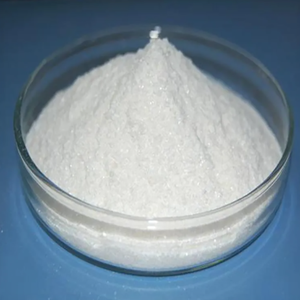
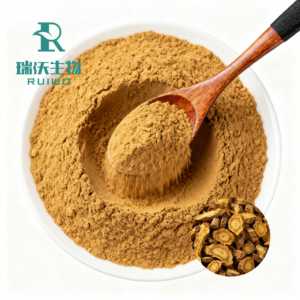
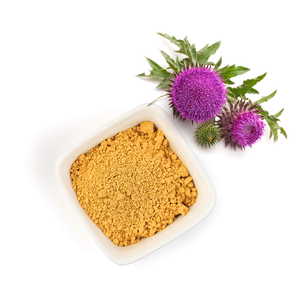
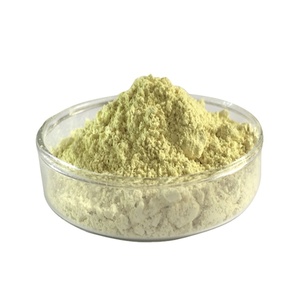
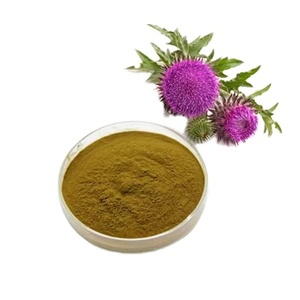
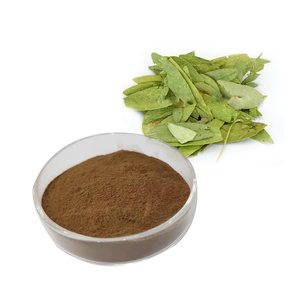
As international regulatory frameworks under the European Medicines Agency (EMA), United States Pharmacopeia (USP), and FDA 21 CFR Part 111 evolve toward strict risk containment, sourcing bulk phytochemicals requires verifiable engineering capability. Ruiwo Phytochem and SV Botanica operate a multi-echelon extraction infrastructure bridging certified Good Agricultural and Collection Practices (GACP) with pharmaceutical-grade cGMP cleanroom facilities.
Our extraction operations feature industrial-scale continuous countercurrent extraction lines, supercritical fluid CO2 separators, column chromatography fractionation systems, and low-temperature vacuum freeze dryers. This protects thermolabile active constituents—such as baicalin flavones, silymarin flavonolignans, and withanolide lactones—against thermal decomposition, oxidation, and molecular cleavage.
Single-component pure isolates, standardized botanical complexes, and custom ratio botanicals.
Every commercial shipment includes certified chemical, heavy metal, and micro testing data.
Immediate dispatch of regulatory dossier, batch-specific HPLC overlays, and MSDS documentation.
Seamless scaling from pilot validation batches to multi-ton FCL maritime containers.
Processing lines operate under certified cGMP, ISO 22000, HACCP, FSSAI Central Authority licensure, Kosher, and Halal oversight. Continuous environmental air filtration (Class D cleanrooms) and automated CIP sanitization eliminate cross-contamination between differing botanical matrices.
Our analytical QA/QC departments utilize Agilent High-Performance Liquid Chromatography (HPLC) with photodiode array and refractive index detection, tandem mass spectrometry (LC-MS/MS), gas chromatography (GC-MS), and inductively coupled plasma mass spectrometry (ICP-MS).
We eliminate port rejections and customs impounds by providing complete regulatory compliance portfolios ahead of cargo departure. Every consignment matches destination-specific compliance criteria for the US FDA Foreign Supplier Verification Program (FSVP) and European Commission entry controls.
A prevalent challenge in global botanical procurement is the analytical discrepancy between spectrophotometric (UV-Vis) absorption testing and baseline-resolved High-Performance Liquid Chromatography (HPLC). Non-specific UV-Vis assays frequently yield inflated active marker percentages due to co-extracted secondary chromophores, plant polyphenols, and pigments absorbing at identical ultraviolet wavelengths. This critical technical divergence regularly causes customs rejections, third-party audit failures, and product batch recalls for western nutraceutical brands.
The engineering matrix below outlines our stated assay methodologies, distinguishing non-specific legacy standards from chromatographic separation methods:
| Phytochemical Active | Target Marker | Standard Non-Specific Assay | Monographed Chromatographic Assay | Analytical Vulnerability Prevented |
|---|---|---|---|---|
| Milk Thistle Extract | Silymarin / Silybin (A+B) | UV-Vis ~80% (Broad Absorbance) | HPLC (Ph. Eur. / USP) ~50-65% | Eliminates non-specific polyphenol false inflation; quantifies isomer balance. |
| Scutellaria Baicalensis | Baicalin | Spectrophotometric >90% | HPLC-DAD 278nm ≥99.0% | Separates baicalein and wogonin aglycones from target glycoside compound. |
| Turmeric Extract | Curcuminoids Triad | Total UV Extinction 95% | HPLC USP Method ≥95% | Quantifies ratio of Curcumin, Demethoxycurcumin & Bisdemethoxycurcumin. |
| Senna Leaf Extract | Sennosides A & B | Colorimetric Titration 20% | Reverse Phase HPLC ≥10%-20% | Prevents interference from oxidized anthrone derivatives and rhein. |
| Luteolin Powder | Luteolin Aglycone | UV-Spectroscopy ~98% | HPLC-ECD ≥98.0% (Isocratic) | Eliminates co-eluting apigenin and chrysoeriol flavonoids in CAS 491-70-3 isolate. |
*Technical Note: Ruiwo Phytochem and SV Botanica state the specific validated chromatographic method, mobile phase gradient, column chemistry, and reference standard CAS on every Certificate of Analysis to guarantee exact laboratory reproducibility upon importer receipt.
As consumer discernment grows and global health authorities refine active ingredient surveillance, industrial ingredient procurement is shifting from spot-market trading to long-term contracted technical partnerships. Formulators and procurement executives must navigate five dominant technological vectors shaping raw material specifications across the next five years:
The enforcement of European Regulation (EU) 2023/915 regarding pyrrolizidine alkaloids (PAs), troparia alkaloids, polycyclic aromatic hydrocarbons (PAH4), and heavy metals is compelling manufacturers to maintain supply chains with closed cultivation belts, automated mechanical weed separation, and routine sub-ppb mass spectrometry audits.
Class 1 and Class 2 organic solvents (such as hexane, chloroform, and ethylene dichloride) are being phased out in favor of GRAS clean-label alternatives. Supercritical CO2, hydro-ethanolic gradients, and solvent-free subcritical aqueous systems prevent chemical residue adulteration and align with consumer demand for ultra-clean formulations.
Hydrophobic phytochemicals (such as silymarin, baicalin, and luteolin) suffer from poor natural water solubility and oral bioavailability. Contract manufacturers are increasingly sourcing customized liposomal preparations, self-emulsifying drug delivery systems (SEDDS), and micronized dispersions to maximize pharmacokinetic bioavailability without increasing pill volume.
High-performance thin-layer chromatography (HPTLC) fingerprinting coupled with genomic DNA meta-barcoding has become essential to eliminate species substitution (e.g., adulteration of Scutellaria baicalensis with Scutellaria lateriflora or unverified Coptis variants). Stable Isotope Ratio Mass Spectrometry (IRMS) ensures the raw material has not been augmented with fossil-fuel-derived synthetic chemical analogs.
Raw active extracts frequently present erratic powder bulk density, hygroscopic clumping, and sub-optimal flow characteristics that impede high-speed encapsulation machinery. Sourcing contracts now routinely integrate OEM particle engineering: high-shear fluid-bed agglomeration, roller compaction, micro-encapsulation, and DC-grade spray granulation tailored to client tooling specifications.
Precision botanical engineering demands rigorous process control across every formulation stage. Our global contract manufacturing protocol operates under a closed-loop quality system that provides complete regulatory confidence:
Client defines target active percentages, plant part monographs, particle mesh sizes, excipient thresholds, and regional regulatory jurisdictions (EU, US FDA, TGA, Health Canada).
Preparation of 500g–2kg pilot validation lot with full chromatographic characterization, reference HPLC chromatograms, bulk density analysis, and accelerated stability projections.
Commercial-scale extraction under In-Process Controls (IPC). Real-time monitoring of solvent reflux temperature, vacuum evaporation velocity, and spray drying thermal profiles.
Final release testing by accredited third-party laboratories (Eurofins, SGS), issuance of batch-specific CoA, multi-barrier vapor seal packaging, and dispatch under temperature-logged freight.
Answers to complex regulatory, analytical, and supply questions frequently raised by inbound quality auditors, procurement directors, and formulation scientists:
We do not employ Ethylene Oxide sterilization at any stage of manufacturing. Our microbial decontamination utilizes high-pressure saturated steam treatment and validated low-temperature gamma or e-beam protocols upon request. Every export lot destined for the EU is validated via GC-MS/MS through accredited third-party laboratories to confirm Ethylene Oxide and 2-chloroethanol levels reside strictly beneath the limit of quantification (LOQ < 0.05 mg/kg), complying with Regulation (EU) 2019/1793.
Ultraviolet-visible (UV-Vis) spectroscopy measures total light absorbance at a designated wavelength, capturing the target molecule alongside structurally similar polyphenols, tannins, and non-target degradation products. High-Performance Liquid Chromatography (HPLC) separates chemical species within a dedicated C18/C8 stationary phase column before quantification against pure reference standards. A 80% UV Silymarin extract typically reads 50%–65% when tested by Ph. Eur. or USP HPLC methods. We provide clear data for both methodologies to prevent commercial discrepancies.
For catalog standardized raw materials (e.g., 99% Baicalin, 80% Silymarin, 98% Luteolin), commercial MOQ begins at 25 kg in heavy-duty fiber drums with dual pharmaceutical-grade polyethylene liners. For customized pilot botanical extractions involving bespoke solvents, specific botanical cultivars, or specialized mesh milling (e.g., D90 < 20 microns), the typical pilot production run starts at 100 kg to ensure proper system equilibrium.
Root and rhizome botanicals naturally bioaccumulate soil elements. We mitigate this through pre-harvest soil testing across our contracted farm cooperatives, specialized physical washing techniques, and ion-exchange membrane chromatography during aqueous purification. Every release lot is evaluated via Inductively Coupled Plasma Mass Spectrometry (ICP-MS) against rigorous limits: Lead (Pb) < 0.5 ppm, Arsenic (As) < 0.5 ppm, Cadmium (Cd) < 0.2 ppm, and Mercury (Hg) < 0.1 ppm, conforming with California Proposition 65 and USP <2232> guidelines.
Yes. Standard commercial extracts often rely on 10%–30% maltodextrin as a spray-drying carrier to prevent stickiness. For clients manufacturing clean-label, keto, or organic-compliant dietary supplements, we offer carrier-free high-vacuum drying, as well as alternative functional carriers such as certified organic acacia fiber, Jerusalem artichoke inulin, or non-GMO tapioca dextrin upon specification.
Every shipment is dispatched with an export portfolio: Batch-Specific Certificate of Analysis (CoA) referencing official pharmacopoeias, Safety Data Sheet (SDS/MSDS according to GHS), Technical Data Sheet (TDS), Flow Chart of Manufacturing, BSE/TSE-Free Statement, Allergen Declaration (EU 1169/2011), Non-GMO Statement, Certificate of Origin, and destination Phytosanitary Inspection Certificates.
Our regulatory department generates stability files in accordance with ICH Q1A(R2) harmonized guidelines. We run both Real-Time Stability Testing (25°C ± 2°C / 60% RH ± 5% RH) and Accelerated Stability Testing (40°C ± 2°C / 75% RH ± 5% RH) over 6, 12, 24, and 36-month intervals. The stability data dossier documents active marker retention, degradation kinetics, moisture pickup, and microbial count over time.
To prevent economic adulteration—such as spiking low-grade extracts with unlisted synthetic chemicals or cheaper botanical surrogates—we deploy High-Performance Thin-Layer Chromatography (HPTLC) fingerprint comparison against authenticated voucher specimens. For critical high-value molecules, Carbon-14 (14C) radiocarbon dating verifies natural biosynthesized origin versus petrochemical synthesis.
Stock inventory materials are dispatched within 3–5 business days following QA release review. Custom contract production campaigns generally require 2 to 3 weeks for synthesis, milling, release quarantine, and third-party laboratory panel completion. In-transit delivery averages 3–7 business days via international air express/cargo (DHL, FedEx, direct airline freight) and 18–35 calendar days for ocean container consignments (FCL/LCL).
We supply complimentary 50g–100g pre-shipment samples for qualifying industrial accounts. Each sample vial is drawn directly from the intended production lot and accompanied by its actual batch Certificate of Analysis, allowing incoming QC and R&D analytical teams to perform full method cross-validation before issuing final purchase approvals.
