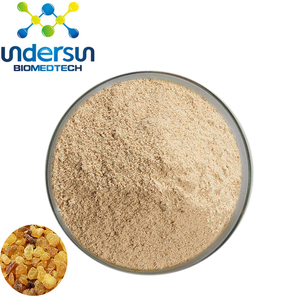
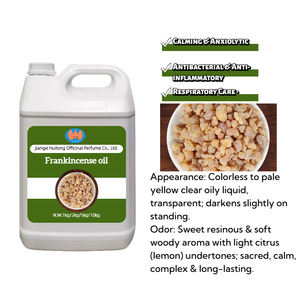
Formulators and procurement managers targeting immune, adaptogenic, and topical applications combine Echinacea Purpurea with these verified, batch-tested extracts and bioactive oils.
The botanical extraction sector for Echinacea purpurea (L.) Moench has transitioned from basic agricultural crude pulverization to an exact science governed by high-performance liquid chromatography (HPLC) fingerprints and standardized bioactive yields. Global nutraceutical, cosmetic, and phytomedicinal procurement agents evaluating the top 10 factory candidates must look beyond nominal pricing sheets and audit the rigorous physical-chemical controls that determine true active retention, solvent safety, and raw material authenticity.
In an international market where immune-support supplements face heightened scrutiny from the United States Food and Drug Administration (21 CFR Part 111 cGMP) and the European Food Safety Authority (EFSA), selecting a manufacturing partner requires an understanding of the botanical parts utilized. Top-tier industrial extractors differentiate between aerial herb extracts (rich in chicoric acid, caftaric acid, and total phenolic acids) and root extracts (concentrated in immunomodulatory alkylamides, notably dodeca-2E,4E,8Z,10E/Z-tetraenoic acid isobutylamides, alongside distinct polysaccharides).
| Evaluation Parameter | Tier-1 Certified Factory Standard | Commodity Extract Processor | Procurement Risk Mitigation |
|---|---|---|---|
| Botanical Identity & Integrity | HPTLC profile matching USP/Ph. Eur. + Genomic DNA barcoding | Macroscopic or non-specific UV absorption only | Prevents cross-contamination with E. pallida or Parthenium hysterophorus |
| Target Bioactive Assay | HPLC validated for Chicoric Acid (2%–4%) & Alkylamides | Non-specific UV-Vis spectrophotometry (Total Polyphenols) | Eliminates inflated values caused by non-active background phenols |
| Drying Kinetics | Low-temperature vacuum belt or closed-loop spray drying (<50°C) | High-temperature open rotary kiln drying | Prevents enzymatic oxidation by polyphenol oxidase (PPO) |
| Ethylene Oxide (ETO) | Strict non-ETO, gamma-free; validated steam/microbial controls | ETO or chemical fumigation applied for micro reduction | Ensures zero-tolerance clearance under EU Regulation 2019/1793 |
| Heavy Metals Trace Level | ICP-MS tested: Pb < 0.5 ppm, Cd < 0.2 ppm, As < 0.5 ppm, Hg < 0.1 ppm | Colorimetric limit test (heavy metals as Pb < 20 ppm) | Meets strict California Proposition 65 and EU 2023/915 standards |
Industrial extraction facilities leading global exports must maintain end-to-end provenance. From seed strain selection and harvest timing (optimally targeted at the flowering stage when chicoric acid concentrations peak in the petals and upper leaf canopy) through to solvent distillation, the entire chain determines the extract's functional biological activity.
The bio-efficacy of Echinacea purpurea is not attributable to a single isolate but rather to the synergism among three primary phytochemical classes: caffeic acid derivatives (chicoric acid, caftaric acid, chlorogenic acid), lipophilic alkylamides, and high-molecular-weight polysaccharides (arabinogalactans). A premier factory must have dedicated analytical suites to measure and preserve each fraction.
Chicoric acid is prone to rapid enzymatic hydrolysis by endogenous polyphenol oxidases upon plant cellular rupture. Advanced factories employ rapid thermal pre-treatment or instantaneous hydro-ethanolic flash-blanching to denature degrading enzymes prior to primary extraction.
Alkylamides represent the lipophilic compound group responsible for the distinct tingling sensation on the tongue. They exhibit high systemic bioavailability and interact directly with human cannabinoid type-2 (CB2) receptors, modulating immune responses via macrophage nitric oxide signaling.
A recurring compliance trap for overseas importers is purchasing 4% Total Polyphenols assayed via UV-Vis, only to find the material delivers less than 1.5% chicoric acid when tested via HPLC at destination. Top facilities mandate validated reversed-phase HPLC testing to guarantee authentic compound fractions.
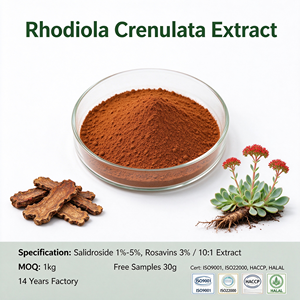
When formulating combination products (such as combining Echinacea with Boswellia Serrata Extract for inflammatory cascade support or Rhodiola Rosea Root Extract for cellular homeostasis), ensuring consistent marker assays allows formulators to substantiate label claims under strict international advertising and health claim frameworks.
As regulatory environments tighten worldwide, botanical supply chains are undergoing structural transformations. Sourcing directors at major nutraceutical, functional food, and cosmetic enterprises must navigate several strategic shifts over the coming five years:
European border authorities routinely reject botanical lots containing traces of persistent agricultural pesticides. The market demands multi-residue gas and liquid chromatography panels covering 500+ chemical compounds down to 0.01 mg/kg quantification limits.
EU and UK regulations maintain near-zero tolerance for ETO contamination (sum of ETO and 2-chloroethanol below 0.05 mg/kg or limit of quantification). Importers now require accredited third-party GC-MS testing reports prior to container loading at departure ports.
Traditional spray-drying maltodextrin carriers (derived from GM corn or non-organic wheat) are being phased out. Enterprise buyers require carrier-free native extracts or non-allergenic organic acacia gum and natural pea starch matrix technologies.
Adulteration with inferior species or exhausted root materials is countered by molecular barcoding. Verifying the internal transcribed spacer (ITS) genomic region ensures that only authentic Echinacea purpurea enters the extraction battery.
Hexane and synthetic halogenated extraction solvents are being eliminated. Leading factories operate certified USP-grade grain ethanol or supercritical CO2 fluid extraction circuits that recover 99% of solvent volumes with zero environmental effluent hazard.
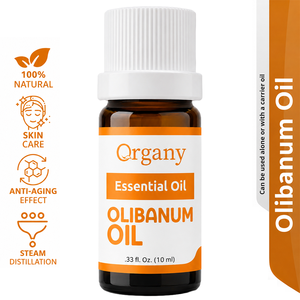
Procurement teams are cutting supply chain fragmentation by sourcing their herbal powders, essential oils (such as Pure Frankincense Essential Oil), and specialty isolates (such as Dihydroberberine) from single multi-certified manufacturing partners.
Operating from Maharashtra, India, SV Botanica stands as a premier B2B manufacturer and exporter of 150+ standardized herbal extracts, cold-pressed oils, spice oleoresins, and nutraceutical raw materials. Built explicitly to withstand foreign supplier qualification audits from North America, Europe, and Asia-Pacific, our facility infrastructure integrates advanced chemical engineering with complete regulatory transparency.
Operating under cGMP and ISO management standards. Validated registrations including Indian Directorate General of Foreign Trade (IEC: ABUCS7891K), FSSAI Central Export Licence (11526999001161), and APEDA documentation.
Every single batch undergoes rigorous analytical release using High-Performance Liquid Chromatography (HPLC), Gas Chromatography-Mass Spectrometry (GC-MS), and Inductively Coupled Plasma Mass Spectrometry (ICP-MS) for heavy metal profiling.
We supply full Technical Data Sheets (TDS), Safety Data Sheets (SDS), Certificates of Analysis with explicit analytical methods, phytosanitary certifications, allergen declarations, and non-GMO statements for customs clearance.
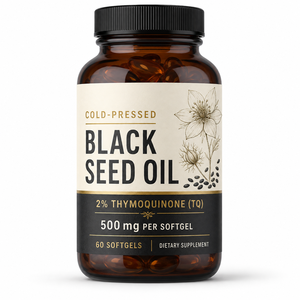
Whether your enterprise requires bulk pallet-scale shipments of standardized Echinacea Purpurea 4% Polyphenols, customized Boswellia Serrata 65%–90%, or finished contract formulations like OEM Black Seed Oil Softgels, our team provides pre-shipment validation samples and guaranteed batch-to-batch analytical reproducibility.
Straight answers to the common technical questions raised by quality assurance auditors, formulation scientists, and international supply chain executives.
UV spectrophotometry measures total absorption at a specific wavelength (typically around 330 nm) and calculates results against a caffeic acid or chlorogenic acid reference curve. Non-target phenolics and background compounds can elevate these results. HPLC physically separates compounds across a chromatography column, quantifying discrete chicoric acid, caftaric acid, and echinacoside peaks. We provide HPLC-verified CoAs to ensure accurate formulation calculations.
Chicoric acid degrades under exposure to ambient moisture, heat, and oxygen. Our finished extract is spray-dried with controlled outlet temperatures (<70°C), vacuum-sealed in double-layer food-grade polyethylene liners enclosed within food-grade tamper-evident fiber drums, and stocked in climate-regulated storage below 20°C with relative humidity below 45%.
Under the Foreign Supplier Verification Program (FSVP), US importers must verify hazard analyses and controls. We supply complete facility flow diagrams, microbiological kill-step validations, third-party heavy metal and pesticide residue panels, allergen matrices, and current facility cGMP compliance certificates.
Yes. Many global supplement brands prohibit gamma irradiation. We utilize clean closed-circuit continuous extraction, filtered water supplies, hygienic clean-in-place (CIP) spray drying systems, and temperature-controlled processing. This maintains Total Aerobic Microbial Count (TAMC) < 1,000 CFU/g and Total Yeast & Mould (TYMC) < 100 CFU/g with zero synthetic irradiation.
Standard packaging for extract powders is 25 kg net weight fiber drums with inner heat-sealed food-grade polyethylene bags. For liquid and carrier oils, packaging ranges from 25 kg fluorinated HDPE containers to 180 kg epoxy-lined steel drums. Starting MOQs typically begin at 25 kg for catalog botanical extracts, scaling to multi-ton container loads.
Yes. Prior to order sign-off, we dispatch 50g–100g representative evaluation samples drawn directly from the production lot, accompanied by the comprehensive batch CoA, heavy metal scan, and technical specifications sheet for in-house laboratory verification.
Request standardized Certificates of Analysis, reserve production batch capacity, or receive tailored technical dossiers for our Echinacea Purpurea, Boswellia, Rhodiola, and pure botanical oils. All technical inquiries are addressed within 24 hours by experienced QA and sourcing specialists.
Send an Inquiry