
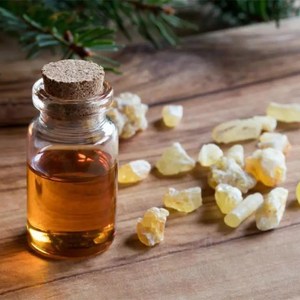
Therapeutic, cosmetic, and oral care grades processed under verified cGMP manufacturing protocols with dual GC-MS/HPLC lot release documentation.
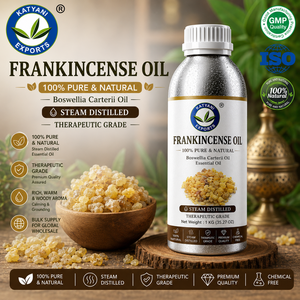
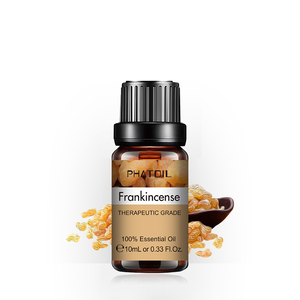
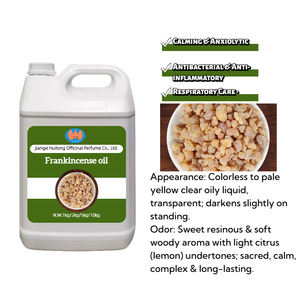
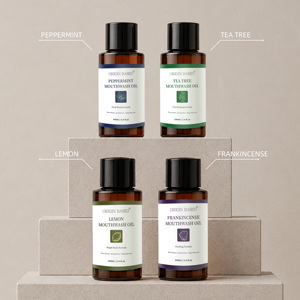
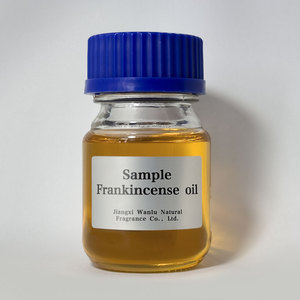

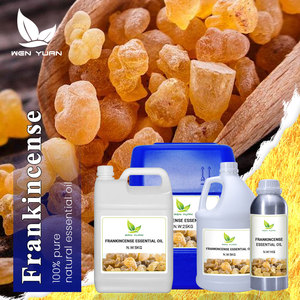
Procuring commercial-scale frankincense oil (Oleum Olibani) across North American and European supply chains has evolved beyond standard pricing inquiries. Today's regulatory compliance landscape under the European Chemicals Agency (ECHA), US FDA FSMA (Foreign Supplier Verification Program), and stringent EU Maximum Residue Limits (Regulation EC No 396/2005) requires wholesale procurement officers to audit botanical chemotypes, extraction vessel engineering, and supply-chain traceability at origin.
The global Frankincense distillation sector is divided between primary origin harvest zones (the Horn of Africa, the Arabian Peninsula, and Central/Western India) and advanced secondary industrial refining facilities in Europe and North America. Below is an engineering and supply audit of the global market leaders providing unadulterated Boswellia distillates.
HQ: Nashik, India
Core Chemotypes: B. serrata, B. carterii
Strengths: Complete vertical farm extraction, ICP-MS trace metal clearance, FSSAI Central License, GMP-certified facility, native pesticide screening.
HQ: Hargeisa, Somaliland
Core Chemotypes: B. carterii, B. frereana
Strengths: Direct wildcraft concession management, FairWild certified harvesting cooperatives, artisan multi-chamber low-pressure steam units.
HQ: Salalah, Oman
Core Chemotypes: B. sacra (Hojari)
Strengths: Ultra-premium cosmetic and luxury perfume fractions; high alpha-pinene and cis-verbenol profiles; strict royal tree export quotas.
HQ: Le Sen, France
Core Chemotypes: Multi-Boswellia Origins
Strengths: Advanced European rectification, molecular distillation, REACH dossier holder, IFRA analytical validation for luxury cosmetics.
HQ: Grasse, France
Core Chemotypes: B. carterii, B. serrata
Strengths: High-vacuum fractional distillation, extraction of specialized organic resins, world-renowned olfactive profiling for perfumery.
HQ: Utah, USA / Direct Distilleries
Core Chemotypes: 4-Species Proprietary Blends
Strengths: High-volume commercial consumer retail standardization, deep field auditing, continuous GC-MS multi-tier batch release.
HQ: Vallauris, France
Core Chemotypes: Certified Organic Carterii
Strengths: 100% pure & natural certification, ISO 9235 compliance, integrated supply chains in East Africa, specialized aromatherapeutic oils.
HQ: California, USA
Core Chemotypes: B. carterii, B. frereana
Strengths: Small-batch technical validation, third-party chirally tested lots, educational traceability, transparent micro-distillery networks.
HQ: Kerala, India
Core Chemotypes: B. serrata Oleoresin & Oil
Strengths: Giant continuous industrial capacity, solvent-free supercritical CO2 extraction systems, deep integration into food flavour standards.
HQ: Salalah, Oman & Split Sites
Core Chemotypes: B. sacra, B. carterii
Strengths: Seed-to-Seal traceability protocols, proprietary long-cycle low-heat distillation vessels, extensive internal testing laboratories.
Procuring frankincense without specifying the exact botanical taxon and marker compound ratio invites systemic quality mismatches in cosmetics, pharmacology, and oral wellness applications.
| Botanical Nomenclature | Primary Industrial Origin | Predominant Volatile Marker Profile | Boswellic Acid Presence in Essential Oil | Best Industrial Application |
|---|---|---|---|---|
| Boswellia carterii | Somaliland, Puntland, Kenya | α-Pinene (35–50%), Limonene (8–18%), Myrcene (4–8%) | None (Non-volatile; remaining in spent marc) | Anti-aging skincare, prestige perfumery, aromatherapeutics |
| Boswellia serrata | Central & Western India | α-Thujene (50–68%), Sabinene (3–7%), α-Pinene (4–10%) | Negligible (<0.05% in steam distilled; present in CO2 Total) | Topical anti-inflammatory, oral rinses, Ayurvedic functional lines |
| Boswellia sacra | Dhofar Governorate, Southern Oman | α-Pinene (60–82%), Limonene (4–9%), Camphene (2–4%) | None in standard steam distillate | Ultra-luxury cosmetics, therapeutic skin regeneration serums |
| Boswellia frereana | Northern Somalia Highlands | α-Phellandrene (25–38%), α-Pinene (10–18%), p-Cymene | None (Lupeol & epilupeol triterpenes in non-distilled resin) | High-end wound care products, fine fragrance fixatives, skin barrier creams |
| Boswellia papyrifera | Ethiopia, Sudan, Eritrea | Octyl acetate (50–70%), Octanol (6–12%), Limonene (3–7%) | None in volatile fractions | Incense manufacture, spiritual diffusion lines, commercial room fresheners |
A frequent error among commercial procurement agents is demanding high percentages of AKBA (3-O-acetyl-11-keto-β-boswellic acid) or total boswellic acids in conventional steam-distilled Frankincense essential oil. Chemically, boswellic acids are heavy pentacyclic triterpenoids with high molecular weights (>450 g/mol). They possess vapor pressures far too low to volatilize across atmospheric or low-pressure steam extraction tubes.
If high concentrations of triterpenic boswellic acids are required in a lipid matrix, the enterprise buyer must specify either: 1) Supercritical Fluid Extraction (SFE-CO2 Total Extract) operated at pressures exceeding 280 bar with ethanol co-solvents, or 2) Standardised Boswellia Serrata Resin Dry Extract (65% Boswellic acids by HPLC/titration) dispersed in pharmaceutical-grade medium-chain triglyceride (MCT) carrier oils. Reviewing incoming Certificates of Analysis (CoAs) showing 60% boswellic acids on steam-distilled essential oil is an immediate red flag indicating fraudulent testing or synthetic spiking.
The raw olibanum supply chain is undergoing profound structural shifts driven by environmental conservation, strict trace-metal standards, and continuous carbon footprint monitoring.
Over-tapping in traditional East African wild populations has increased the mortality rate of wild Boswellia trees. Institutional procurement directors at global cosmetics conglomerates are actively contracting structured agroforestry plantations in Gujarat and Madhya Pradesh (India) to secure sustainable, CITES-compliant harvesting corridors.
Industrial formulators are shifting toward hybrid formulations. Utilizing gentle subcritical CO2 as a primary extraction step preserves fragile monoterpenes (α-thujene, limonene), followed by controlled heat finishing to isolate sesquiterpenic fractions, eliminating charred polycyclic aromatic hydrocarbon (PAH) residues.
Synthetic compounding using petrochemical α-pinene and cheap dipentene cuts has created widespread batch dilution across non-verified suppliers. Advanced international purchasers now mandate enantioselective chiral capillary GC-MS to confirm native botanical enantiomeric ratios ((+)- and (-)-α-pinene).
Precise answers to compliance, shelf-life stabilization, import duties, and testing protocols required by enterprise QA teams.
The primary volatile distinction lies in the monoterpene ratio: Boswellia serrata distillate is characterized by high levels of α-thujene (frequently 50–65%) and relatively low α-pinene (under 10%). In contrast, authentic Boswellia carterii displays a dominance of α-pinene (35–55%), low α-thujene (typically <2%), and significant limonene fractions. A supplier labeling B. carterii with an α-thujene level of 55% is misrepresenting Indian B. serrata as African or Arabian material.
Under Regulation (EC) No 396/2005 and Implementing Regulation (EU) 2019/1793, the European Union enforces a strict maximum residue limit (MRL) of 0.05 mg/kg (or 0.02 mg/kg limit of quantification) for the sum of ethylene oxide and 2-chloroethanol expressed as ethylene oxide. Consignments of Indian and African botanicals are subject to systematic border testing. SV Botanica enforces zero ETO treatments throughout our extraction pipeline, utilizing accredited third-party GC-MS/MS testing on every batch.
Unopened frankincense essential oil holds a validated shelf-life of 36 to 48 months when stored in airtight fluorinated HDPE containers or epoxy-lined aluminum drums between 10°C and 20°C away from UV radiation. The primary risk is the oxidation of monoterpenes (limonene and α-pinene) into skin-sensitizing hydroperoxides. For transatlantic container freight, drums should be nitrogen-blanketed (inert headspace purge) to maintain peroxide values strictly below 10 mmol/L.
Price disparities stem from harvest biomass yield and geopolitical risk factors. Boswellia serrata is native to vast, accessible forest areas across India, benefiting from industrial cGMP infrastructure and stable export logistics (competitive bulk price). Boswellia carterii and B. frereana require hazardous collection in East African mountain regions with fragile transport infrastructure. Boswellia sacra from Oman carries royal protective decree limitations, resulting in raw resin costs 500% to 1200% higher than Indian commercial grades.
To clear US FSVP import checks, an enterprise importer requires: (1) A batch-specific Certificate of Analysis detailing verified chromatographic assays, (2) A full Safety Data Sheet (SDS) aligned with GHS standards, (3) A facility Food Safety Plan including hazard analyses for heavy metals (lead, cadmium, mercury, arsenic), (4) Evidence of manufacturing under current Good Manufacturing Practices (21 CFR Part 111 / 117), and (5) A non-irradiation and non-GMO declaration statement.
Delivering uncompromised botanical integrity from India's agricultural belts to global industrial processing hubs.
Operated under strict cleanroom industrial configurations with FSSAI Central License (11526999001161), APEDA registration, and full compliance for USDA Organic, Halal, and Kosher supply programs.
Every single batch undergoes exhaustive gas chromatography to verify volatile fingerprinting alongside ICP-MS heavy metal panels (Pb < 0.5 ppm, Cd < 0.2 ppm, As < 0.5 ppm, Hg < 0.1 ppm).
Direct supply contracts across Central and Western India eliminate middle-tier broker contamination, guaranteeing transparent harvest tracking, sustainable resin bleeding cycles, and volume stability.
Located in Nashik, Maharashtra, our logistics team executes seamless multi-modal dispatches via Mumbai air and sea ports with technical dossier sign-off provided within 24 hours.
Discuss your formulation parameters, delivery scheduling, and compliance requirements directly with our technical botanical export specialists. We provide verified laboratory dossiers and 100g pre-production evaluation samples for qualified industrial inquiries.