
Engineering Quality Assurance in Commercial Essential Oil Manufacturing
The international trade of pure plant essential oils represents a multi-billion dollar industrial sector transitioning from subjective organoleptic evaluation toward exhaustive molecular chromatography, isotope ratio mass spectrometry (IRMS), and rigid trace-level contaminant governance. Sourcing managers and chemical formulators face substantial liability when navigating asymmetric information, undocumented blending, and adulteration with petrochemical aroma chemicals.
In an international procurement landscape where essential oil volatility, seasonal crop variations, and secondary metabolite fluctuations directly affect finished product efficacy, a Tier-1 manufacturing partner is characterized not merely by agrarian volume, but by its analytical infrastructure and regulatory documentation velocity. SV Botanica and its premier manufacturing ecosystem represent the modern standard of botanical engineering: combining contracted agronomic cultivation across primary bioclimatic zones with state-of-the-art steam distillation, supercritical fluid CO2 fractionation, and cold-press separation facilities operating under strict ISO 9001, ISO 22000, and cGMP mandates.
Defining the "Top 10" Quality Architecture in Botanical Oil Distillation
Industrial procurement teams within the consumer packaged goods (CPG), personal care, cosmeceutical, and pharmaceutical industries evaluate essential oil manufacturing capabilities through a systematic audit of four primary vectors:
1. Botanical Authenticity & Chemotype Fixation
Validation starts at the genomic and taxonomic level. True therapeutic efficacy requires strict verification that Lavandula angustifolia is free of hybrid Lavandula x intermedia (Lavandin) spiking, and that Eucalyptus globulus maintains its native 1,8-cineole isomer distribution without synthetic eucalyptol fortification.
2. Hyphenated Chromatography (GC-MS/FID)
Standard flame ionization detection (FID) is insufficient for high-liability applications. Modern manufacturing requires dual-column gas chromatography combined with quadrupole mass spectrometry to establish exhaustive volatile constituent libraries, determining peak identity, relative percentage, and retention index against verified NIST databases.
3. Chiral Enantiomer Ratio Verification
The ultimate frontier in preventing synthetic dilution: analyzing the chiral distribution of key terpene alcohols. Synthesized (petrochemical) linalool or linalyl acetate presents as a racemic 50:50 mixture of (R)- and (S)-enantiomers, whereas unadulterated botanical essential oils demonstrate distinct, evolutionarily dictated enantiomeric excesses.
Industrial Analytical Benchmark Matrix: Pure Distillates vs. Commercial Dilutions
The table below provides QA/QC directors and technical buyers with the analytical baselines employed in our Nashik and associated processing centers for release-testing commercial batches against common adulterants:
| Essential Oil Monograph | Key Bioactive Marker | Assay Technique | Target Regulatory Threshold | Common Adulteration Vector Screened |
|---|---|---|---|---|
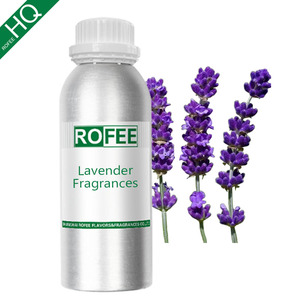
| Lavender (Lavandula angustifolia) |
Linalool (25–38%) Linalyl Acetate (25–45%) |
Chiral GC-MS / GC-FID | ISO 3515 Compliant | Synthetic linalyl acetate, Lavandin oil addition, acetylated terpenes |
| Eucalyptus Globulus (Eucalyptus globulus) |
1,8-Cineole (Eucalyptol) ≥ 70.0% to 85.0% |
GC-MS / Refractive Index | Ph. Eur. / USP Standard | Synthetic cineole fractions, blending with Cinnamomum camphora |
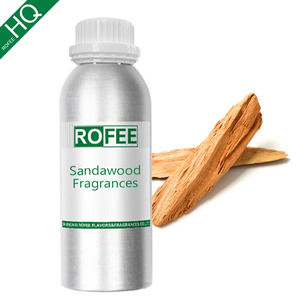
| East Indian Sandalwood (Santalum album) |
α-Santalol (41–55%) β-Santalol (16–24%) |
GC-MS / Carbon-14 Dating | ISO 3518 / CITES App II | Glycol diluents, castor oil, synthetic sandalore, Amyris balsamifera |
| Peppermint (Mentha x piperita) |
Menthol (30–55%) Menthone (14–32%) |
Dual-Column GC-FID | FCC / USP Grade | Cornmint (Mentha arvensis) fractions, synthetic l-menthol crystals |
| Rosemary (Salvia rosmarinus) |
1,8-Cineole / Camphor / α-Pinene | Chemotype GC Fingerprint | ISO 1342 Certified | Spike lavender, eucalyptus fractions, synthetic camphor additions |
Future Procurement Trends in Industrial Essential Oils (2025–2030)
The global essential oil procurement environment is undergoing structural realignment driven by regulatory mandates, climate-induced raw material instability, and decarbonization pressures across global supply networks. Enterprise procurement executives must incorporate four decisive macro trends into their long-term sourcing strategies:
1. Digital Product Passports & Isotopic Tracing
European Union supply-chain transparency regulations and modern ESG accounting demand granular visibility to farm coordinates. Factory partners must establish stable isotope ratio mass spectrometry (IRMS) databases to scientifically authenticate the exact geographical origin of biomass, eliminating transshipment fraud.
2. The 51st IFRA Amendment Compliance Shock
The International Fragrance Association's (IFRA) 51st Amendment has significantly restricted dermal exposure thresholds for phototoxic and sensitizing constituents like bergapten, methyl eugenol, and trans-2-hexenal. Manufacturing factories must possess industrial fractional vacuum distillation columns capable of isolating and stripping target molecules down to parts-per-million (PPM) thresholds without degrading delicate top notes.
3. Closed-Loop Hydro-Distillation & Decarbonization
Energy-intensive steam generation is moving away from fossil fuels. Tier-1 extraction plants are deploying closed-loop biomass briquette boilers, solar thermal arrays, and water-recycling condensing circuits to achieve measurable carbon-offset metrics required by international corporate scopes (Scope 1, 2, and 3 emissions).
Enterprise Manufacturing Capabilities: The SV Botanica Advantage
Backed by registered facilities in Nashik, Maharashtra, and extensive agrarian collection belts across India, SV Botanica bridges the historic gap between localized agricultural production and the rigorous compliance required by North American and European importers. Our manufacturing infrastructure is engineered around verifiable quality systems:
Direct sourcing agreements with farming collectives guarantee pure crop harvests, single-variety botanical species, and farm-to-drum traceability.
Distillation and sterile packaging operate within certified environments adhering to ISO 9001:2015, ISO 22000, FSSAI Central, and APEDA oversight.
Every industrial production lot is assayed via dual GC-MS, GC-FID, and optical rotation analyzers to issue definitive Certificates of Analysis (CoA).
Strict third-party and internal testing panels for organochlorine pesticides (EU MRL compliance), ethylene oxide (ETO), and heavy metals (ICP-MS).
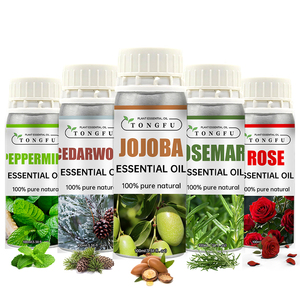
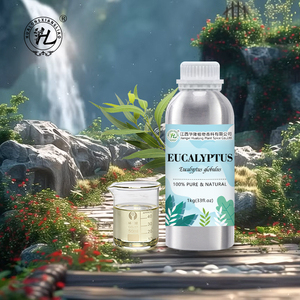
Whether your procurement requirements call for 100 metric tons of bulk steam-distilled eucalyptus oil for commercial disinfectant formulation, therapeutic-grade single-varietal lavender for luxury cosmetics, or completely customized retail-ready private label aromatherapy sets with automated bottling, our factory delivers guaranteed quality, consistent pricing, and full export compliance.
Turnkey Private Label & OEM Contract Manufacturing
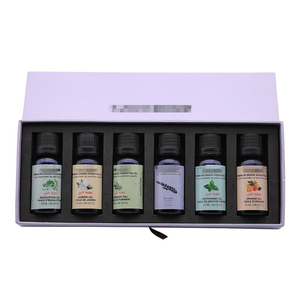
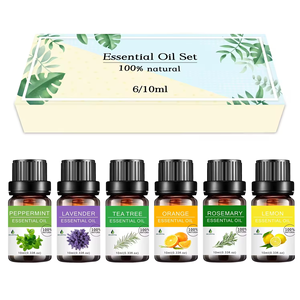
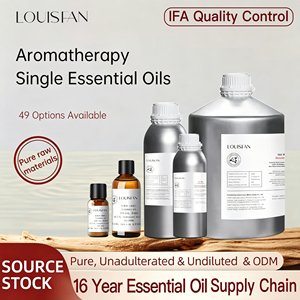
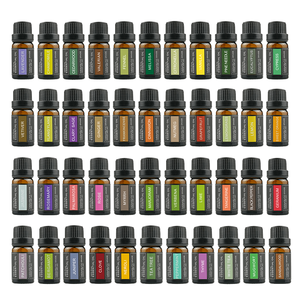
Beyond bulk supply, our factory lines offer complete formulation and secondary packaging flexibility. We manufacture 5ml, 10ml, 15ml, 30ml, and 100ml amber, cobalt blue, and matte black glass dropper bottles equipped with tamper-evident, child-resistant, or euro-dropper pipettes. Automated multi-head filling, nitro-sparging during bottling to arrest oxidation, high-speed rotary labeling, and custom FSC-certified secondary gift box assemblies ensure your retail products arrive shelf-ready for global eCommerce or high-end retail distribution.