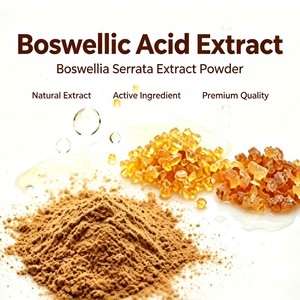
Engineered in cGMP and ISO-accredited facilities from ethically harvested gum oleoresins (Boswellia serrata and Boswellia carterii). Available in vacuum-sealed food-grade fiber drums with complete HPLC/Titration batch assay certifications.
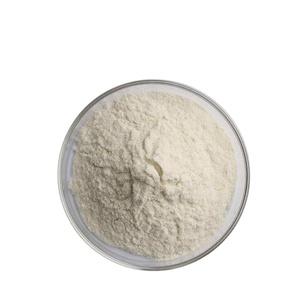
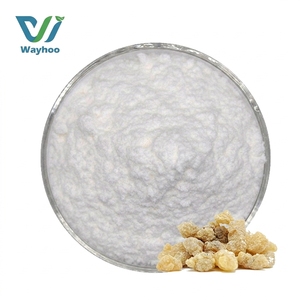
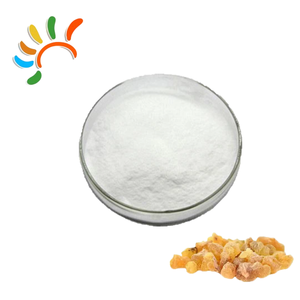
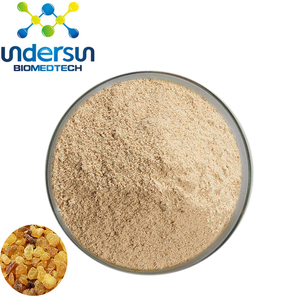
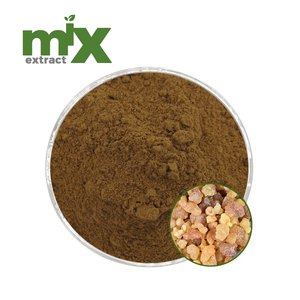
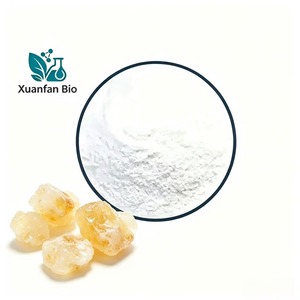
For B2B procurement managers, technical QA directors, and contract manufacturers sourcing Boswellia Extract Powder, understanding analytical methodologies is the single most vital factor preventing commercial and regulatory non-compliance.
The therapeutic and functional bioactivity of Boswellia serrata (Indian Frankincense / Salai Guggul) and Boswellia carterii gum resin is principally attributed to pentacyclic triterpenic acids known collectively as boswellic acids. The complex natural resin matrix contains six major organic acids:
A widespread source of discrepancy in wholesale international commerce arises from contrasting analytical methods. Standard Acid-Base Titration measures total organic acidity, titrating carboxyl groups indiscriminately across both target boswellic acids and non-specific triterpenic resin acids. Consequently, an extract rated at 65% Total Boswellic Acids by Titration typically reveals only 18% to 24% total organic boswellic acids when verified via High-Performance Liquid Chromatography (HPLC).
| Commercial Grade Specification | Assay Methodology | True Active AKBA Content | Pharmacopeia Reference | Target Product Application |
|---|---|---|---|---|
| Boswellia Serrata 65% Titration | Potentiometric Titration | 1.5% – 3.0% (Natural baseline) | Food / Dietary Grade | Mass-market joint health tablets, animal feed |
| Standardised 65% Total Boswellic Acids | HPLC (Sum of 6 Organic Acids) | 5.0% – 8.0% AKBA | USP Monograph / Ph. Eur. | Premium clean-label joint & mobility supplements |
| High-Potency 30% AKBA Powder | Isocratic Reversed-Phase HPLC | ≥ 30.0% pure AKBA | Clinical / Therapeutic Grade | High-potency micro-dose capsules, acute inflammation |
| Water-Soluble Boswellia 10:1 - 50:1 | Spectrophotometric / Gravimetric | Optimised for dynamic dispersion | Cosmetic & Beverage Grade | Ready-to-Drink (RTD) functional beverages, cosmetic serums |
As an export-oriented manufacturer, our facilities provide transparent Certificates of Analysis (CoA) documenting the precise analytical test method employed, standard reference materials, and retention peaks. We eliminate ambiguous labeling so your internal incoming QC teams can replicate our laboratory findings effortlessly.
Integrating primary harvesting networks with automated industrial solvent extraction, our facilities deliver full batch-to-batch consistency and complete chain-of-custody documentation.
Operated in strict conformity with current Good Manufacturing Practices (cGMP), ISO 9001:2015, ISO 22000, and HACCP standards. Halal and Kosher batch certificates available for export shipments.
Trace elemental contaminants (Lead, Arsenic, Cadmium, Mercury) quantified below 10 ppb via Agilent ICP-MS. Residual solvents (ethanol, ethyl acetate) meet USP <467> and EP limits without exception.
Stringent compliance with European Union Implementing Regulation (EU) 2019/1793. Zero Ethylene Oxide (ETO) and 2-Chloroethanol treatment, validated down to < 0.01 mg/kg limit of quantification (LOQ).
Screened against 450+ multi-residue pesticide screens meeting strict EU Maximum Residue Limits (Regulation EC No 396/2005) and US FDA botanical dietary supplement guidelines.
Comprehensive 50g–200g laboratory evaluation samples dispatched within 48 hours accompanied by certified batch CoAs, full Technical Data Sheets (TDS), and safety documentation (SDS).
Vacuum-packed inner double food-grade polyethylene liners protected by robust 25kg tamper-evident fiber drums, engineered specifically to resist oceanic transit moisture and atmospheric degradation.
Procurement of Boswellia serrata is transitioning from simple raw commodity sourcing to IP-driven formulation, specialized bioavailability enhancements, and rigorous supply chain compliance.
Natural boswellic acids, particularly AKBA, possess lipophilic properties resulting in restricted gastrointestinal solubility and absorption. Future procurement demands are increasingly centered around phytosome phospholipid encapsulation, cyclodextrin complexes, and self-emulsifying micro-emulsion delivery systems that elevate human bioavailability by up to 300%–500% over native resin powders.
Brand formulators are steering away from mono-ingredient offerings. Leading clinical formulations pair standardized Boswellia extract with Curcuminoids (95%), Undenatured Type II Collagen (UC-II), and Palmitoylethanolamide (PEA). Boswellia's specific 5-LOX inhibition perfectly complements Curcumin's COX-2 pathway suppression, offering comprehensive joint and inflammatory balance.
Traditional non-derivatized Boswellia resin extracts cause turbidity and bitter precipitation in liquid media. Proprietary water-soluble extract lines (utilizing dynamic carrier-modified hydro-colloidal stabilization) resolve this challenge, allowing clear RTD sports nutrition drinks, effervescent mobility powders, and clean functional stick packs without sediment.
With increasing regulatory focus on wild resource exploitation across arid gathering regions, enterprise buyers require audit-ready chain-of-custody verification. Our ecological tapping schedules prevent bark damage, while batch records document origin, lot harvest dates, and regional sustainability compliance.
Eliminate supply variability through our standardized stage-gate onboarding and qualification procedure.
Submit required botanical species, target marker ratio (Titration vs. HPLC), particle size mesh, and destination country regulatory framework.
Receive lot-specific Certificates of Analysis, method validation files, heavy metal panels, and 100g bench testing material within 48–72 hours.
Validation of third-party lab confirmation (Eurofins, SGS) with full commercial contract terms, freight booking, and lot reservation.
Full batch manufacturing, vacuum packaging, pre-shipment composite inspection, export phytosanitary clearance, and door-to-door transit.
Essential operational, compliance, and formulation answers for procurement specialists and QA professionals.
Our standard Minimum Order Quantity (MOQ) for conventional standardized powders (65% Titration) is 25 kg (one standard fiber drum). For high-concentration active grades such as 30% AKBA by HPLC or customized water-soluble grades, trial MOQs of 1 kg to 5 kg can be accommodated for pilot batch trials.
Titration calculates total acidity by measuring neutralization reactions, detecting all triterpenic and fatty organic acids present in the gum resin. HPLC isolates and precisely measures distinct active target molecules (KBA, AKBA, α-BA, β-BA). Hence, a 65% Titration specification corresponds to approximately 20% total target boswellic acids under HPLC calibration.
We mandate clean drying, vacuum temperature handling, and heat-assisted microbial reduction without the application of gaseous ETO or 2-chloroethanol fumigation. Every batch bound for the EU is certified with a third-party accredited laboratory report documenting non-detectable levels below 0.01 mg/kg limit of detection.
We primarily utilize hydro-ethanolic (water and food-grade ethanol) or ethyl acetate extraction processes. Residual solvents are rigorously stripped via low-temperature falling film evaporation and vacuum drying, fully conforming with USP <467> Class 3 limits (< 5,000 ppm, typically controlled below 1,000 ppm).
Standard inventory grades (65% Boswellia Extract Powder, 100% pure frankincense powder) typically dispatch within 3–5 working days from order receipt. Custom-milled (80–120 mesh), customized water-soluble grades, or specialized AKBA enrichments require 10–14 business days from production schedule confirmation.
Yes. While natural boswellia gum resin extracts can be hygroscopic, we provide 100% native excipient-free extracts, or standardized powders stabilized with non-GMO maltodextrin, silica, or acacia gum based upon customer encapsulation or tableting speed requirements.
All export consignments include a comprehensive regulatory package: Lot-Specific Certificate of Analysis (CoA), Technical Data Sheet (TDS), Safety Data Sheet (SDS / GHS compliant), Non-GMO Statement, Allergen Declaration, BSE/TSE-Free Certificate, Packing List, Commercial Invoice, and Official Phytosanitary Certificate.
The standard shelf life is 24 to 36 months from the date of manufacture when stored unopened in the original double-lined polyethylene vacuum bags in a cool, dry warehouse environment protected from direct sunlight, ambient heat, and moisture exposure.
Consult with our technical engineers, review comprehensive batch analytical CoAs, or arrange trial samples for your laboratory pilot batch runs. Direct factory pricing with guaranteed regulatory compliance.