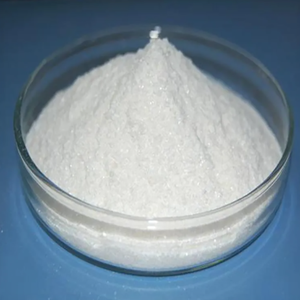
Directly sourced from GMP/ISO certified manufacturing infrastructure with full batch tracking, heavy metal panels via ICP-MS, and validated Certificates of Analysis.
Understanding molecular integrity, botanical species selection, and why Chinese manufacturers dominate the global supply of natural trans-resveratrol.
Natural Resveratrol is primarily extracted from the dried rhizome and root of Polygonum cuspidatum Sieb. et Zucc. (commonly designated as Japanese Knotweed or Giant Knotweed). While synthetic pathways utilizing petroleum-derived chemical intermediates exist, global nutraceutical brand formulators consistently favor natural botanical extraction due to clean-label transparency and regulatory approvals under EU Novel Food frameworks and US FDA cGMP (21 CFR Part 111).
Resveratrol (3,5,4'-trihydroxystilbene, CAS No: 501-36-0) exists in two geometric stereoisomers: Trans and Cis. Only the trans-isomer demonstrates superior biological activity in activating SIRT1 (sirtuin longevity pathways) and exerting free radical scavenging. Industrial processing in top China factories requires strictly controlled darkroom crystallization and nitrogen protection to prevent photo-isomerization into the functionally inert cis-form.
A critical qualitative benchmark separating premium Chinese manufacturers from low-tier producers is the elimination of Emodin (CAS No: 518-82-1). Crude Polygonum cuspidatum naturally carries substantial anthraquinone derivatives which induce gastrointestinal laxative discomfort. Our high-efficiency macroporous adsorption resin and recrystallization technologies drive residual emodin content strictly below 0.1%, with premium lots reading undetectable (<0.01%).
Procurement teams require verifiable validation. Below is our standardized release matrix evaluated against major international pharmacopoeias.
| Analytical Parameter | United States Pharmacopeia (USP) | European Pharmacopoeia (EP) | Our Factory Export Standard | Primary Test Methodology |
|---|---|---|---|---|
| Assay (Trans-Resveratrol) | 98.0% – 102.0% (Dried Basis) | ≥98.0% (Dried Basis) | ≥98.5% – 99.8% | HPLC (External Reference Standard) |
| Appearance & Color | White to off-white crystalline powder | White crystalline powder | Pure snow-white crystalline powder | Visual / Spectrophotometric check |
| Related Impurities (Emodin) | ≤ 0.1% | Conforms to monograph limits | ≤ 0.05% (or Undetectable) | HPLC with Photodiode Array (PDA) |
| Particle Size Distribution | Variable / Buyer defined | Variable / Buyer defined | 80 Mesh standard / Micronized (D90 < 20μm) | Laser Diffraction (Malvern Mastersizer) |
| Loss on Drying (LOD) | ≤ 0.5% | ≤ 0.5% | ≤ 0.35% | Vacuum Oven Drying at 105°C |
| Heavy Metals (Pb, As, Cd, Hg) | Conforms to USP <232> / <233> | Regulation (EU) 2023/915 | Pb <0.5ppm, As <0.5ppm, Cd <0.1ppm, Hg <0.05ppm | ICP-MS (Inductively Coupled Plasma) |
| Residual Solvents (Ethanol) | ≤ 5,000 ppm (Class 3) | ≤ 5,000 ppm (Class 3) | ≤ 500 ppm (Ethanol-only processing) | GC-HS (Headspace Gas Chromatography) |
| Ethylene Oxide (ETO) | Not routinely specified | < 0.02 mg/kg (Sum of ETO + 2-CE) | Absent / Strictly Below LOQ (<0.01 mg/kg) | GC-MS Screening (EU 2019/1793 Panel) |
| Microbiological Bioburden | TPC <1,000 cfu/g, Yeast & Mold <100 cfu/g | Conforms to EP Microbiological Quality | TPC <100 cfu/g, Pathogens Absent/25g | USP <61> / <62> Standard Cultures |
Supply chain transparency has transitioned from a marketing claim to an audit mandate. Global brands are enforcing supply chain mapping back to wild-harvesting bases and domestic cultivation plots in Hunan, Sichuan, and Shaanxi provinces. Adulteration screening using Next-Generation Sequencing (NGS) DNA barcoding and stable isotope ratio mass spectrometry (IRMS) is emerging as standard practice to authenticate natural botanical provenance against petrochemical synthetics.
Trans-Resveratrol is classified as a Biopharmaceutics Classification System (BCS) Class II compound—characterized by high membrane permeability but notoriously low aqueous solubility. Leading factories are aggressively adopting advanced processing steps: Air-jet micronization (D90 < 10μm), cyclodextrin molecular inclusion, and liposomal self-emulsifying drug delivery systems (SEDDS) that multiply intestinal absorption by up to 10-fold without requiring synthetic adjuvants.
Procurement policies now penalize factories reliant on toxic halogenated solvents such as dichloromethane or chloroform. Modern extraction utilizes food-grade aqueous ethanol closed-loop systems with over 95% solvent recovery efficiency. Carbon footprint metrics per kilogram of finished extract, alongside continuous wastewater COD/BOD reductions, are now formal criteria in Fortune 500 vendor qualification audits.
Engineered for quality controllers, supply chain strategists, and regulatory compliance directors.
Our manufacturing complex features Class 100,000 cleanrooms for crystallizing, drying, and packing. Equipped with multi-stage counter-current extraction batteries, industrial continuous macroporous resin chromatography columns, and high-vacuum rotary evaporation systems designed to maintain chemical integrity.
Our testing facility is equipped with Shimadzu and Agilent instrumentation: HPLC-DAD for quantitative trans-resveratrol and emodin determination, GC-MS for multi-residue pesticide and solvent screens, ICP-MS for heavy metal speciation, and automated microbial pathogen identification systems.
We provide comprehensive documentation packages for global regulatory filings: Certificate of Analysis (CoA) for every production lot, Technical Data Sheets (TDS), Safety Data Sheets (SDS), Process Flowcharts, Allergen Declarations, Non-GMO verification, BSE/TSE statements, and ETO-free guarantees.
We proactively screen every single batch against Regulation (EC) No 396/2005 for over 500 pesticide residues, ensure compliance with EU 2023/915 for heavy metal thresholds, and verify zero ethylene oxide treatment (ETO/2-CE < 0.02 mg/kg) to eliminate border control post (BCP) rejections.
Technical requests, tailored specification feasibility assessments, and pre-shipment sample dispatch are processed within one business day. Our specialized technical export team speaks directly with your R&D and formulation specialists to match particle sizes, tap densities, and custom assay requirements.
Consolidate your botanical API and extract sourcing through a single certified partner. In addition to Resveratrol 98%, our supply capability encompasses Elderberry Anthocyanins, Turmeric Curcumin 95%, Ashwagandha Withanolides, Cold-Pressed Carrier Oils, and Food-Grade Oleoresins with standardized active biomarkers.
Direct answers to technical, commercial, and regulatory questions asked by qualification auditors.
An assay reported as "98%" using Ultraviolet-Visible Spectrophotometry (UV) measures generalized absorbance, which inflates the reading by detecting related stilbenoids and polydatin. In contrast, High-Performance Liquid Chromatography (HPLC) resolves and quantifies the exact trans-resveratrol molecule against a certified reference standard. We always state the exact chromatographic conditions (C18 column, mobile phase gradient, UV wavelength 306 nm) on every Certificate of Analysis.
Emodin is an anthraquinone with significant cathartic properties that can cause digestive cramping. Our refined purification technology utilizes proprietary multi-bed polymeric adsorption resin that separates trans-resveratrol from emodin based on differential polarity. We test every production lot via HPLC-PDA to verify that residual emodin remains below 0.05%, ensuring safe incorporation into dietary supplements and skincare lines.
Our baseline commercial MOQ starts at 25 kg, packaged in tamper-evident fiber drums containing double food-grade polyethylene interior bags vacuum-sealed under nitrogen flush to prevent photo-oxidation. For pilot validation, formulation stability studies, and qualification trials, we supply 100g to 1kg pre-shipment sample canisters accompanied by complete batch documentation.
Yes. While standard Resveratrol 98% powder passes through an 80-mesh sieve, high-speed capsule filling and direct compression tableting frequently require specialized physical properties. We utilize cryogenic air-jet milling to deliver customized particle size distributions, such as D50 < 5μm or D90 < 20μm, alongside tailored tapped and bulk densities to optimize powder flowability and tablet hardness.
Trans-resveratrol is sensitive to intense UV light and elevated thermal exposure. Our packaging architecture incorporates light-blocking aluminum foil barrier liners flushed with high-purity nitrogen gas (oxygen content < 1.5%). Real-time and accelerated stability studies conducted under ICH guidelines (25°C/60% RH and 40°C/75% RH) confirm a 36-month shelf life with active degradation remaining below 0.5% when stored in original sealed containers.
We maintain buffer inventory of qualified Resveratrol 98% powder in our temperature-controlled central warehouses, enabling dispatch within 3 to 5 business days for stock quantities. For custom specifications, specialized particle milling, or custom synthesis volumes of 5 to 20 metric tons, the typical production lead cycle ranges from 2 to 3 weeks from purchase order confirmation.
Connect directly with our senior application scientists and regulatory documentation specialists. Receive customized pricing, full technical dossier packages, and complimentary validation samples dispatched within 24 hours.
Contact Us