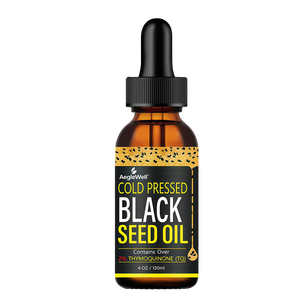
Pharmacopoeia-grade, cold-pressed Nigella sativa oils, bulk cosmetic raw materials, and private label softgel capsules formulated for global nutraceutical and dermatological brands.
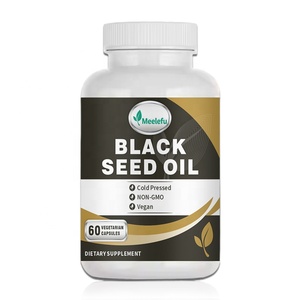
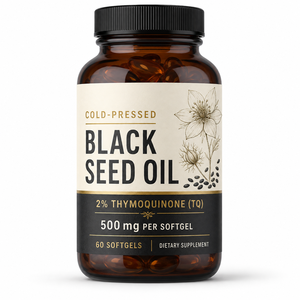
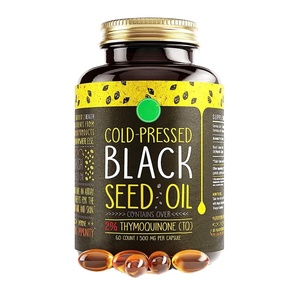
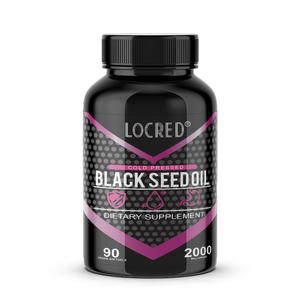
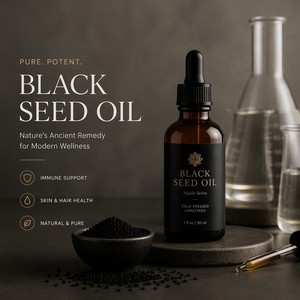
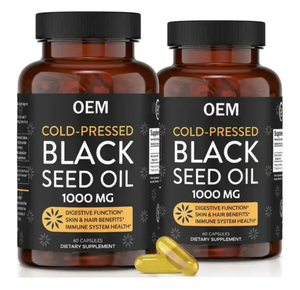
Black seed oil (derived from the seeds of Nigella sativa L., family Ranunculaceae) stands as one of the most therapeutically validated botanical lipids in the global nutraceutical and cosmetic industries. Historically utilized across Mediterranean, Middle Eastern, and Ayurvedic pharmacopoeias, the physiological efficacy of black seed oil is driven by a unique lipophilic matrix comprising fixed fatty acids and a potent volatile essential oil fraction. For international procurement directors and quality assurance managers, the true determinant of value in commercial transactions is not merely the volume of oil extracted, but the verified concentration and thermodynamic preservation of its primary bio-actives: Thymoquinone (TQ), Dithymoquinone (Nigellone), Thymohydroquinone (THQ), p-Cymene, and Carvacrol.
In standard cold-pressed expeller configurations, raw Nigella sativa seeds yield approximately 28% to 35% total oil. Within this lipid pool, the polyunsaturated and monounsaturated fatty acid profile is dominated by Linoleic Acid (C18:2, typically 52.0% – 65.0%) and Oleic Acid (C18:1, 18.0% – 25.0%), alongside Palmitic Acid (C16:0, 11.0% – 14.0%) and Stearic Acid (C18:0, 2.0% – 3.5%). However, unlike common culinary or carrier oils, genuine therapeutically graded black seed oil holds an inherent volatile terpene fraction (0.5% – 1.8%). Thymoquinone represents the primary marker compound subject to rigorous commercial standardization. Standard commodity seed oil typically provides baseline TQ levels of 0.4% – 0.8%. In contrast, our advanced direct-origin extraction facilities consistently deliver standardized virgin oils with TQ concentrations exceeding 1.5%, 2.0%, and custom-refined grades beyond 3.0% by High-Performance Liquid Chromatography (HPLC).
| Analytical Parameter | Testing Methodology | Standard Commercial Grade | Enterprise Pharmaceutical/Nutra Grade | Regulatory Reference |
|---|---|---|---|---|
| Thymoquinone (TQ) Assay | Reversed-Phase HPLC-DAD (254nm) | 0.30% – 0.70% w/w | ≥ 1.50% – 3.00% w/w | Internal In-House & USP-NF Mono |
| Acid Value | Titrimetric (mg KOH/g) | ≤ 20.0 mg KOH/g | ≤ 5.0 – 8.0 mg KOH/g | ISO 660 / Ph. Eur. 2.5.1 |
| Peroxide Value (PV) | Iodometric Titration (meq O2/kg) | ≤ 20.0 meq O2/kg | ≤ 10.0 meq O2/kg (at dispatch) | ISO 3960 / Ph. Eur. 2.5.5 |
| P-Cymene Content | Gas Chromatography (GC-FID/MS) | 0.10% – 0.40% | 0.50% – 1.20% | GC-MS Quantitative Screening |
| Heavy Metals (Pb, Cd, As, Hg) | ICP-MS (Inductively Coupled Plasma) | Complies with local limits | Pb <0.5 ppm, Cd <0.1 ppm, Hg <0.05 ppm | EU Reg 2023/915 / USP <232> |
| Pesticide Residues (500+ Panel) | LC-MS/MS & GC-MS/MS | Regional standard | Zero Detectable / Below EU MRLs | EC No 396/2005 Compliant |
| Ethylene Oxide (ETO) + 2-CE | GC-MS/MS Screen | Not routinely verified | < 0.02 mg/kg (Strict Non-Detect) | EU Reg 2019/1793 Annex I/II |
The manufacturing flow employed by reliable black seed oil producers directly dictates the chemical integrity, biological activity, and shelf-stability of the finished product. In commercial manufacturing, three distinct technologies dominate: chemical solvent extraction (typically n-hexane), high-heat continuous expeller screw pressing, and precision temperature-monitored single-pass cold pressing.
Solvent extraction, while delivering maximum commercial oil extraction efficiency (>98% lipid yield), completely destroys the delicate volatile matrix and introduces residual solvent impurities. In dietary supplement applications, regulatory jurisdictions like the European Commission and the US FDA enforce strict residual solvent limits under USP <467> and Ph. Eur. 5.4. Solvent-extracted black seed oil produces an oxidized, dark-tar oil completely devoid of biological nuance.
At our manufacturing facilities, production is strictly centered on Mechanically Engineered Low-Temperature Cold Pressing. Cleaned, optical-sorted seeds of Nigella sativa undergo cold-pressing through water-jacketed expellers where the internal barrel temperature is rigorously regulated below 45°C (113°F). This barrier prevents the thermolytic isomerization and oxidative degradation of Thymoquinone into secondary artifacts. The freshly expelled virgin crude oil is immediately transferred into sealed, nitrogen-blanketed decantation vessels to prevent ambient photo-oxidation. Subsequent filtration utilizes mechanical plate-and-frame filtration followed by food-grade multi-stage micro-filtration down to 1 micron, removing suspended seed cake particulate without artificial bleaching, neutralization, or deodorization. This retains the pungent, peppery aroma, rich amber hue, and bio-available antioxidant structure necessary for clinical-grade nutraceutical applications.
Incoming seed batches undergo de-stoning, aspiration, and multi-spectral optical sorting to remove foreign matter, weed seeds, and broken kernels, achieving 99.9% botanical cleanliness prior to expelling.
Continuous water-jacketed expellers maintain extraction temperatures strictly below 45°C. Single-pass mechanical extrusion ensures maximum preservation of volatile Thymoquinone and unsaturated lipids.
Crude oil undergoes sedimentation in stainless-steel tanks with continuous nitrogen purging, followed by 1-micron filtration and packaging into inert, food-grade drums to eliminate dissolved oxygen.
Global procurement of botanical oils is experiencing structural shifts driven by rigorous scientific substantiation, increased consumer literacy, and hyper-vigilant border-inspection protocols. In our consultative capacity working alongside procurement teams in North America, Western Europe, and the Asia-Pacific region, several dominant market transformations have emerged:
Procurement teams are moving away from generic “100% Pure” language to contractual Thymoquinone minimums (≥1.5% or ≥2.0% HPLC verified). Contracts now include penalty clauses for biomarker decay.
Stringent EU border controls on Indian botanicals require batch-specific multi-residue pesticide screening (EC 396/2005) and Ethylene Oxide (ETO) certification to prevent costly container quarantines.
While bovine gelatin remains the volume leader, demand for non-animal encapsulation matrices (modified tapioca starch and carrageenan) is growing at over 14.8% CAGR to satisfy Halal, Kosher, and vegan certifications.
Cosmeceutical formulators are isolating deodorized and fractionated black seed lipids as active anti-inflammatory raw materials for barrier-repair serums, acne therapeutics, and androgenic alopecia hair treatments.
The broader botanical oil manufacturing sector is advancing toward molecular precision. Historically, black seed oil was sold as an undifferentiated bulk agricultural commodity. Today, industrial downstream manufacturers are introducing three distinct technological paradigms:
Supercritical CO2 Fluid Extraction (SFE-CO2): Operating at low pressures and near-ambient critical temperatures (31.1°C), supercritical carbon dioxide acts as an exceptional non-toxic solvent for extracting both volatile and non-volatile lipids from Nigella sativa seeds. SFE-CO2 produces a completely solvent-free oil with elevated TQ concentrations reaching 3.5% – 5.0%, free from residual heavy metals and micro-particulates. While capital expenditures for SFE facilities remain higher than cold-pressing, the yield consistency and lack of thermal exposure make SFE-CO2 an attractive choice for clinical-grade dietary supplement brands.
Bioavailability Enhancement & Water-Soluble Emulsions: As consumer formats diversify into functional beverages, effervescent drink powders, and functional gummies, the hydrophobic nature of native black seed oil poses formulation hurdles. Leading manufacturers are investing heavily in micro-encapsulation, spray-drying onto prebiotic acacia fiber carriers, and developing self-emulsifying drug delivery systems (SEDDS). These advanced powdered black seed oil preparations (standardized to 5% – 20% oil payload) exhibit rapid gastrointestinal dispersion and improved systemic bioavailability of Thymoquinone.
Our vertically integrated processing ecosystem spans contract seed farming across Maharashtra and Madhya Pradesh directly to container freight forwarding at Nhava Sheva (JNPT) and Mumbai air cargo hubs.
State-of-the-art manufacturing infrastructure compliant with WHO-GMP and ISO 22000 standards. Fully equipped for nitrogen-blanketed cold pressing and automated softgel encapsulation.
Operating under central statutory export compliance: Indian Importer-Exporter Code (IEC: ABUCS7891K), FSSAI Central License (No. 11526999001161), and APEDA registrations.
Every consignment ships with comprehensive batch-specific documentation: HPLC Thymoquinone assay, GC-MS fatty acid spectrum, ICP-MS heavy metals, microbiological panels, and ETO non-detect certificates.
Full-scope OEM/ODM capabilities: 500mg/1000mg softgels in blister packs or HDPE bottles, 60ml to 250ml amber glass liquid droppers, and 25kg, 190kg, or 950kg IBC bulk industrial drums.
Direct communication with qualified food scientists and regulatory documentation specialists. Receive full technical data sheets, sample CoAs, and export pricing within 24 business hours.
Direct partnerships with regional agrarian cooperatives enforce Good Agricultural and Collection Practices (GACP), mitigating heavy metal contamination and pesticide drift at the root source.
Technical, regulatory, and logistics answers prepared by our quality control and international trade desks.
Procurement inefficiencies and delivery delays often stem from ambiguous specifications submitted during initial request-for-quotation (RFQ) phases. To enable our technical trade desk to provide a binding commercial quote, accurate export freight calculation, and matching Certificate of Analysis within 24 hours, we advise enterprise buyers to specify the following parameters:
1. Target Extraction Specification: State clearly whether your formulation demands cold-pressed virgin, unrefined cosmetic grade, or standardized high-TQ oil (≥1.5% or ≥2.0%). Specify if organic certification (USDA NOP / EU) is mandatory.
2. Delivery Format: Identify if raw ingredients are required in bulk containers (25kg carboys, 190kg steel drums, or 950kg IBC totes) or if you are requesting contract finished products (softgels in bulk bulk-pack, packaged PET/glass bottles, or liquid droppers).
3. Analytical Acceptance Criteria: List internal laboratory parameters including acceptable limits for Acid Value, Peroxide Value, and specific contaminant screening protocols (such as European Union multi-residue pesticide or ETO screening).
4. Annual Volume & Call-Off Schedule: Outline initial trial batch requirements alongside 12-month projected volumes. Consignment scheduling allows us to reserve seed lots and lock in raw material pricing against agricultural seasonality.
Connect directly with our export engineering and quality assurance teams. Request pre-shipment evaluation samples, batch-specific Certificates of Analysis, or detailed contract manufacturing quotations tailored to your regional market.
Contact Us