
Essential Oils & Actives
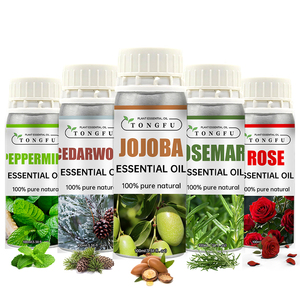
Wholesale OEM/ODM 100% Pure Cold Pressed Jojoba Rosemary Peppermint Essential Oil
Steam Distilled / Cold-Pressed
Get Catalog
Source high-purity phytochemicals, lipophilic oleoresins, and cold-pressed plant matrices with verified batch Certificates of Analysis (CoA) matching international monograph standards.

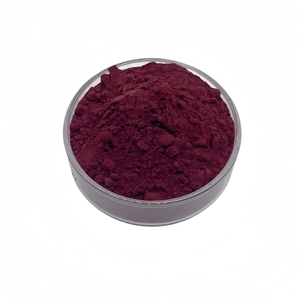
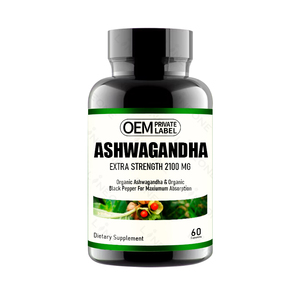
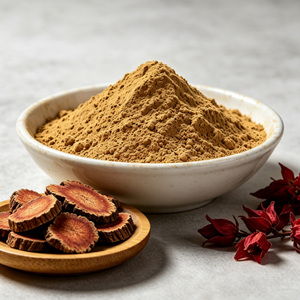
Capsicum Oleoresin represents one of the most industrially significant concentrated spice extracts globally, synthesized via the solvent extraction of dried, ground ripe fruits of Capsicum annuum L. or Capsicum frutescens L. Operating as an internationally audited export manufacturer headquartered in Nashik, Maharashtra, we bridge the gap between traditional agricultural harvesting and stringent pharmacopoeial requirements. High-performance Capsicum oleoresin contains two primary fractions: volatile essential oil matrices delivering authentic organoleptic aroma, and non-volatile pungent capsaicinoids (chiefly capsaicin, dihydrocapsaicin, and nordihydrocapsaicin) yielding measurable heat ratings between 500,000 SHU (Scoville Heat Units) to upwards of 10,000,000 SHU for refined crystalline grades.
In modern industrial procurement across pharmaceutical topical analgesics, food flavour matrices, and natural defense formulations, sourcing decisions pivot on precise chemical standardization. A typical compliance bottleneck faced by importing QA/QC departments involves variance in assay standardization. While historical organoleptic panels relied on the Scoville organoleptic dilution methodology (ASTA 21.0), modern FDA and European Pharmacopoeia (Ph. Eur.) guidelines strictly require reverse-phase High-Performance Liquid Chromatography (RP-HPLC) coupled with Photodiode Array (PDA) or UV/VIS detection. At our manufacturing facility, every metric ton produced is characterized under standardized chromatographic protocols ensuring absolute fidelity of specific capsaicinoid marker ratios, eliminating residual solvent artifacts, and providing unassailable batch traceability.
Supercritical Fluid Extraction (SC-CO2) and validated food-grade hexane extraction protocols ensure solvent residues test non-detectable or remain well below strict EU limits (Regulation EC 396/2005) and US FDA 21 CFR standards.
Indian spice botanicals often trigger scrutiny under Regulation (EU) 2019/1793. Our integrated facilities deploy zero-ETO processing with comprehensive pre-shipment GC-MS/MS validation for both free ethylene oxide and 2-chloroethanol.
Every lot is quantified for lead, cadmium, arsenic, and mercury via Inductively Coupled Plasma Mass Spectrometry (ICP-MS) to effortlessly meet the strict baseline of Regulation (EU) 2023/915 and USP monograph thresholds.
Furthermore, standardizing the color intensity (ASTA color values) alongside Scoville Heat Units is paramount for food industrial formulation. A non-standardized oleoresin results in undesirable batch-to-batch variations in finished packaged foods, sauces, seasonings, and processed meats. We offer decolorized Capsicum Oleoresin where intense pungency is achieved without color contamination, as well as color-standardized grades where both visual hue and thermal impact are locked to customer specifications.
Verified physical-chemical and microbiological baseline criteria for export-grade Capsicum Oleoresin batches.
| Analytical Parameter | Standard Product Range / Limit | Analytical Test Method | Primary Compliance Target |
|---|---|---|---|
| Total Capsaicinoids Content | 3.3% to 40.0% (Customizable to spec) | RP-HPLC (ASTA Method 21.3 / Ph. Eur.) | Global Pharma & Food Grade |
| Scoville Heat Units (SHU) | 500,000 SHU to 6,400,000+ SHU | Calculated via HPLC Marker Conversion | Sensory & Topical Applications |
| ASTA Color Value | < 500 (Decolorized) or up to 4,000 ASTA | Spectrophotometric (ASTA Method 20.1) | Clean Label Visual Neutrality |
| Residual Solvent (Hexane / Acetone) | < 10 ppm (Hexane) / < 30 ppm (Acetone) | Headspace Gas Chromatography (GC-FID) | EU MRL Directive & US FDA 21 CFR |
| Ethylene Oxide & 2-Chloroethanol | < 0.05 mg/kg (Sum Total, LOQ) | Triple Quad GC-MS/MS | EU Official Border Verification |
| Heavy Metals (Pb, Cd, As, Hg) | Pb < 1.0 ppm | Cd < 0.5 ppm | As < 0.5 ppm | Hg < 0.1 ppm | ICP-MS (USP <232> / <233>) | Regulation (EU) 2023/915 Compliant |
| Aflatoxins (B1 + B2 + G1 + G2) | B1 < 5.0 ppb | Total Aflatoxins < 10.0 ppb | HPLC-FLD with Immunoaffinity Cleanup | EU Food Safety Authority Standards |
Direct Indian agricultural origins unified with cGMP manufacturing hygiene, government certification, and comprehensive export documentation.
Direct farm networks across India's Guntur, Warangal, and Byadgi chili belts provide unmatched farm-level traceability, eliminating intermediaries, securing supply predictability, and mitigating harvest cost fluctuations.
Fully compliant with the DGFT (IEC: ABUCS7891K), FSSAI Central Licensing (No. 11526999001161), APEDA registrations, and certified with corporate verification under MCA CIN U21009MR2026PTC479885.
No industrial bulk batch ships without validated pre-shipment samples accompanied by a comprehensive Certificate of Analysis (CoA) to match client factory bench tests prior to vessel dispatch.
Our regulatory quality department provides destination-tailored documentation including Allergen, Non-GMO, BSE/TSE statements, Technical Data Sheets (TDS), and destination customs packs within one business day.
Whether formulated as food-grade oil-soluble matrices, emulsified water-dispersible microemulsions, or encapsulated solid-powder carriers, we customize our bulk products to align with your processing machinery.
Streamline corporate vendor audits by sourcing standardised extracts, spice oleoresins, herbal powders, and cold-pressed lipids under a unified global documentation protocol and quality framework.
The global demand for Capsicum oleoresin is experiencing rapid growth, driven by key market transformations: the systemic transition toward natural food ingredients replacing synthetic additives (such as artificial red colors and synthetic flavor enhancers), alongside the expansion of pharmaceutical transdermal capsaicin applications for non-opioid neuropathic pain relief. As category managers prepare strategic sourcing frameworks for upcoming fiscal cycles, three structural procurement trends must be anticipated:
1. Escalating Regulatory Hurdles on Residual Solvents and Cross-Contaminants: European import authorities (DG SANTE) and the US FDA are tightening thresholds for ethylene oxide (ETO), chlorpyrifos, and related agricultural pesticide residues. Formulators are transitioning toward suppliers using green extraction technologies—such as Supercritical Fluid Extraction (SFE-CO2)—or closed-loop ethanol extractions that avoid halogenated hydrocarbon and hexane contact.
2. Microencapsulation and Hydrophilic Delivery Systems: Historically, Capsicum oleoresin presented compounding challenges due to insolubility in aqueous environments and excessive burning sensations during industrial handling. Modern procurement leans toward microencapsulated spray-dried powders and water-dispersible nano-emulsions. These allow functional food and sports beverage brands to harness capsaicinoid thermogenic and metabolic properties without phase separation or harsh throat irritation.
3. Climate Resilience and Cultivar Traceability: Seasonal volatility across Central and South India necessitates strong backward integration. Procurement strategies require vendor transparency down to the farm collective level. Enterprise buyers are shifting from opportunistic open-market purchasing toward annual fixed-volume supply contracts backed by strict Quality Agreements (QAs) to ensure cost stability and continuous production cycles.
Clear, direct answers regarding assay methodologies, export logistics, sample validations, and regulatory dossier support.
Capsicum Oleoresin is a full-spectrum concentrated extract retaining both the natural heat profile (capsaicin, dihydrocapsaicin, nordihydrocapsaicin) and natural lipid-soluble aromatic characteristics of raw chilies, concentrated up to 20-fold compared to dried powders. Unlike synthetic capsaicin (nonivamide), authentic natural capsicum oleoresin contains the full phytocomplex required for natural food labeling and specific pharmaceutical pharmacopeial monographs.
We apply strict raw material selection from low-pesticide growing belts, utilize non-ETO decontamination protocols, and test composite batch samples via accredited third-party ISO 17025 laboratories using GC-MS/MS and LC-MS/MS. Every shipment bound for the European Union is accompanied by comprehensive multi-residue pesticide screens (Regulation EC 396/2005) and Ethylene Oxide (including 2-chloroethanol) validation reports below quantifiable limits.
In analytical chemistry, 1% of total capsaicinoids measured by RP-HPLC equates to approximately 160,000 Scoville Heat Units (SHU). For example, a 6.6% standardized capsaicinoid oleoresin corresponds to approximately 1,000,000 SHU. We state both the HPLC marker percentage and the converted SHU value on each Certificate of Analysis to eliminate specification confusion across different QA standards.
Our standard starting MOQ for standardized herbal extracts and spice oleoresins is 25 kg, typically packaged in UN-certified HDPE drums or aluminum canisters. For commercial container-load volumes (FCL/LCL), order terms scale flexibly. Standard catalog products dispatch within 2-3 weeks from order confirmation, inclusive of pre-shipment sampling and testing.
Yes. We support US importers under the Foreign Supplier Verification Program (FSVP) by providing full supplier verification dossiers, including Hazard Analysis Critical Control Point (HACCP) plans, process flowcharts, cGMP plant certifications, batch-level allergen statements, non-animal testing declarations, and SDS (Safety Data Sheets) in 16-section GHS format.
Connect with our technical export division in Nashik, Maharashtra. Request sample evaluations, review third-party CoA audits, and receive tailored commercial volume terms within 24 hours.