Engineered for high-throughput German contract manufacturers (Lohnhersteller), encapsulators, and pharmaceutical-grade nutraceutical brands requiring batch-specific HPLC fingerprint chromatograms, zero ethylene oxide (ETO), and certified EU MRL compliance.
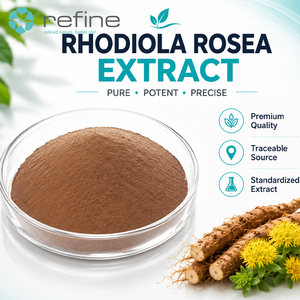
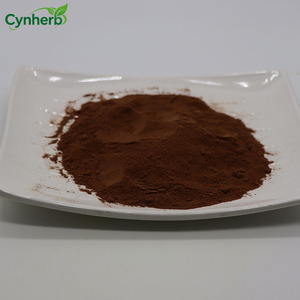
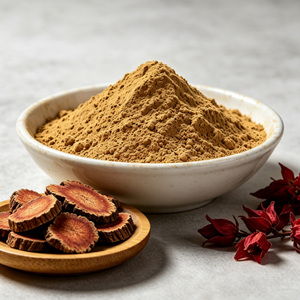
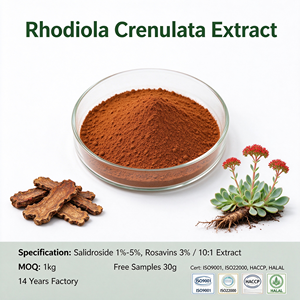
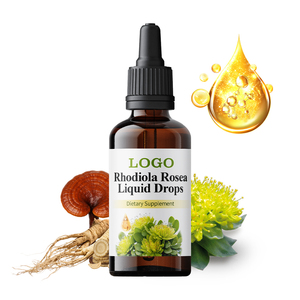
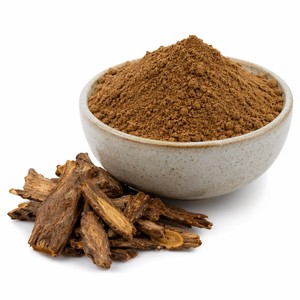
In the European dietary supplement arena—and particularly under the rigorous surveillance of Germany's Bundesamt für Verbraucherschutz und Lebensmittelsicherheit (BVL) and the Federal Institute for Risk Assessment (BfR)—botanical identity authentication is the single most critical gating factor. Rhodiola rosea L. (Golden Root / Rosenwurz) is botanically distinguished by its unique secondary metabolite profile containing both phenylpropanoids (Rosavins: Rosavin, Rosin, and Rosarin) and phenylethanoids (Salidroside and Tyrosol). Cheap commercial extracts frequently utilize adulteration with Rhodiola crenulata, an unapproved alternative botanical that contains high salidroside but completely lacks the signature rosavins required by the European Pharmacopoeia (Ph. Eur.) and EMA HMPC traditional herbal monographs.
Every commercial batch released from our factory is analyzed via gradient RP-HPLC on a C18 bonded silica column (250 x 4.6 mm, 5 μm) using acetonitrile and 0.1% phosphoric acid mobile phase. We quantify the individual peak area ratios of Rosavin, Rosin, and Rosarin at 254 nm, ensuring the authentic natural ratio of 3:1 (Rosavins to Salidroside) is uncompromised by synthetic spike-ins.
As of February 23, 2023, Rhodiola spp. (including roots, extracts, and finished derivatives) are officially listed under CITES Appendix II. Importing raw material into German customs without valid CITES Export Permits and EU Import Endorsements will result in immediate seizure. We handle 100% of the CITES legal chain-of-custody documentation, ensuring seamless clearance via Frankfurt and Hamburg customs ports.
Our industrial extraction cascades employ closed-loop multi-stage counter-current maceration using purely potable hydro-ethanolic mixtures (70:30 v/v). Operating at strictly controlled temperatures below 45°C prevents thermal degradation of heat-sensitive phenylpropanoids, producing a clean native extract free from chlorinated solvent residues and excessive ash content.
| Analytical Parameter | Rhodiola rosea L. (Factory Spec) | Rhodiola crenulata (Adulterant) | German / EU Compliance Standard |
|---|---|---|---|
| Rosavins Profile (Rosavin, Rosin, Rosarin) | 3.0% – 5.0% HPLC | 0.0% (Natural Absence) | Ph. Eur. & German Standard Marker Ratio |
| Salidroside (Rhodioloside) | 1.0% – 3.0% HPLC | 2.0% – 6.0% (Unbalanced Excess) | Validated via HPLC at 278 nm |
| Natural Golden Ratio | ~3:1 (Rosavins to Salidroside) | 0:1 (Instant Regulatory Flag) | BfR Identity Verification Benchmark |
| Heavy Metals (ICP-MS) | Pb < 1.0 ppm, Cd < 0.5 ppm, Hg < 0.1 ppm | Often unmonitored (> 3.0 ppm) | Regulation (EU) 2023/915 Thresholds |
| Polycyclic Aromatic Hydrocarbons (PAH4) | Benzo(a)pyrene < 2 ppb, Sum 4 PAHs < 10 ppb | Variable / Non-compliant | Regulation (EU) 2023/915 (< 50 ppb limit) |
| Ethylene Oxide (ETO + 2-Chloroethanol) | < 0.01 mg/kg (Non-Detect) | High contamination risk | Reg (EU) 2019/1793 & Reg (EC) 396/2005 |
Germany represents Europe's most sophisticated market for herbal adaptogens (Rosenwurz-Extrakte). Consumer preferences strongly favor clean-label, bio-certified excipients and synergistic formulations that directly address cognitive stamina, burnout recovery, and athletic endurance.
Targeted at high-demand professionals in Munich, Frankfurt, and Berlin seeking natural cortisol regulation without sedation.
Premium cognitive enhancement products sold in German pharmacies (Apotheken) and direct-to-consumer health brands.
Endurance formulas formulated for athletes to modulate physical exertion fatigue and decrease blood lactate accumulation.
Rapidly growing liquid adaptogen segment across bio-supermarkets and boutique German wellness brands.
German dietary supplement manufacturers operate under the strictest food-safety enforcement in the European Union. Products are governed by the German Food and Feed Code (LFGB), the German Food Supplements Regulation (Nahrungsergänzungsmittel-Verordnung - NemV), and extensive monitoring by the BVL. Sourcing raw materials from non-verified factories introduces critical risks of product recalls, import border seizures, and brand reputation loss. Our factory implements end-to-end quality systems designed specifically to satisfy German compliance audits.
Complete traceability documentation, ingredient characterization dossiers, and botanical identification papers required for mandatory German national product notifications via BVL.
Systematic multi-residue pesticide screening covering 500+ compounds via GC-MS/MS and LC-MS/MS. Every export lot tests well below the European Union Maximum Residue Limits.
Strict internal limits verified via Agilent ICP-MS instrumentation: Lead (Pb) < 1.0 mg/kg, Cadmium (Cd) < 0.5 mg/kg, Mercury (Hg) < 0.1 mg/kg, and Arsenic (As) < 1.0 mg/kg.
Strict non-fumigation protocol. We do not use ethylene oxide gas anywhere in processing or warehouses. Third-party testing confirms non-detectable levels (< 0.01 ppm LOQ).
Drawing on world-class botanical manufacturing facilities, advanced analytical instrumentation, and robust supply chain integration, we eliminate friction in international sourcing.
Extracted, purified, and vacuum-spray dried in ISO 22000, HACCP, and GMP-certified cleanroom workshops. We maintain rigorous air handling, HEPA filtration, and strict sanitation standard operating procedures (SSOP).
We do not make you wait days for technical data. Our in-house regulatory affairs team issues batch-specific Certificates of Analysis (CoA), Technical Data Sheets (TDS), Safety Data Sheets (SDS), and Allergen Statements within 24 hours.
Long-term direct harvesting contracts across high-altitude alpine harvesting regions ensure authentic species selection, sustainable root renewal practices, and stable multi-year bulk pricing insulated from raw material volatility.
Whether you require raw bulk micronized powder for powder drink formulations, direct-compression granules for high-speed rotary tableting machines, or customized vegan HPMC encapsulation, we provide turn-key contract manufacturing.
We supply pre-shipment evaluation samples (100g–500g) alongside authentic mother batch CoAs so your incoming QA laboratory can cross-verify marker percentages, microbial limits, and heavy metals prior to releasing the commercial purchase order.
Experienced in DDP (Delivered Duty Paid), CIF Hamburg, and CIP Frankfurt airport shipments. Complete management of phytosanitary certificates, EUR.1 origin documentation, and air/sea freight temperature logging.
Specify desired marker concentrations (Rosavins % / Salidroside %), annual volume requirements, and physical processing parameters (mesh size, excipients).
Our regulatory team returns a product-specific TDS, representative chromatograms, and commercial proposal within 24 hours.
Receive pre-shipment sample from the designated production lot. Conduct in-house or third-party validation (Eurofins, SGS) with full confidence.
Production release with CITES export certificates, Phytosanitary clearance, and express logistics directly to your German warehouse or contract manufacturer.
Key technical, commercial, and regulatory questions addressed by our compliance desk.
Authentic Rhodiola rosea L. contains a distinct phytochemical fingerprint characterized by both rosavins (rosavin, rosin, rosarin) and salidroside in an approximate natural ratio of 3:1. In contrast, Rhodiola crenulata contains only salidroside and completely lacks the rosavins complex. We use validated reversed-phase HPLC-DAD profiling to quantify each individual peak. Batches showing only salidroside or inverted marker ratios are rejected. Complete chromatographic raw data is included with every batch CoA.
Yes. Effective February 2023, all Rhodiola spp. imports into the European Union fall under CITES Appendix II controls. As an accredited primary manufacturer, we hold legitimate government export quotas and issue official CITES Export Permits for every shipment. We coordinate directly with your designated customs broker in Germany to provide the documentation required by the German Federal Agency for Nature Conservation (Bundesamt für Naturschutz - BfN) for smooth import validation.
Absolutely. We enforce multi-stage pesticide screening under Regulation (EC) No 396/2005. Raw botanicals are tested before extraction, and finished extracts undergo targeted multi-residue GC-MS/MS and LC-MS/MS testing covering over 500 pesticide entities. Our products consistently demonstrate zero detectable organochlorine, organophosphate, and synthetic pyrethroid residues.
Our internal release limits are set significantly lower than EU legal maximums: Lead (Pb) < 1.0 mg/kg (EU limit 3.0 mg/kg), Cadmium (Cd) < 0.5 mg/kg (EU limit 1.0 mg/kg), Mercury (Hg) < 0.1 mg/kg (EU limit 0.1 mg/kg), and Arsenic (As) < 1.0 mg/kg. For Polycyclic Aromatic Hydrocarbons, our specialized low-temperature vacuum drying ensures Benzo(a)pyrene remains under 2.0 μg/kg and the sum of 4 PAHs remains under 10.0 μg/kg (EU limit is 50 μg/kg for food supplements).
No. We strictly prohibit Ethylene Oxide treatment, 2-chloroethanol exposure, and gamma irradiation across our manufacturing and warehousing operations. Microbial control is accomplished via closed-system pressurized pasteurization and cleanroom spray drying. Every lot is verified by independent accredited laboratories (e.g., Eurofins) to ensure ETO and 2-chloroethanol levels are non-detectable below the 0.01 mg/kg limit of quantification (LOQ).
For standard bulk extract powders (e.g., 3% Rosavins 1% Salidroside or 5% Rosavins), our standard starting MOQ is 25 kg (one standard UN fiber drum). For custom standardizations or specific particle size granulations, the MOQ is 100 kg. For private label finished products (bottled vegan HPMC capsules or liquid tinctures), custom OEM production runs typically start from 2,000 to 5,000 units depending on formulation and packaging specs.
Yes. We welcome on-site qualification audits from quality managers of European brands. Alternatively, we provide a complete remote audit packet containing our ISO 22000, HACCP, and GMP audit reports, process validation logs, equipment calibration registers, cleaning validation documents, and facility layout diagrams.
For stock items, dispatch occurs within 5 to 7 business days following QA release and CITES document processing. Air freight transit to Frankfurt (FRA) or Munich (MUC) takes approximately 3 to 5 business days. Sea freight to Hamburg or Bremerhaven takes 24 to 28 days. We support various Incoterms including EXW, FOB, CIF, CIP, and DDP (Delivered Duty Paid directly to your door in Germany with customs and duties fully resolved).
Require a batch-specific Certificate of Analysis, analytical chromatogram, CITES compliance verification, or commercial volume quotation for your German manufacturing pipeline? Reach our specialized international export desk immediately.