1. The Canadian Black Seed Oil Landscape: Strategic Trade Dynamics & Regulatory Environment
The botanical and natural health product landscape across Canada has experienced an aggressive structural transition over the past five years. Driven by an educated domestic demographic concentrated in metropolitan corridors like Toronto, Vancouver, Montreal, and Calgary, consumer and corporate demand for clean-label, therapeutic-grade oils has elevated Nigella sativa (commonly known as Black Seed Oil or Black Cumin Seed Oil) from an ethnic, niche remedy to a mainstream wellness staple. For business executives, quality managers, and global procurement officers, navigating the Canadian market requires clear comprehension of Health Canada's Natural and Non-prescription Health Products Directorate (NNHPD) regulations, foreign site licensing (FSL), and strict verification of chemical purity.
Importing botanical oils into Canadian jurisdictions cannot follow conventional North American agricultural pathways. Under the Canadian Natural Health Products Regulations, any Nigella sativa finished product claiming therapeutic efficacy—such as anti-inflammatory benefits, support for respiratory wellness, skin condition relief, or digestive stabilization—must hold a valid Natural Product Number (NPN). Importers seeking to distribute black seed oil softgels, dietary liquids, or functional formulations must partner with manufacturing facilities that maintain proven Good Manufacturing Practices (GMP) and supply robust dossier documentation. Without certified origin controls, heavy metal profiles, microbial testing, and validated GC-MS (Gas Chromatography-Mass Spectrometry) assay reports, consignments frequently encounter delays, customs impoundment, or rejection at key Canadian points of entry.
"Canadian pharmaceutical-grade buyers and natural product brand managers do not evaluate raw black seed oil based purely on CIF pricing. The primary purchasing matrix is defined by active chemical integrity—specifically verifiable Thymoquinone (TQ) concentrations above 1.5% to 2.0%, minimal peroxide oxidation values (below 10 meq O2/kg), and total absence of ethylene oxide residues."
2. Comparative Review: Top 10 Black Seed Oil Factories & Exporters Serving Canada
The global trade pipeline targeting Canada features specialized agricultural processors, pharmaceutical extractors, and wholesale softgel encapsulation plants. Selecting the optimal manufacturing partner demands assessing facility certifications, testing capabilities, export speed, and technical compliance. Below is the comparative industry overview of the top 10 exporters and factories dominating supply chains across Ontario, British Columbia, Alberta, and Quebec.
| Manufacturer / Exporter Category |
Primary Processing Specialty |
Key Standard / Marker Spec |
Export Lead Time to Canada |
Compliance Dossier Scope |
| 1. Premium Standardized Extract Exporters (e.g., SV Botanica Direct Network) |
Dual-screw cold extraction, HPLC standardization, softgel OEM packaging |
TQ 1.5%–3.0%, p-Cymene, Carvacrol, <0.2% Acid Value |
10 – 18 Calendar Days |
Comprehensive NPN & FSL Ready |
| 2. Mediterranean Virgin Pressers |
Raw cold-pressed virgin unfiltered culinary & cosmetic oil |
Traditional cold expeller, unstandardized TQ (~0.7%) |
25 – 35 Days |
Standard Phytosanitary, Basic CoA |
| 3. South Asian Bulk Industrial Extractors |
High-tonnage continuous solvent-free extraction drums |
TQ 1.0% min, crude oleoresin variants |
20 – 30 Days |
ISO 9001, Batch CoA, Heavy Metals |
| 4. Egyptian Delta Agricultural Cooperatives |
Nigella sativa cultivar farm-gate processing |
Traditional pressing, volatile aromatic fractions |
30 – 40 Days |
Origin Certificate, Pesticide Screen |
| 5. Central European GMP Nutraceutical Co-Packers |
Finished softgel blisters and private-label retail bottling |
Repacked Egyptian/Indian crude oil; standard 500mg softgel |
15 – 25 Days |
EU GMP, CoA, Allergen Declaration |
| 6. Turkish High-Ester Botanical Facilities |
Refined cosmetic-grade carrier base oils |
Low-odor, fractionated, pale clarity |
20 – 28 Days |
INCI / REACH Cosmetic Dossier |
| 7. North American Domestic Re-distributors |
Local warehousing of foreign imported crude lots |
Blended virgin oils with mixed country origins |
3 – 7 Days (Domestic) |
Standard Domestic SDS |
| 8. Levantine Heritage Artisan Distilleries |
Batch hydraulic expeller pressing |
High bitterness, strong organoleptic profile |
35 – 45 Days |
Commercial Export Invoicing |
| 9. East Asian Softgel OEM Contract Synthesizers |
Automated rotary die encapsulation |
Bovine/HPMC capsules filled with customer-supplied oil |
20 – 30 Days |
ISO 22000, Micro Testing |
| 10. Middle Eastern Bulk Oleochemical Plants |
Large-scale ISO tanks & flexitanks for cosmetics |
Acid value < 2.0, deodorized variants |
25 – 35 Days |
Technical Data Sheet (TDS) |
3. Localized Applications Across the Canadian Commerce Landscape
Canadian B2B buyers integrate Nigella sativa raw materials and finished products into four primary regional sectors:
A. Natural Health Product (NHP) Formulations & Retail Encapsulation
The most lucrative application in Canada resides in natural health food supplement manufacturing. Premium brands situated in Vancouver and Toronto utilize standardized black seed oil (holding over 2.0% Thymoquinone) to produce targeted oral health formulations. Finished products focus on respiratory comfort (especially during harsh Canadian winter climates), joint flexibility, and healthy glycemic response. Cold-pressed softgels, either using standard halal bovine gelatin or plant-based vegan casing (tapioca or modified starch), represent over 60% of commercial consumer revenue.
B. Dermal Cosmetics & Clean-Beauty Regimens
Clean cosmetics manufacturers across Quebec and British Columbia have embraced organic cold-pressed black seed oil as a hero ingredient for high-performance facial serums, barrier-repair crèmes, and restorative scalp treatments. The natural ratio of linoleic acid (Omega-6) and oleic acid (Omega-9), combined with the antimicrobial profile of thymoquinone, makes the oil ideal for eczema-prone skin and acne therapies. Because Health Canada enforces strict cosmetic notification regulations and bans specific preservatives, formulating with cold-pressed oils featuring low peroxide numbers ensures natural shelf stability without irritating additives.
C. Functional Beverage & Specialty Food Blends
Emerging micro-breweries and functional beverage companies in Montreal and Ontario are researching emulsified black cumin seed oil compounds. Using specialized ultrasonic homogenization, high-potency oil is converted into water-dispersible emulsions for wellness tonic shots and artisanal oil infusions, providing consumer markets with daily antioxidant enhancement without overpowering the palate.
4. Macro Trends Shaping the Canadian Black Seed Oil Market
The procurement velocity of Nigella sativa inside Canada is defined by key structural market developments:
Clean-Label Non-GMO Verification
Consumers in Canada prioritize non-GMO, zero-pesticide, and solvent-free processing. Cold mechanical screw pressing with nitrogen blanketing is replacing traditional solvent extraction across commercial brand portfolios.
Verified TQ Quantification via HPLC
Generic "100% pure" claims are no longer sufficient for Canadian retail shelf placement. Buyers demand High-Performance Liquid Chromatography (HPLC) batch verification stating verified percentages of active thymoquinone.
Supply Chain Traceability & ESG Audits
Institutional Canadian distributors require farm-to-freight transparency. Direct contracts with origin agricultural networks in India and Egypt safeguard stable pricing and insulate buyers against seasonal market volatility.
5. Enterprise Competitive Advantages: Our Supply Chain Assurance
Positioned as an international benchmark for direct botanical exports and contract formulation, our facility infrastructure is organized specifically to satisfy stringent Canadian quality audits:
- GMP & ISO Manufacturing Infrastructure: Our production lines operate under audited pharmaceutical-grade Clean Room standards, fully certified for GMP, ISO 9001, and ISO 22000, fulfilling prerequisite guidelines for Health Canada Foreign Site Licensing.
- Proprietary Cold Extraction Methodology: Processing seeds under 45°C preserves fragile heat-sensitive phytonutrients—including thymoquinone, dithymoquinone, thymohydroquinone, and thymol—preventing thermal oxidation.
- Triple Contaminant Screening: Every commercial batch is analyzed using ICP-MS for heavy metals (Lead, Arsenic, Cadmium, Mercury), LC-MS/MS for over 400 pesticide residue varieties, and gas chromatography to confirm 0.0 ppm Ethylene Oxide (ETO) levels.
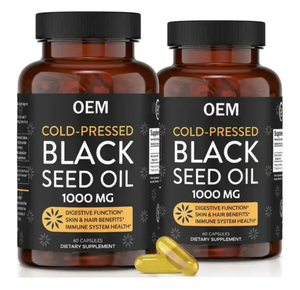
- Agile Turnkey Private-Label OEM Solutions: From 60-count child-resistant bottled softgels to 25kg / 190kg bulk steel drums lined with food-grade epoxy, our Nashik export center delivers custom packaging tailored to Canadian regulatory standards.
6. Frequently Asked Questions (FAQ) for Canadian B2B Importers
Q1: How does Health Canada regulate the importation of raw and packaged Black Seed Oil?
Health Canada classifies Black Seed Oil intended for internal therapeutic consumption as a Natural Health Product (NHP). Raw bulk oil imported for domestic compounding or repacking requires incoming QC testing conforming to licensed Site License requirements. Finished pre-packaged products sold directly to retail consumers must bear a valid 8-digit NPN (Natural Product Number), derived from an approved compendial or non-compendial safety and efficacy application.
Q2: What analytical testing data is included with bulk shipments to Canada?
Every commercial export consignment arrives with a comprehensive Certificate of Analysis (CoA) referencing the specific production batch. This includes chromatographic assay testing (TQ %, fatty acid methyl ester profile via GC-FID/MS), physical indices (refractive index, specific gravity, peroxide value, acid value), heavy metals via ICP-MS, microbial count (total aerobic, yeast/mold, E. coli, Salmonella), and an ETO-free guarantee statement.
Q3: Can you assist Canadian private label brands with custom softgel manufacturing?
Yes. We offer turnkey OEM encapsulation services, providing standard softgel formulations ranging from 500mg to 1000mg. Buyers can specify casing options (certified Halal bovine gelatin, Kosher, or vegan tapioca/carrageenan), packaging formats (PET/amber glass bottles or PVC/foil blister packs), bilingual packaging design (English/French Canadian compliant labeling), and integrated tamper-evident induction seals.
Q4: What is the typical Minimum Order Quantity (MOQ) and freight lead time to Toronto or Vancouver?
For standard bulk oil drums (25kg canisters or 190kg closed-head steel drums), MOQs start at 25kg. For customized private label softgels, initial batch sizes start at 100,000 units or 1,000 retail bottles. Air freight consignments direct to Toronto Pearson (YYZ) or Vancouver International (YVR) clear in approximately 5 to 7 days, while ocean freight (FCL/LCL) to Port of Montreal or Port of Vancouver averages 20 to 28 transit days.
Q5: Why is the assay method for Thymoquinone (TQ) critical when auditing supplier pricing?
Certain suppliers report volatile fractions using UV-Vis spectrophotometry, which falsely inflates the recorded TQ value by detecting background phenolic compounds. We perform selective Reverse-Phase High-Performance Liquid Chromatography (RP-HPLC) calibrated against absolute external reference standards. This ensures that the active concentration stated on your Certificate of Analysis accurately matches the actual therapeutic content verified by third-party testing labs in Canada.
Q6: How is oil freshness protected during international sea freight transport?
To prevent oxidative stress, all extraction is carried out in low-temperature environments under inert nitrogen flushing. Finished bulk oils are packed into fluorinated HDPE containers or epoxy-coated food-grade steel drums sealed with airtight nitrogen blankets. These precautions maintain peroxide values well below 5.0 meq O2/kg, guaranteeing extended shelf life for Canadian formulators and retailers.
Accelerate Your Canadian Botanical Supply Line
Partner directly with a certified, research-driven botanical extraction manufacturer. Connect with our technical export division today to request batch CoAs, regulatory dossiers, free pre-shipment evaluation samples, and customized CIF quotations for Canadian destinations.
Inquire Now