Navigating cross-border botanical procurement between China and Japan requires an uncompromising adherence to analytical repeatability, strict residual pesticide limits, zero-adulteration chiral authenticity, and clean documentation. Our direct-from-source manufacturing bridges primary botanical harvesting with Japan's exacting cosmetic, quasi-drug, and nutraceutical requirements.
Laboratory-assayed essential oils, active plant powders, and cold-pressed botanical lipids formulated for Japanese OEM/ODM cosmetic, nutraceutical, and fragrance developers.
Japanese cosmetic brands, quasi-drug licensees, and wellness product manufacturers operate under unique formulation paradigms where sensorial elegance, skin compatibility, and clean ingredient labeling are paramount.
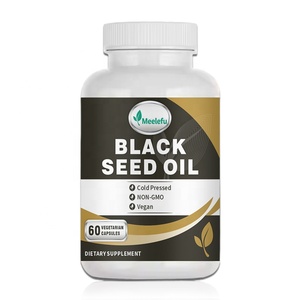
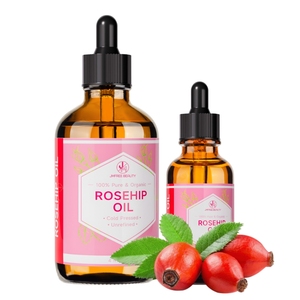
Japanese skin regimens emphasize Hadahada (skin texture refinement) and non-occlusive lipid replenishment. Highly refined cold-pressed Rosehip Seed Oil and virgin Nigella Sativa oil serve as core biocompatible lipids in lightweight face oils, milky emulsions, and barrier-soothing ampoules.
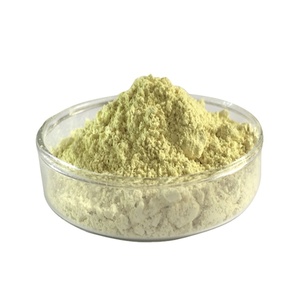
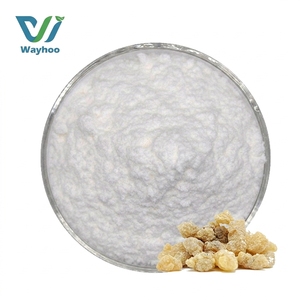
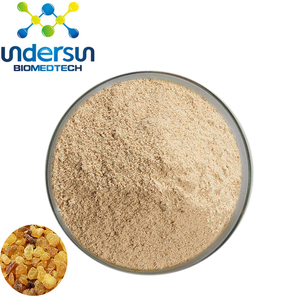
Formulating under the Japanese Quasi-Drug designation demands verified efficacy and stability under the Japanese Standards of Quasi-Drug Ingredients (JSQI). High-purity Boswellia Serrata extract (standardized to boswellic acids) and 98% Luteolin powder deliver verifiable anti-inflammatory and redness-attenuating pathways.
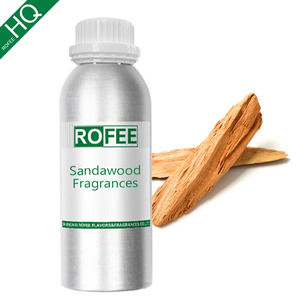
Japan possesses an ancient culture of incense appreciation (香道 - Kodō), currently evolving into premium room fragrances, reed diffusers, and luxury hotel ambient scenting. Concentrated sandalwood essential oil provides rich alpha- and beta-santalol aromatic cores required for high-end Japanese perfumers.
1. The Transition from European Intermediaries to Direct Primary Origin: Historically, Japanese trading companies (Sogo Shosha) imported processed essential oils and resins through distributors in Grasse, France or Hamburg, Germany. However, surging logistics surcharges, coupled with currency volatility, have driven major Japanese cosmetic OEM/ODM players to establish direct contracts with certified Chinese primary extraction facilities. Operating in contiguous time zones allows Japanese QA teams to conduct virtual facility audits and secure single-origin traceability from harvest field to finished drum.
2. Increased Scrutiny under MHLW's Positive List System for Agrochemicals: Japan's Ministry of Health, Labour and Welfare (MHLW) enforces some of the world's strictest maximum residue limits (MRLs) for agricultural chemicals under its Positive List System. For botanical extracts and cold-pressed essential oils, uniform default limits of 0.01 ppm apply whenever a specific standard is not set. Suppliers unable to perform comprehensive multi-residue GC-MS/MS and LC-MS/MS screenings find their shipments systematically impounded at Tokyo and Kobe customs. Our factory employs closed-loop pesticide tracking at our own cooperative farm bases to ensure 100% compliance prior to export.
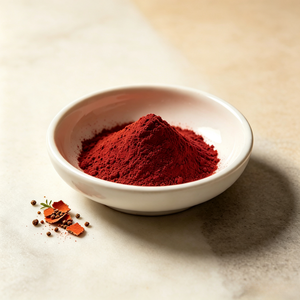
3. The "In-and-Out" Synergistic Beauty Paradigm: The boundary between topical skincare and functional nutritional supplements has dissolved in Japan. Inner beauty (Innershine) formulations regularly pair fat-soluble antioxidants such as Haematococcus Pluvialis Astaxanthin powder (10%) and encapsulated cold-pressed Nigella Sativa oil with topical serums. Japanese procurement directors increasingly favor manufacturers capable of delivering both cosmetic-grade and food-grade certifications from the same verified botanical lineage.
How our factory's internal analytical controls surpass the baseline requirements of the Japanese Pharmacopoeia (JP18) and the Japanese Standards of Quasi-Drug Ingredients.
| Test Parameter | Japanese Regulatory Benchmark (MHLW / JSQI) | Our Factory Release Standard | Analytical Methodology |
|---|---|---|---|
| Botanical Authenticity & Active Markers | Identified against authentic standard herb voucher | Fingerprint matching with 100% chromatographic correlation | Chiral GC-MS / High Performance Liquid Chromatography (HPLC) |
| Heavy Metals (Pb, As, Cd, Hg) | Pb < 10 ppm, As < 2 ppm, Total < 20 ppm | Pb < 2.0 ppm, As < 1.0 ppm, Cd < 0.5 ppm, Hg < 0.1 ppm | Inductively Coupled Plasma Mass Spectrometry (ICP-MS) |
| Pesticide Residues (Positive List) | Default limit ≤ 0.01 ppm for unlisted pesticides | Non-detectable (< LOQ) across 480+ target agrochemicals | GC-MS/MS and LC-MS/MS multi-residue screen |
| Ethylene Oxide (ETO) & 2-CE | Zero tolerance in natural active components | ETO < 0.01 ppm, 2-Chloroethanol < 0.01 ppm | Headspace Gas Chromatography (HS-GC-MS) |
| Residual Extraction Solvents | ICH Guideline Q3C (Ethanol < 5000 ppm, Methanol < 3000 ppm) | Supercritical CO2 or pure water/ethanol only; solvents < 50 ppm | Gas Chromatography with Flame Ionization Detector (GC-FID) |
| Microbiological Enumeration | TPC < 1,000 CFU/g, Yeast & Mold < 100 CFU/g | TPC < 100 CFU/g, Absence of E. coli, Salmonella, S. aureus | USP <61> / <62> and Japanese Pharmacopoeia Microbial Testing |
Direct primary distillation, rigorous physical separation of allergens, and deep experience with the documentation protocols required by Japanese customs and third-party inspectors.
Operating custom stainless steel SS316L steam distillation columns and 3x600L supercritical CO2 fluid extraction systems to ensure pure yield without thermal degradation.
Every shipment is backed by batch-specific SDS (JIS Z 7253 compliant), Certificates of Analysis (CoA), non-animal testing certificates, and BSE/TSE statements in English & Japanese.
Essential oils and polyunsaturated carrier lipids are sealed under high-purity food-grade nitrogen in epoxy-lined aluminum containers or PVDF drums to prevent oxidation during sea transport.
Strategic logistics pipelines directly to Shanghai and Ningbo ports provide 3-5 days ocean freight delivery to Tokyo, Yokohama, or Osaka, supported by manageable starting trial MOQs.
Direct, technically verified answers to common questions asked by Japanese corporate purchasing managers, QA auditors, and import agents.
Every production batch designated for Japan undergoes extensive multi-residue gas and liquid chromatography screening (GC-MS/MS and LC-MS/MS) covering over 480 agrochemical active substances. We enforce a zero-detect or default limit of ≤0.01 ppm across all unlisted synthetic pesticides, guaranteeing unhindered import quarantine release at Japanese ports.
Yes. We provide complete manufacturing process flowcharts, solvent residue profiles, full compositional breakdowns, impurity matrices, and analytical method validation files formatted specifically to satisfy PMDA (Pharmaceuticals and Medical Devices Agency) auditor queries and Japanese Standards of Quasi-Drug Ingredients (JSQI) registration criteria.
Standard export documentation includes a batch Certificate of Analysis (CoA) with specified assay methods (HPLC, GC-MS), Japanese GHS-compliant Safety Data Sheet (SDS), Certificate of Origin (Form RCEP or general C/O), Phytosanitary Inspection Certificate, Heavy Metals & Microbial Assay, Non-GMO Declaration, and Allergens Statement.
For rare or high-potency extracts and high-value essential oils (such as sandalwood oil or luteolin powder), our pilot validation MOQ starts at 1 kg. For cold-pressed carrier oils (such as black seed oil and rosehip oil), commercial MOQ starts at 25 kg in UN-rated steel/aluminum drums, scaling up to multi-metric ton container shipments.
We employ nitrogen purging and blanketing during the packaging process, expelling all headspace oxygen. Liquid fractions are stored in fluorinated or epoxy-phenolic lined drums sealed with airtight bung locks. For maritime routes to Japan, we monitor temperature-controlled reefer container shipments to prevent thermal isomerism.
Before dispatching commercial volumes, we provide 50g-100g pre-shipment samples taken directly from the homogenized, sealed production lot, complete with a matching lot CoA. Once your Japanese laboratory completes identity, assay, and purity approvals, that exact lot is reserved and released for export.
Partner with a premier Chinese extraction facility trusted by leading Asian cosmetic formulators, pharmaceutical researchers, and dietary supplement brands. Request batch-specific CoAs, complete PMDA regulatory dossiers, or pre-shipment testing samples today.