From standardized coloring solutions to pungency-calibrated resin extracts, our manufacturing base delivers laboratory-validated batches tailored for global industrial processors.
Metric Tons Annual Capacity
Lot-Assayed HPLC / UV-Vis
Supercritical / Hexane Recovery
Export Destination Countries
Combining world-class planting belts with closed-loop subcritical and supercritical extraction lines, we eliminate standard supply volatility while assuring bulletproof batch compliance.
Direct contract farming across high-altitude pepper cultivation bases in Xinjiang and northern China guarantees high initial capsanthin content, low moisture variability, and early field control over agrochemical inputs.
State-of-the-art continuous countercurrent solvent recovery and subcritical CO2 processing lines prevent thermal degradation. We provide precisely de-aromatized, de-flavored, or fully pungent dual-profile oleoresins.
Every single batch undergoes ICP-MS heavy metals testing (Pb < 2.0 ppm, As < 1.0 ppm, Cd < 1.0 ppm), multi-pesticide screen (compliant with EC 396/2005), and GC-MS residual solvent assays well within USP/FCC standards.
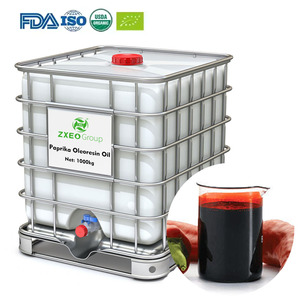
Our centralized bonded logistics centers keep standardized stock ready for prompt dispatch. Bulk supply is nitrogen-flushed into food-grade 25 kg, 200 kg steel/fluorinated HDPE drums, or 1000 kg IBC containers to prevent oxidative decay.
The global natural colorants sector is rapidly migrating away from synthetic azo dyes toward stable carotenoid complexes. Explore key supply chain transformations shaping industrial buying over the next five years.
Stricter limits under European Food Safety Authority (EFSA) guidance have accelerated demand for supercritical CO2 extracted oleoresins. Buyers are transitioning from conventional organic solvent extraction (such as acetone or hexane) toward low-temperature extraction lines that eliminate solvent residues below detectable limits.
Historically limited to oil-based matrices, the procurement of microencapsulated, spray-dried water-dispersible paprika powders and self-emulsifying liquids has surged by over 14% CAGR. Beverage manufacturers and instant noodle seasoners require clear dispersion without phase separation or oil-ring formation.
With unpredictable climatic variations impacting traditional harvesting bases in India and Spain, corporate food conglomerates are securing long-term futures contracts with certified Chinese suppliers. China’s vast land reserves and mechanical harvesting infrastructures protect B2B buyers from single-region crop failures.
Reference data for food scientists, QC procurement directors, and cosmetic formulation engineers.
| Grade Designation | Color Units (CU) / E0.1% 1cm | Capsaicin / Pungency | Physical State | Primary Industrial Applications |
|---|---|---|---|---|
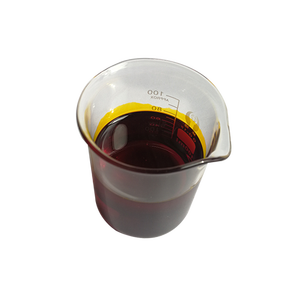
| Standard Color E-40 | 40,000 CU (approx. 900 E) | < 0.01% (De-pungent) | Viscous deep red liquid | Meat emulsions, processed cheeses, snack dusting |
| High-Density E-100 | 100,000 CU (approx. 2,250 E) | < 0.005% (Non-pungent) | Homogeneous thick oil | Sauce bases, dressings, culinary oil coloration |
| Ultra-Refined E-150 | 150,000 CU (approx. 3,375 E) | Non-pungent | Dark red resinous fluid | Gelatin capsule shells, botanical cosmetic shades |
| Capsicum Oleoresin Dual | 10,000 – 60,000 CU | 1.0% – 6.6% (150k - 1M SHU) | Semi-liquid resin | Spicy instant ramen seasonings, hot wings, marinades |
| Water-Dispersible Grade | 20,000 – 40,000 CU | Non-pungent | Emulsified liquid / Powder | Beverages, canned soups, brines, dairy coatings |
Essential guidance covering stability, testing procedures, packaging formats, and international shipping protocols.
Color value is determined via spectrophotometric analysis following the ASTA (American Spice Trade Association) Method 20.1 or the EOA standard. Absorbance is measured at 460 nm in acetone. We certify color intensity against precise E0.1% 1cm parameters on the batch Certificate of Analysis to ensure exact color reproducibility across your production runs.
Capsanthin and capsorubin carotenoids are sensitive to light and oxidation. We utilize food-grade antioxidants (such as natural Mixed Tocopherols or Ascorbyl Palmitate upon customer specification), nitrogen sparging during filling, and heavy-gauge opaque steel or epoxy-lined drums. We also offer temperature-monitored refrigerated container shipping (reefer containers) for equatorial maritime routes.
Yes. Through targeted molecular distillation and selective column fractionation, we separate spicy capsaicinoids from natural red carotenoids. Our de-pungent grades contain capsaicin content below 0.001% (tested via HPLC), making them ideal for confections, infant-adjacent foods, and delicate sauces requiring pure visual tint without heat.
Given global scrutiny around illegal adulteration in capsicum extracts, every production lot is screened for Sudan I, II, III, IV, Para Red, and related synthetic dyes using validated LC-MS/MS testing with detection limits under 10 ppb. We issue third-party verified adulteration-free declarations with every export consignment.
Standard packaging includes 25 kg fluorinated HDPE jerrycans, 200 kg epoxy-lined steel drums, and 1,000 kg food-grade intermediate bulk containers (IBCs). Our standard minimum order quantity (MOQ) begins at 100 kg for regular stock color strengths, while customized color calibrations or organic formulations typically start at 500 kg.
All consignments are backed by a complete technical dossier: Lot-Specific Certificate of Analysis (CoA), Technical Data Sheet (TDS), Safety Data Sheet (SDS / GHS compliant), Non-GMO Statement, Allergen Declaration, Origin Certificate (Form A / Form E / RCEP where applicable), and Phytosanitary Certificate issued by China Customs (GACC).
Accelerate your formulation pipeline with certified, high-color-yield, low-residual natural carotenoid extracts. Our technical engineering desk delivers sample validation, custom color profiling, and commercial pricing within 24 hours.
Send an Inquiry