
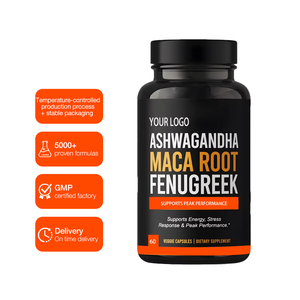
Nutraceutical Formulation
Oem Odm Private Label Ashwagandha Maca Root Extract Capsules Supplements
Supercritical synergy complex standardizing withanolides and macamides for endocrine balance and vitality formulation.
Direct wholesale inventory produced across state-of-the-art supercritical CO2 fractionation lines and pharmaceutical-grade cold processing suites. Every ingredient features complete batch traceability, certified HPLC/GC-MS assay profiles, and full destination compliance dossiers.
Supercritical synergy complex standardizing withanolides and macamides for endocrine balance and vitality formulation.
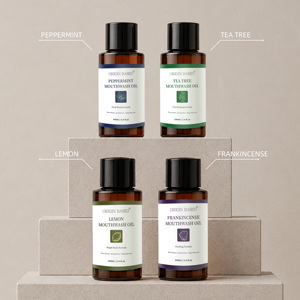
CO2-extracted Boswellia carterii fraction loaded with active terpenes, combined with virgin carrier oils for microbiome balance.
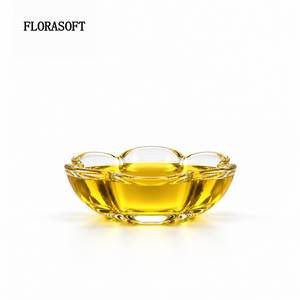
Zero-degradation supercritical and cold-pressed Rosa Mosqueta fractions high in trans-retinoic acid and omega-3-6-9 esters.
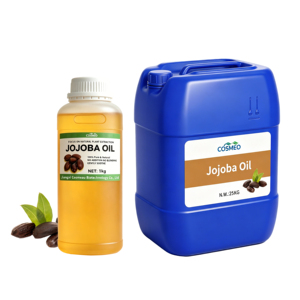
Biocompatible liquid wax ester profile mimicking human sebum; molecularly purified without hexane or thermal cracking.
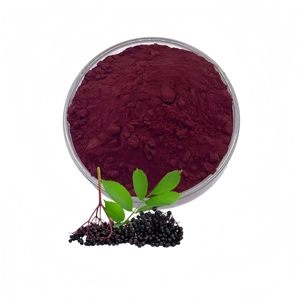
Water/CO2 counter-current concentrated Sambucus Nigra extract standardized for cyanidin-3-glucoside immune actives.
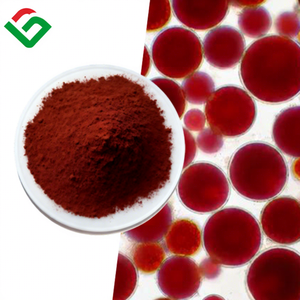
Supercritical CO2 extracted from Haematococcus pluvialis. Free of residual solvent solvents, non-irradiated, 100% natural isomer.
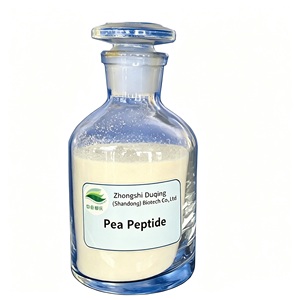
Enzymatically cleaved, non-allergenic vegan peptides optimized for rapid nitrogen absorption, clear solubility, and neutral mouthfeel.
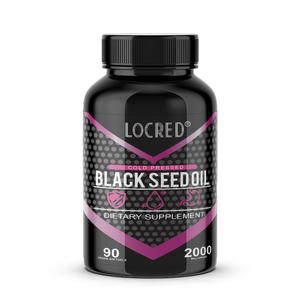
Cold-pressed and scCO2 Nigella sativa oil verified for minimum 3% Thymoquinone, enclosed in enteric or vegetarian shell softgels.
Supercritical Fluid Extraction (SFE), explicitly utilizing carbon dioxide ($scCO_2$), has redefined high-purity natural ingredient manufacturing. As global regulatory bodies such as the European Food Safety Authority (EFSA), the United States FDA, and the Japanese PMDA enforce stricter ceilings on chemical solvent residues (such as hexane, ethanol, acetone, and methylene chloride), industrial B2B sourcing agents are aggressively shifting their raw material dossiers away from legacy solvent extractions toward supercritical and subcritical fluid technologies.
At its thermodynamic critical point (temperature exceeding 31.1°C and pressure beyond 73.8 bar), carbon dioxide exhibits unique physicochemical behaviors: it penetrates plant cell matrices with the low viscosity and high diffusivity of a gas, while solubilizing complex lipophilic and aromatic fractions with the high density and solvent power of a liquid. Within China's specialized botanical manufacturing hubs, multi-stage supercritical extraction units operate at scalable commercial pressures between 200 bar and 350 bar, allowing selective bio-active extraction without exposing delicate secondary metabolites to thermal denaturing or oxidative stress.
Understanding the fundamental technical disparities between legacy extraction systems and industrial supercritical CO2 extraction is pivotal for formulating robust product compliance profiles:
| Analytical Parameter | Supercritical CO2 (SFE-CO2) | Hexane / Hydrocarbon | Hydro-Ethanolic (Ethanol/H2O) |
|---|---|---|---|
| Solvent Residue in Extract | 0.00 ppm (Completely Evaporates) | 2.0 – 50.0 ppm (Requires Desolventizer) | 100 – 5000 ppm (Demands Thermal Drying) |
| Thermal Exposure Matrix | Low (32°C – 45°C Controlled) | Moderate (65°C – 80°C) | High (75°C – 100°C) |
| Heavy Metal Extraction Carryover | Near Zero (Insoluble in non-polar CO2) | Moderate Risks | High Risk (Pulls soil polar metals) |
| Bioactive Integrity / Native Fingerprint | High (>98% native enantiomer retention) | Moderate (Solvent artifacts occur) | Variable (Oxidation & caramelization risk) |
| Environmental & Clean Label Status | Green, Carbon-Recycled, USDA Organic | VOC Emission, Hazardous Waste | Moderate Carbon Footprint |
The standard architecture of premier Chinese Supercritical CO2 extraction facilities involves triple-cascade extraction vessels (ranging from 100L up to 1,500L vessel capacity) coupled to dual multi-stage cyclonic separators. Closed-loop recovery systems capture upwards of 95% of circulating CO2, liquefying and compressing it back into operational buffer tanks. High-pressure membrane dosers allow the micro-metered introduction of food-grade ethanol as an entrainer (co-solvent) when moderately polar targets—such as specific saponins, flavonoids, or glycosides—are demanded by international specifications.
Continuous stabilization at 250–320 bar extracts delicate phytocannabinoids, thymoquinone, and astaxanthin lipids without creating thermal degradation byproducts or synthetic isomers.
Dual separator arrays permit the isolated collection of light volatile aromatic molecules in Separator 1, while isolating heavier waxes and resinous triglycerides in Separator 2.
Real-time chromatographic sensor loops integrate with in-house analytical laboratories running HPLC, GC-MS, and ICP-MS platforms for instantaneous batch marker consistency.
As the international dietary supplement and functional cosmetics sectors mature, the expectations placed on bulk active pharmaceutical ingredient (API) and botanical extract suppliers in China are undergoing rapid transformation. B2B buyers must align their procurement protocols with five prevailing supply-chain trajectories:
International Pharmacopoeias (USP, Ph. Eur., JP) continue to lower permissible daily exposure (PDE) limits for Class 2 and Class 3 solvents. Leading brands are pre-emptively sourcing 100% solvent-free extracts to eliminate regulatory non-compliance friction across multiple borders.
Modern analytical specifications demand comprehensive botanical fingerprints rather than single marker spiked isolates. For instance, authentic Ashwagandha extracts must balance withanolides, withaferin A, and withanosides, verified by high-resolution HPLC.
Global logistics regulations require systematic testing for ethylene oxide (ETO), polycyclic aromatic hydrocarbons (PAHs), heavy metals (Pb, Cd, As, Hg by ICP-MS), and over 400 pesticide residue panels under EU Regulation 396/2005.
Parallel to traditional supercritical CO2, forward-thinking Chinese processing plants are investing heavily in subcritical low-temperature extraction using environmentally safe eco-solvents such as R134a and liquefied propane/butane for ultra-heat-sensitive botanical enzymes and polar pigments. Furthermore, because supercritical CO2 extracts yield concentrated, lipophilic oleoresins and non-polar oil fractions, advanced suppliers are pairing extraction with wet-milling, liposomal encapsulation, and micro-fluidic nano-emulsification technologies. This transformation converts lipophilic extracts into cold-water-dispersible (CWD) free-flowing powders, expanding the utilization of actives like Astaxanthin, Curcumin, and Frankincense into ready-to-drink (RTD) functional beverages and effervescent delivery formats.
Navigating direct factory procurement in China requires a manufacturing partner with demonstrated operational transparency, verified engineering capabilities, and robust quality governance. Our production infrastructure combines decades of botanical cultivation heritage with pharmaceutical cleanroom processing:
Equipped with commercial 1000L×3 high-pressure extraction vessels delivering consistent multi-ton production cycles with automated pressure-temperature control loops.
Full manufacturing compliance certified under ISO9001, ISO22000, HACCP, cGMP (21 CFR Part 111), USDA Organic, Halal, and Kosher regulatory audits.
Equipped with Agilent HPLC systems, GC-MS/MS, Shimadzu ICP-MS, UV-Vis spectrophotometers, and automated microbiological barrier suites for batch-by-batch release.
Full formulation capability covering custom supercritical fractions, powder spray drying, carrier oil dispersion, beadlet encapsulation, and contract softgel packaging.
Procuring raw botanical extracts from China without standardized parameters creates vulnerabilities in quality consistency, analytical disputes, and customs hold-ups. International QA/QC teams should utilize the following checklist when submitting requests for quotations (RFQs):
| Evaluation Parameter | Technical Criteria to Mandate in Contract | Analytical Verification Method |
|---|---|---|
| Botanical Identity & Part | Latin binomial, plant part (e.g., Nigella sativa seed, Rosa canina fruit) | TLC / HPTLC Fingerprint against USP Botanical Reference Standard |
| Active Biomarker Assay | Explicit percentage (e.g., Astaxanthin ≥5.0%, Thymoquinone ≥3.0%) | Reverse-Phase HPLC with UV/DAD or Refractive Index Detection |
| Residual Solvent Clearance | Zero ppm for non-entrained extracts; <5000 ppm if food ethanol co-solvent used | Headspace Gas Chromatography with Flame Ionization (HS-GC-FID) |
| Heavy Metals (Elemental) | Lead (Pb) < 0.5 ppm, Cadmium (Cd) < 0.2 ppm, Mercury (Hg) < 0.1 ppm, Arsenic (As) < 0.5 ppm | Inductively Coupled Plasma Mass Spectrometry (ICP-MS) |
| Pesticide Multi-Residue | Full screen compliant with EC No 396/2005 (>400 active agrochemicals) | LC-MS/MS & GC-MS/MS Multi-Residue Analysis |
| Microbiological Bioburden | Total Aerobic Plate Count < 1,000 CFU/g; Yeast/Mold < 100 CFU/g; Salmonella/E. coli: Negative | USP <2021>, <2022> Microbial Enumeration Protocols |
Direct technical answers addressing commercial logistics, quality assurance protocols, and custom production contracts.
Connect directly with our chemical extraction engineers and export compliance specialists to match specifications, verify CoA archives, and request evaluation samples.
Send an Inquiry