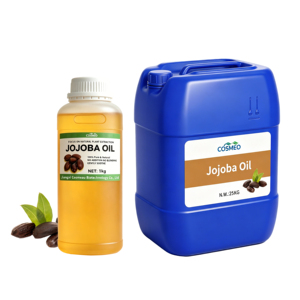
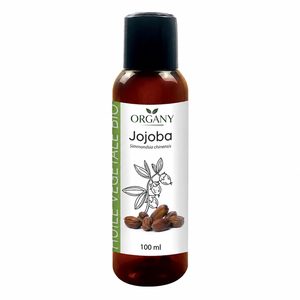
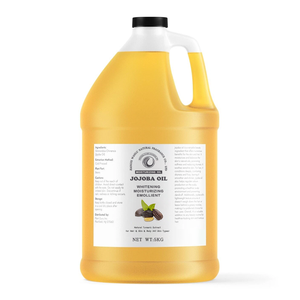
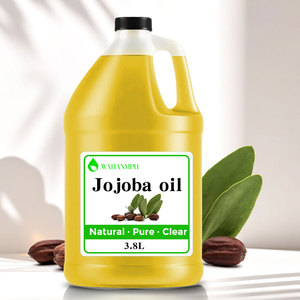
Explore our certified cold-pressed bulk carrier oils and private label packaged solutions. Every production run is backed by comprehensive analytical testing, guaranteed heavy-metal and pesticide safety thresholds, and complete traceability dossiers.
In modern personal care formulations, Jojoba Oil (INCI: Simmondsia Chinensis Seed Oil) is uniquely positioned not as a conventional vegetable oil, but as a long-chain monounsaturated liquid wax ester. Conventional botanical seed oils—such as sunflower, almond, or argan—are structured as glycerol molecules esterified with three fatty acid chains (triglycerides). Jojoba, by stark contrast, consists almost exclusively (over 97%) of straight-chain mono-esters combining C20 and C22 monounsaturated fatty acids with C20 and C22 monounsaturated fatty alcohols.
This distinct macromolecular configuration gives jojoba liquid wax exceptional physical and chemical stability. Because it lacks the glycerol backbone prone to enzymatic beta-oxidation and free-radical rancidity, pure golden jojoba oil maintains a thermal decomposition threshold exceeding 300°C and an oxidative stability index (Rancimat method at 110°C) surpassing 50–60 hours. For global brand directors and procurement engineers, this equates to extended shelf life, minimal rancidity complaints, and the ability to formulate preservative-free or waterless clean-label cosmetic systems without premature organoleptic degradation.
Human sebum is composed of triglycerides (41%), wax monoesters (26%), squalene (12%), and free fatty acids (16%). Because human skin is naturally saturated with wax esters that decline with age and environmental distress, topical application of pure cold-pressed jojoba oil provides immediate, bio-identical physiological compatibility. Unlike occlusive petroleum-derived mineral oils that create impermeable barriers, jojoba interacts directly with intercellular lipid matrices, restoring the epidermal stratum corneum barrier while allowing physiological transpiration.
From an aesthetic perspective, the straight-chain structure yields an exceptionally low spreadability coefficient resistance and a high slip factor. It imparts a dry, velvet-like emolliency without greasy, tacky post-application residues—making it the ideal active carrier for high-end facial serums, scalp barrier balms, luxury color cosmetics, and non-comedogenic acne treatment formulations.
| Physicochemical Parameter | Golden Virgin (Cold-Pressed) | Decolorized / Refined Jojoba | Analytical Standard / Method |
|---|---|---|---|
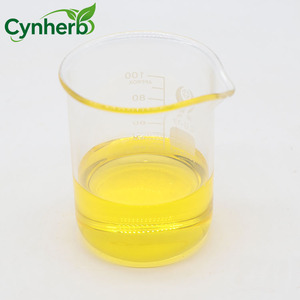
| Appearance & Color | Clear, Brilliant Golden Yellow | Water-White to Pale Transparent | Visual / Lovibond Scale |
| Specific Gravity (25°C) | 0.863 – 0.873 g/cm³ | 0.863 – 0.872 g/cm³ | USP <841> / Pycnometer |
| Refractive Index (25°C) | 1.465 – 1.468 | 1.465 – 1.467 | Abbe Refractometer (ASTM D1218) |
| Acid Value (mg KOH/g) | ≤ 1.0 (Typically ≤ 0.5) | ≤ 0.5 | AOCS Cd 3d-63 |
| Peroxide Value (meq O₂/kg) | ≤ 2.0 (Ultra-fresh runs ≤ 1.0) | ≤ 1.0 | AOCS Cd 8b-90 |
| Iodine Value (Hanus) | 80 – 90 g I₂/100g | 80 – 90 g I₂/100g | AOCS Cd 1b-87 |
| Saponification Value | 90 – 98 mg KOH/g | 90 – 98 mg KOH/g | AOCS Cd 3-25 |
| C20:1 Gadoleic Acid (%) | 65.0% – 80.0% | 65.0% – 80.0% | GC-FID (Capillary Column) |
| C22:1 Erucic Acid (%) | 10.0% – 22.0% | 10.0% – 22.0% | GC-FID (Capillary Column) |
| Ethylene Oxide (ETO) | < 0.01 mg/kg (Not Detected) | < 0.01 mg/kg (Not Detected) | Accredited GC-MS Headspace |
Sourcing botanical raw materials for high-volume manufacturing lines introduces severe compliance and consistency challenges. SV Botanica mitigates international procurement risk through an institutional-grade supply chain model that bridges agricultural provenance in regulated agro-climatic belts with pharmaceutical-grade downstream processing.
Our extraction facilities operate low-temperature screw expellers calibrated below 45°C. By avoiding chemical extraction solvents (such as hexane), we preserve native tocopherols, phytosterols, and polyphenol matrices.
Each harvest cycle is subjected to GC-MS fatty acid profiling, HPLC verification, and ICP-MS testing for heavy metals (Lead, Cadmium, Arsenic, Mercury) to guarantee absolute conformity with stringent USP and Ph. Eur. monographs.
In accordance with EC Regulation 396/2005 and EU 2019/1793, consignments undergo third-party laboratory multi-residue pesticide screens and zero-ETO validation, preventing port border detentions and regulatory recalls.
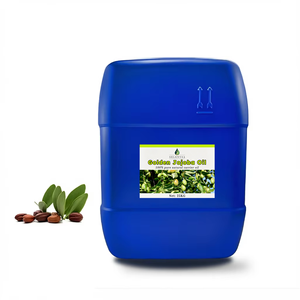
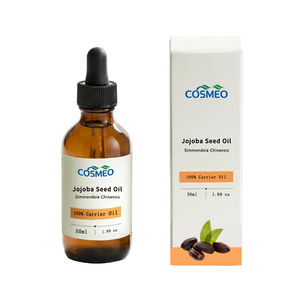
From 25kg HDPE drums and 1,000L IBC totes to private-label automated filling in ISO-certified cleanrooms, we offer nitrogen-purged bottling, custom silkscreen branding, and retail-ready secondary cartons.
We supply full destination documentation including batch Certificates of Analysis (CoA), Safety Data Sheets (SDS), Technical Data Sheets (TDS), Certificate of Origin, Phytosanitary certificates, and MoCRA/CPNP PIF support.
The global jojoba oil ecosystem is experiencing a structural pivot. Traditionally viewed as an alternative commodity carrier oil, jojoba is increasingly categorized as a core functional bio-lipid. Procurement directors face shifting dynamics across several vectors:
Global regulatory bodies and eco-conscious consumers are pressing cosmetic brands to remove water from formulas to eliminate microplastics, synthetic preservatives, and heavy carbon transport footprints. Jojoba oil’s structural stability makes it the ultimate base for concentrated anhydrous facial balms, solid cleansing sticks, and waterless active serums. Unlike natural oils with shorter shelf lives, jojoba does not require high dosages of synthetic antioxidants (like BHT), allowing brands to claim 100% clean-label status without risking lipid rancidity.
Jojoba (*Simmondsia chinensis*) is an intrinsically resilient, drought-tolerant perennial shrub capable of thriving in hyper-arid zones where conventional crops cannot survive. Jojoba plantations serve as vital carbon sinks and prevent desertification while consuming minimal irrigation resources. Forward-thinking procurement teams in the EU and North America are prioritizing direct farm partnerships where soil carbon sequestration metrics and fair-trade labor frameworks can be audited. SV Botanica’s integrated sourcing strategy provides transparent farm-to-dock lot numbers, verifying sustainable agricultural practices across every barrel.
Historically, commercial jojoba production was dominated by small regional corridors in the Sonoran desert and select sectors of South America. Extreme climate fluctuations, frost unpredictability, and water rights legislation have recently stressed traditional yields. SV Botanica’s cultivated sourcing network leverages India’s specialized arid agro-belts (including certified tracts in Rajasthan and Gujarat), delivering geographic diversification, high output yields, and price insulation for multinational purchasers looking to eliminate single-origin dependency.
While the virgin golden grade remains the gold standard for prestige skin and hair care marketing, an increasing volume of color-sensitive cosmetics—such as clear lip oils, pastel makeup creams, and pharmaceutical-grade dermatological suspensions—demands pure, decolorized jojoba. Using low-temperature mechanical bleaching earths without toxic chemical oxidants, our decolorization process extracts the natural yellow carotenes without modifying the underlying wax ester bonds, resulting in a crystal-clear, virtually odorless functional lipid matrix.
Direct, technically rigorous answers compiled by our chemical engineering and regulatory export departments to assist procurement managers, QA auditors, and formulation chemists.
Connect directly with our technical sales engineers to request lot-specific Certificates of Analysis, physical pre-shipment sample testing kits, custom OEM bottling quotes, or bulk drum tiered pricing. Complete regulatory dossiers delivered within 24 hours.