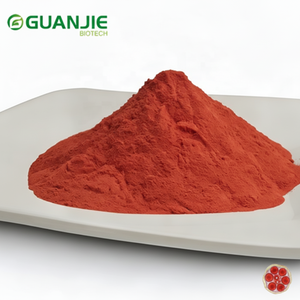
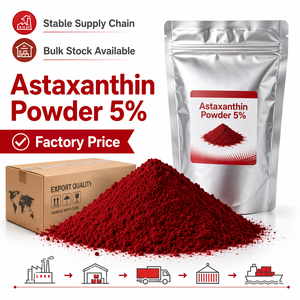
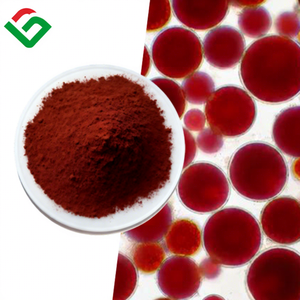
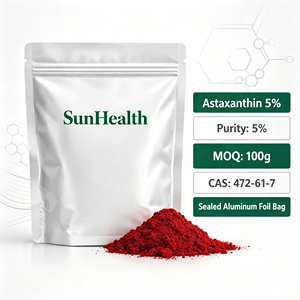
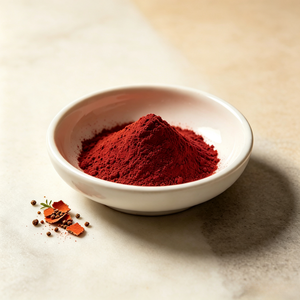
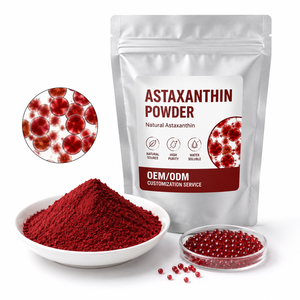
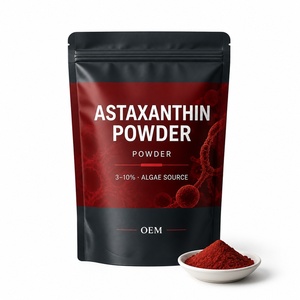
Direct manufacturer supply derived from non-GMO closed photobioreactor Haematococcus pluvialis cultures. Fully certified for worldwide customs clearance.
Litres High-Purity Microalgae Photobioreactor Capacity
Cell Wall Rupture Rate via Low-Temperature Mechanical Jet
HPLC Testing for Exact (3S, 3'S) Stereoisomer Purity
ICP-MS Validated Ultra-Low Heavy Metal Tolerance
Why procurement teams must verify botanical identity, chiral configurations, and esterification profiles before confirming raw material suppliers.
Natural astaxanthin extracted from Haematococcus pluvialis presents exclusively as the (3S, 3'S) stereoisomer, typically 85–90% esterified with mono- and di-unsaturated fatty acids (oleic, linoleic). This molecular architecture provides up to 50 times the antioxidant singlet oxygen quenching capability of synthetically synthesized petrochemical derivatives, which exist as a racemic mixture (3S:3R:3'R) with inferior biological cellular membrane absorption.
The thick sporopollenin-like encysted wall of H. pluvialis aplanospores presents an impenetrable physical barrier to human digestive proteases. Our manufacturing complex utilizes multi-stage ultra-low-temperature cryogenic micro-jet disruption under cleanroom conditions, achieving unbroken cell cracking rates exceeding 98% while preventing thermal degradation of heat-sensitive conjugated polyene chains.
Zero chlorinated solvents, ethanol, or acetone remain in the finished active pharmaceutical ingredient (API). By applying supercritical carbon dioxide (SC-CO2) at controlled pressures of 32–38 MPa and 40°C, the natural carotenoid complex is extracted intact without exposure to ambient oxygen or degradation catalysts, yielding solvent-residue-free oleoresins and powders compliant with USP and Ph. Eur.
| Parameter / Specification | China Factory Direct (H. pluvialis Extract) | Synthetic Petrochemical Synthesis | Yeast / Bacterial Fermentation (P. rhodozyma) |
|---|---|---|---|
| Stereoisomer Profile | 100% Pure (3S, 3'S) Isomer Configuration | Racemic (1:2:1 ratio of 3S,3'S; 3R,3'S; 3R,3'R) | Predominantly (3R, 3'R) Configuration |
| Esterification Status | Esterified (~80% Monoester, ~15% Diester) | 100% Free / Unesterified Form (Unstable) | Unesterified Free Form |
| Biological Activity / Antioxidancy | Highest Singlet-Oxygen Quenching Capacity | Low (~20–50x Lower Cellular Uptake) | Moderate (~3–5x Lower Clinical Evidence) |
| Regulatory Cleared Markets | US FDA NDI, EU Novel Food, EFSA, CFDA | Restricted to Animal Feed Pigmentation | Subject to Strict Novel Food Scrutiny |
| Trace Contaminants & Solvents | Solvent-Free (Supercritical CO2), No Petrochemicals | Risk of Residual Carcinogenic Solvents | Residual Host Cell Proteins & Mutagens |
Market forecasts point to a 13.8% CAGR across functional foods, pharmaceutical supplements, and clean-label cosmetic formulations.
Global procurement teams are rapidly disqualifying suppliers who utilize unsealed raceway open-pond systems due to high environmental contamination risks, including heavy metal airborne deposition, wild bird droppings, and fluctuating seasonal UV levels. By 2027, top-tier global buyers will exclusively mandate enclosed glass tubular photobioreactor sourcing to guarantee zero airborne micropollutants.
Standard astaxanthin oleoresins face poor gastrointestinal absorption and rapid oxidation when exposed to light or air. Modern international brands require cold-water-dispersible (CWD) powders, microencapsulated beadlets, and liposomal dispersions tailored for ready-to-drink (RTD) functional beverages, hard-shell capsules, and gummy formulations without color bleeding or degradation.
Import authorities in North America (FDA FSVP rules) and Europe (EC 396/2005 pesticide limits & EU 2023/915 contaminants) have introduced stringent testing standards. Importers can no longer rely on unverified intermediary CoAs. Direct factory contracts with batch-traceable origins from biomass cultivation to drying are essential to mitigate cross-border shipment seizures.
A long-standing challenge in astaxanthin sourcing has been the conflation of UV-Vis Spectrophotometric assay values with High-Performance Liquid Chromatography (HPLC) results. UV spectrophotometry measures total absorbing carotenoids, falsely inflating results by 15% to 30%. High-integrity buyers now mandate that suppliers verify active astaxanthin content using validated HPLC assay protocols.
Direct from our manufacturing hubs in Shaanxi and specialized aquaculture facilities in Yunnan, we provide seamless procurement and end-to-end documentation.
All extraction, crystallization, micronization, and packaging operations occur within Grade D 100,000 c-GMP cleanrooms. We operate automated HVAC climate controls that eliminate moisture fluctuations, oxidation exposure, and airborne particulates, exceeding standard dietary supplement production guidelines.
Whether formulating compressed tablets requiring free-flowing direct-compression granules or cosmetic anti-aging serums requiring sub-micron water-miscible emulsions, our milling systems calibrate particle sizes from 80-mesh powders down to 200-nanometer liposomal suspensions.
Every commercial consignment includes comprehensive batch-specific documentation: Certificate of Analysis (CoA) referencing HPLC methods, Material Safety Data Sheet (MSDS/SDS), Flow Charts, Non-GMO Statements, Allergen Declarations, BSE/TSE-Free Certificates, and Phytosanitary documentation.
Technical, analytical, and supply chain answers to streamline your factory qualification process.
UV-Vis Spectrophotometry measures total light absorbance at approximately 478-480 nm, detecting not only pure astaxanthin but also related carotenoids such as beta-carotene, canthaxanthin, and lutein, inflating reported assay concentrations by 20% or more. High-Performance Liquid Chromatography (HPLC) isolates individual molecular components, determining the exact concentration of pure astaxanthin isomers. We provide HPLC assay verification for all batches.
Haematococcus pluvialis encysted resting cells (aplanospores) possess a rigid sporopollenin-composed wall. We apply continuous high-pressure microfluidization and low-temperature physical jet cracking under cleanroom conditions. This yields an unbroken wall rupture rate ≥98% without thermal degradation, safeguarding the sensitive esterified carotenoid chains.
Our standard bulk packaging comprises 1 kg or 5 kg multi-layer aluminium foil bags flushed with high-purity inert nitrogen gas and vacuum heat-sealed. These are packaged inside 25 kg fiber drums with double food-grade polyethylene liners. This prevents UV radiation, ambient oxygen, and moisture ingress, maintaining 24-month stability when stored between 2°C and 8°C.
Standard astaxanthin powder is lipophilic and oil-soluble. For functional beverages, effervescent tablets, and gummies, we supply specialized Cold Water Dispersible (CWD) 1% and 2% astaxanthin powders, as well as microencapsulated beadlets. These dissolve rapidly in cold water to produce an optically clear or translucent solution without oily surface separation.
We provide 20g–50g free pre-shipment evaluation samples along with batch-specific analytical CoAs for qualification by your R&D and QA laboratories. Our standard commercial trial MOQ begins at 1 kg for pilot formulations, scaling up to multi-ton container loads for established industrial supply lines.
Yes. Our extraction process utilizes non-irradiated supercritical carbon dioxide (SC-CO2) with zero application of ethylene oxide gas. All export batches destined for the EU are screened by independent accredited laboratories (such as Eurofins or SGS) for ETO and 2-chloroethanol down to < 0.01 mg/kg, ensuring compliance with EC Regulation 396/2005.
Yes. We support customized particle micronization, proprietary carrier choices (e.g., maltodextrin, gum acacia, or vegan pea starch), custom potency adjustments from 1% to 10%, and turnkey private-label packaging for retail-ready capsules, powders, and liquids.
In-stock inventory (standard 2%, 5%, and 10% powder or oil) dispatches within 3 to 5 business days after order confirmation and payment processing. Custom microencapsulation runs, tailored mesh grinding, or large-scale contract manufacturing orders typically ship within 14 to 21 calendar days.
Whether you require a pilot trial sample, updated batch HPLC reports, or an annual supply contract quote, our bioprocess team responds within 24 hours.