Explore our flagship, pharmacopoeially validated raw extracts and clean bio-actives. Each lot is authenticated by HPLC/GC-MS with validated assay data, heavy metal ICP-MS screening, and full batch traceability.
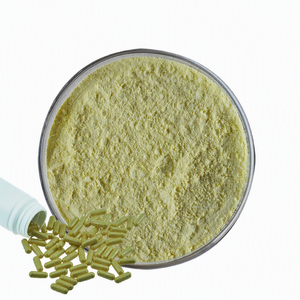
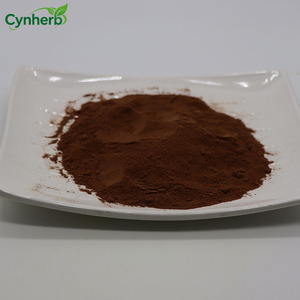
South Korea’s wellness, cosmeceutical (K-Beauty), and functional food markets represent one of the world’s most sophisticated industrial environments for botanical active ingredients. Governed strictly by the Ministry of Food and Drug Safety (MFDS, 식품의약품안전처), Korean importers, contract manufacturers (OEM/ODM giants like Kolmar Korea and Cosmax), and formulation chemists require an uncompromising tier of phyto-chemical verification.
Procuring raw botanical ingredients into Incheon or Busan demands far more than basic commercial invoices. Importers face stringent enforcement of the Korean Food Code (식품공전), Health Functional Food Code (건강기능식품공전), and the Korean Cosmetic Ingredients Dictionary (KICID). Unstandardised plant powders or ambiguous solvent residues lead to immediate customs detainment and costly border rejections.
Information Gain Insight: Our extraction processes bridge the compliance gap between international bio-farms and Korean customs clearance by executing validated batch-specific assays by HPLC, GC-MS, and ICP-MS testing in ISO/IEC 17025 accredited laboratories prior to freight loading.
A prevalent challenge within the Korean procurement landscape is the widespread proliferation of generic "extraction ratios" (e.g., 10:1 or 20:1) that lack validated bioactive quantification. In high-efficacy K-Derma formulas and MFDS "Individually Recognized Functional Ingredients" (개별인정형 기능성원료), crude ratios fail to guarantee clinical efficacy or batch-to-batch repeatability.
We engineer each active botanical extract against target chromatographic profiles. Whether confirming 3% Rosavins and 1% Salidroside in Rhodiola rosea to combat metabolic stress, or quantifying Mogroside V in monk fruit via liquid-solid chromatography, our manufacturing facility delivers standardized markers that allow Korean formulators to predict thermodynamic stability, bioavailability, and transdermal penetration accurately.
Furthermore, our materials are screened for ethylene oxide (ETO), 2-chloroethanol, polycyclic aromatic hydrocarbons (PAHs), and toxic elemental impurities (Pb, As, Cd, Hg) below MFDS trace-level thresholds.
From derma-cosmetics formulated in Pangyo Techno Valley to functional supplements distributed across Seoul's retail networks, our botanical actives fulfill specific technical roles.
Korean cosmetic brands demand clean-label, hypoallergenic, high-penetration ingredients that synergize with active hydration and epidermal restoration matrices.
Supplying registered functional food producers with certified active compounds compliant with strict microbiological and active-level specifications.
Preserving active liquid botanicals and natural fermented extracts without triggering dermal sensitisations or altering product sensory signatures.
How R&D directors and procurement officers across Seoul, Gyeonggi, and Chungcheong are upgrading their raw material pipelines to meet 2026+ regulatory demands.
Korean consumers are moving past purely "free-from" marketing toward verified efficacy ("Clean + Clinical"). Active botanical manufacturers must present documented cellular pathways, quantified active percentages (HPLC), and verified dermatological safety data.
Following international alerts, Korean quarantine authorities scrutinize imported botanical powders for ETO and 2-chloroethanol contamination. Supplying ETO-free validated lots processed with non-thermal steam sanitation is now a prerequisite for import approval.
With Korean cosmetic brands expanding into Southeast Asia, Europe, and the Middle East, active ingredients must carry international Halal, Kosher, and accredited Vegan declarations to minimize downstream reformulation costs.
Review our quality specifications engineered to eliminate analytical discrepancies between our Certificate of Analysis and incoming QC testing at Korean laboratories.
| Phyto Ingredient | Reference Botanical Name | Target Standardisation | Analytical Protocol | Contaminant Control Specification |
|---|---|---|---|---|
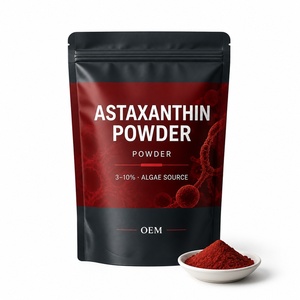
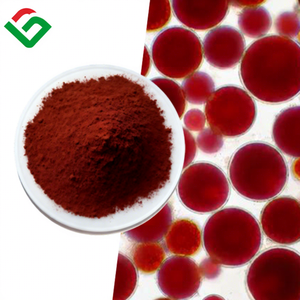
| Natural Astaxanthin | Haematococcus pluvialis | 2.0% – 10.0% Pure | HPLC (Reversed Phase) | Heavy Metals < 10ppm; Arsenic < 1.0ppm; Solvent residue free (CO2) |
| Rhodiola Rosea Extract | Rhodiola rosea L. | 3% Rosavins / 1% Salidroside | HPLC (Dual-Wavelength UV) | Pesticide MRL compliance under EU/Korean Food Code; ETO Negative |
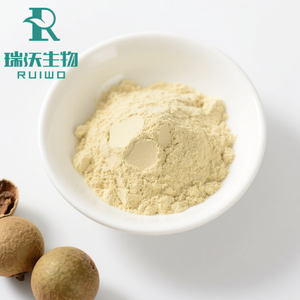
| Monk Fruit (Luo Han Guo) | Siraitia grosvenorii | 25% – 50% Mogroside V | HPLC / Evaporative Light Scattering | Aflatoxins B1+B2+G1+G2 < 4.0 ppb; Total plate count < 1,000 CFU/g |
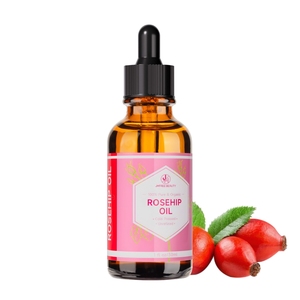
| Pure Virgin Rosehip Oil | Rosa canina L. | > 75% Unsaturated FA | GC-FID (Fatty Acid Methyl Esters) | Peroxide value < 5 meq O2/kg; Acid value < 1.0 mg KOH/g; Non-irradiated |
| Kava Root Active | Piper methysticum | 30% Total Kavalactones | HPLC (Chromatographic Profiling) | Screened for Pipermethystine (0.00% Stem/Peel marker); Lead < 0.5 ppm |
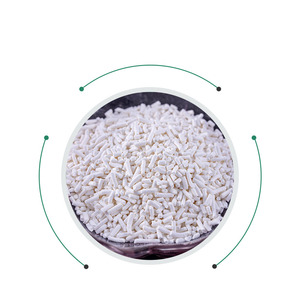
| Potassium Sorbate | Synthetic / Synthetic Nature-Identical | 99.0% – 101.0% Purity | Acidimetric Titration (FCC/KP) | Heavy Metals (as Pb) < 2 ppm; Loss on drying < 1.0%; Free alkali < 0.1% |
Our global production ecosystem delivers pharmaceutical-grade botanical supply chains backed by rigorous documentation, certified processing facilities, and dedicated export logistics.
Manufactured within strict Current Good Manufacturing Practice (cGMP) and ISO-certified infrastructure, guaranteeing pristine sanitation and process repeatability.
Every shipment is accompanied by a detailed Certificate of Analysis stating exact quantitative assay methodologies, instrumental parameters, and complete impurity limits.
We provide comprehensive technical data dossiers, SDS, non-GMO statements, BSE/TSE-free declarations, and INCI/CAS listings for seamless K-REACH and customs clearance.
Integrated supply chains allow complete vertical audit trails back to the cultivation region, harvest season, and primary extraction run for ultimate transparency.
Technical support from qualified analytical chemists who review client target monographs, chromatograms, and solubility constraints within one business day.
Standard starting MOQs from 25 kg fiber drums up to full container loads (FCL), supported by refrigerated storage and specialized nitrogen-flushed packaging for oxidizable oils.
Direct technical and commercial answers addressing quarantine, regulatory validation, and shipping logistics to Incheon (ICN) and Busan Port.
All export batches targeting South Korea are screened by multi-residue GC-MS/MS and LC-MS/MS against the positive list system (PLS) defined in the Korean Food Code. Materials with pesticide residues exceeding 0.01 ppm for non-registered substances are strictly withheld from our Korea export inventory.
Yes. Every cosmetic-grade botanical active is supplied with standard INCI nomenclature, CAS numbers, Korean Cosmetic Ingredient Dictionary (KICID) listing status, and quantitative solvent/carrier declarations to facilitate functional cosmetic notifications (기능성화장품 보고/심사).
We supply destination-tailored export packets including the Manufacturer’s Certificate of Analysis (CoA), Phytosanitary Certificate issued by government quarantine bodies, Certificate of Origin (COO), Safety Data Sheet (SDS/MSDS), Non-Radiation Declaration, and ETO-Free statements.
Sensitive lipophilic actives such as Astaxanthin powder/oleoresin and cold-pressed Rosehip oil are packaged in multi-layered, vacuum-sealed aluminum bags or HDPE drums under a nitrogen flush. For maritime or air freight, temperature-controlled transit can be coordinated to preserve low peroxide values.
While our standard commercial MOQ is 25 kg in factory-sealed fiber drums, we support qualified Korean R&D teams and pilot manufacturing runs with introductory pilot lots (1 kg to 5 kg) accompanied by pre-shipment testing samples.
Yes. Rather than generic colorimetric limit tests, our quality control relies on Inductively Coupled Plasma Mass Spectrometry (ICP-MS) to quantify Lead (Pb), Arsenic (As), Cadmium (Cd), and Mercury (Hg) with parts-per-billion (ppb) sensitivity, adhering to USP and Korean Pharmacopoeia standards.
Yes. We accommodate specialized physical particle sizes ranging from standard 80 mesh up to ultra-fine micronized powders (200 mesh) suitable for high-speed direct compression tableting, sachet powder blending, or rapid water dispersion.
Stocked active extracts typically dispatch within 3 to 5 business days after order confirmation. Air freight delivery to Incheon International Airport (ICN) averages 3 to 6 days transit time, while sea freight to Busan Port typically requires 14 to 21 days depending on port of departure.
Collaborate with an audited, high-precision botanical active ingredients manufacturer. Request our comprehensive ingredient index, complete batch Certificates of Analysis, and formulation dossiers tailored to Korean regulatory standards.
