
Joint Care · HPLC
Direct factory-manufactured botanical active pharmaceutical ingredients (APIs), standardized phytocomplexes, and clean-label stabilizers certified for rapid customs clearance via the Port of Osaka and Kansai International Airport (KIX).
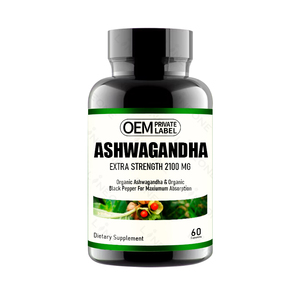
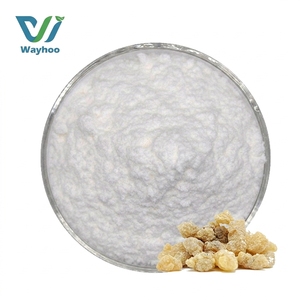
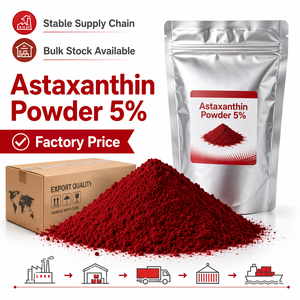
The Kansai metropolitan basin—anchored by Osaka's historical Doshomachi (道修町) medicine district and extended across Saito Life Science Park (茨木市彩都)—represents the foundational intellectual core of Japan's pharmaceutical synthesis and nutraceutical innovation. For decades, Japanese master formulators and contract manufacturing organizations (CMOs/CDMOs) have demanded unmatched chemical reproducibility, hyper-traceable supply chains, and exhaustive physical contaminant profiling. Our specialized botanical extract manufacturing facility operates as the direct industrial conduit between expansive raw botanical cultivation zones, rigorous pharmacopoeial hydro-ethanolic extraction, and the hyper-stringent regulatory corridors overseen by the Japanese Ministry of Health, Labour and Welfare (MHLW / 厚生労働省).
Ayurvedic phytochemistry, characterized by intricate polyherbal synergies such as pentacyclic triterpenes from Boswellia serrata, adaptogenic withanolide glycosides from Withania somnifera, and thymoquinone-rich triglycerides from Nigella sativa, is experiencing unprecedented demand across Osaka-based research laboratories. Japanese formulators are aggressively integrating these classical Indian botanicals alongside Kampo (漢方) extract matrixes to manufacture modern "Foods with Function Claims" (FFC / 機能性表示食品) and quasi-drugs (医薬部外品). Navigating the intricate food-versus-drug classification boundaries (薬食区分 - Shokusho-kubun) under the Japanese Pharmaceuticals and Medical Devices Act (PMD Act / 薬機法) requires an export manufacturer equipped not just with commercial milling equipment, but with advanced analytical instrumentation capable of defending lot-to-lot bio-identity down to single-digit parts per billion.
By establishing dedicated solvent-fractionation lines utilizing exclusively food-grade potable ethanol (compliant with Japanese positive lists) and ultra-pure reverse osmosis aqueous phases, our manufacturing facility eliminates toxic Class 1 and Class 2 residual solvent cross-contaminations. Whether supplying high-solubility free-flowing 30% AKBA Boswellia powders for automated high-speed rotary tableting machines in Toyama and Osaka, or providing stabilized astaxanthin beadlets with controlled bulk density for liquid sachet filling, we deliver raw material security designed to withstand scrutiny by Osaka Customs (大阪税関) and domestic analytical re-inspections.
How leading Kansai contract manufacturers, health supplement formulators, and J-Beauty laboratories incorporate our wholesale standardized ingredients into commercial product pipelines.
With Japan's hyper-aged demographic, Osaka nutraceutical labs lead the world in addressing "Locomotive Syndrome" (ロコモティブシンドローム). Our 30% AKBA Boswellia Serrata extract provides targeted 5-lipoxygenase (5-LOX) inhibition without causing gastrointestinal distress.
Kansai urban workforces increasingly rely on functional anti-fatigue drinks and nighttime relaxation capsules. Ashwagandha acts as a potent GABAergic modulator, dampening excessive salivary cortisol surges induced by occupational stress.
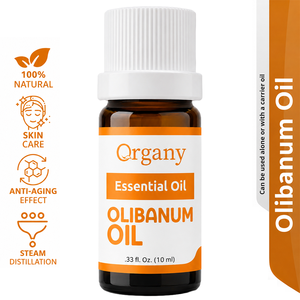
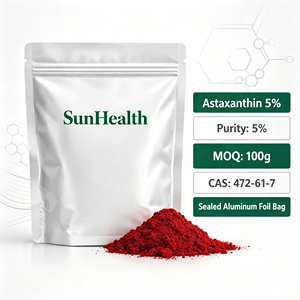
Osaka and Kobe serve as global beacons for photoprotective and barrier-restorative cosmetic sciences. We supply 5% natural astaxanthin and steam-distilled Boswellia carterii essential oils for advanced anti-photoaging topicals and beauty ingestibles.
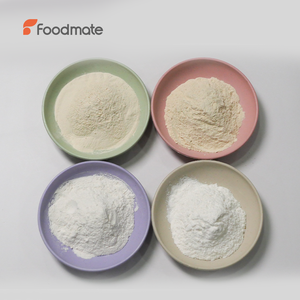
The contemporary Japanese consumer market exhibits intense aversion toward animal-origin gelatins, driven by surging vegan lifestyle trends and the strategic expansion of Osaka food brands into international Halal markets across Southeast Asia. Our semi-refined carrageenan (clean-label texturizer) functions as a thermoreversible, plant-based gelling architecture capable of stabilizing delicate herbal actives without syneresis. By calibrating potassium and calcium ion cross-linking parameters, our hydrocolloids provide the precise chewy elasticity ("mochi-texture") demanded by Japanese sensory evaluation panels, while protecting vulnerable active terpenes from oxidative hydrolytic cleavage.
Procuring raw botanical ingredients for the Japanese market is fundamentally governed by three non-negotiable vectors: the Pharmaceuticals and Medical Devices Act (薬機法), the Food Sanitation Act (食品衛生法), and the evolving documentation framework for Foods with Function Claims (機能性表示食品) managed by the Consumer Affairs Agency (CAA / 消費者庁). Osaka procurement directors cannot afford ambiguous documentation when clearing botanical imports through Nanko (南港) container terminals.
Under MHLW administrative ordinances, the structural part of the botanical determines its legal status as a food or a drug. For instance, while certain whole-plant extracts are classified strictly as medicinal pharmaceutical ingredients (専ら医薬品として使用される成分本質), isolated root materials of specified herbs—such as Withania somnifera (Ashwagandha)—require meticulous documentation of the exact anatomical botanical component utilized. SV Botanica provides explicit Certificates of Botanical Authenticity affirming the exclusive extraction of non-medicinal root stocks, accompanied by high-performance thin-layer chromatography (HPTLC) fingerprinting to eliminate adulteration with unapproved aerial foliage.
Japan enforces one of the world's most comprehensive "Positive List" frameworks for agricultural chemical residues in food products. Where specific maximum residue limits (MRLs) are not established for rare Ayurvedic botanicals, a stringent uniform default limit of 0.01 ppm (mg/kg) is enforced automatically. Our factory performs exhaustive multi-residue gas chromatography-tandem mass spectrometry (GC-MS/MS) and liquid chromatography-tandem mass spectrometry (LC-MS/MS) screens across over 500 individual chemical compounds, guaranteeing full compliance before shipment dispatch.
While chemical sterilization using Ethylene Oxide (ETO) is widely permitted across standard North American bulk handling, Japan maintains an absolute zero-tolerance policy regarding ETO and its breakdown metabolite 2-chloroethanol in botanical imports. Our manufacturing workshops deploy non-thermal high-pressure saturated steam sterilization regimes and advanced HEPA-filtered cleanrooms (Class 100,000) to ensure microbiological cleanliness (Total Aerobic Microbial Count < 10,000 CFU/g, Yeast & Mold < 100 CFU/g, Absent Salmonella and E. coli) without resorting to gamma irradiation or chemical fumigation.
Why standard wholesale botanical powders fail incoming Japanese quality audits, and how our pharmacopoeial manufacturing standards guarantee unhindered clearance.
| Analytical Parameter | Common Low-Tier Supplier | Our Factory Export Standard (Japan Ready) | Analytical Methodology | Regulatory Relevance |
|---|---|---|---|---|
| Active Marker Compound Assay | Unverified Titration / Non-specific UV-Vis (inflated values) | HPLC Isocratic/Gradient Separation against USP/JP certified primary reference standards | Reversed-Phase HPLC-DAD (Diode Array Detector) | Eliminates interference from structural isomers and nonspecific polyphenols. |
| Ethylene Oxide (ETO) & 2-CE | Commonly used for overseas bio-burden fumigation | Strictly Negative (<0.01 mg/kg Limit of Quantification) | GC-MS-MS headspace extraction | Zero-tolerance rejection threshold under Japanese Food Sanitation Act inspection. |
| Heavy Metals (Pb, As, Cd, Hg) | Total heavy metals <20 ppm (colorimetric sulfide test) | Individually Quantified: Pb <1.0 ppm, As <1.0 ppm, Cd <0.5 ppm, Hg <0.1 ppm |
Inductively Coupled Plasma Mass Spectrometry (ICP-MS) | Fully adheres to Japanese Pharmacopoeia (JP XVII) monograph standards. |
| Residual Solvents | Undefined industrial-grade solvents used; unverified | Exclusively Class 3 food-grade Ethanol & RO Water; Residual EtOH < 500 ppm | Headspace Gas Chromatography with FID | Conforms to ICH Q3C (R6) guidelines for pharmaceutical excipients. |
| Microbiological Bio-Burden | High variability; irradiation frequently hidden on CoA | TAMC <1,000 CFU/g; TYMC <100 CFU/g; Pathogens Absent in 25g | High-pressure dry steam pasteurization, BAM FDA compendial culture | Guarantees shelf stability in Osaka’s humid summer warehousing environments. |
| Particle Sizing & Bulk Density | Broad distribution, irregular coarse clumps | Uniform 80-120 mesh; Tapped density calibrated (0.45-0.65 g/ml) | Laser Diffraction Particle Size Analysis (Malvern Mastersizer) | Prevents segregation during high-speed automated capsule filling and blending. |
Decouple your supply chain from intermediaries. Leverage factory-direct production lines backed by full traceability, GMP oversight, and rapid Asia-Pacific logistics.
Dedicated multi-functional counter-current extraction tanks, continuous disc centrifuges, and low-temperature falling-film vacuum evaporators to preserve thermally vulnerable phytoconstituents.
ISO 9001 / 22000 CertifiedWe supply comprehensive batch-specific Certificates of Analysis, Manufacturing Process Flowcharts, Allergen Statements, Non-GMO Declarations, and BSE/TSE-Free Certificates with every lot.
Audit Ready DocsStrategically positioned to service Kansai international ports. Containerized ocean freight arrives at Port of Osaka within 4-7 days; urgent analytical pilot batches reach KIX within 48 hours.
Direct Route To OsakaCustom particle sizing (micronized, granular, or water-soluble beadlet matrices), nitrogen-flushed pharmaceutical-grade inner double PE food bags, sealed within robust 25kg fiber drums.
25kg Vacuum SealedPractical, regulatory, and logistical answers addressed to Japanese regulatory affairs managers, QA auditors, and import directors.
Every import clearance batch is accompanied by comprehensive botanical identification paperwork specifying the non-medicinal anatomical plant part utilized (e.g., 100% dried roots for Ashwagandha or natural exudate gum oleoresin for Boswellia). We supply taxonomic botanical certifications, Latin binominals, extraction flowcharts demonstrating absence of synthetic pharmaceutical spiking, and HPTLC chromatographic comparative fingerprints. This enables your Japanese import agent (通関業者) to submit pre-arrival declarations swiftly to local Quarantine Stations (検疫所) under the Ministry of Health, Labour and Welfare.
We provide batch-specific multi-residue pesticide screening reports conducted by international ISO/IEC 17025 accredited third-party laboratories (such as SGS, Eurofins, or equivalent). The screening panel covers organochlorines, organophosphates, pyrethroids, and carbamates encompassing over 500 target molecules, specifically reporting against the 0.01 mg/kg limit of quantification (LOQ) enforced under the Japanese Food Sanitation Act.
Yes. We maintain a strict pre-shipment sampling protocol specifically tailored for Japanese corporate quality assurance protocols. We dispatch a 100g–500g representative lot drawn from the homogenized commercial batch, vacuum-sealed in foil laminate alongside an interim Certificate of Analysis. The commercial consignment is physically quarantined in our temperature-monitored warehouse until your internal laboratory in Osaka completes assay verification, heavy-metal screen, and sensory sign-off.
Traditional non-specific acid-base titration methods measure total titratable organic acids, which routinely overestimates the actual functional triterpenoid content by reacting with non-active resinous organic impurities. When submitting functional claims or maintaining high brand integrity in Japan, quantifying the true bioactive fraction—specifically 3-O-acetyl-11-keto-β-boswellic acid (AKBA)—via reversed-phase high-performance liquid chromatography (HPLC) is mandatory. We provide documented HPLC operational parameters, retention times, column chemistry, and reference standard curves on every CoA.
Our standard starting MOQ for catalogue botanical extracts (such as 30% AKBA Boswellia, 5% Astaxanthin, or standardized Ashwagandha) is 25 kg (one standard fiber drum). For custom client-specified standardizations or specific particle-size milling requirements, our MOQ is typically 100 kg. Standard stocked inventory is dispatched within 3-5 business days upon order confirmation. Ocean transit to the Port of Osaka (大阪港) typically takes 4–7 days, while expedited air-cargo consignments dispatched to Kansai International Airport (KIX) arrive within 48 to 72 hours.
Because Japanese regulations prohibit both ETO fumigation and food ingredient irradiation, we employ a proprietary closed-circuit pure steam sterilization process. Raw botanical feeds are subjected to short-duration high-temperature thermal treatment under precise vacuum pressure, instantly inactivating vegetative bacteria, coliforms, and fungal spores while preserving delicate heat-sensitive bioactives. Final drying and hermetic vacuum packaging occur within Class 100,000 cleanroom environments under continuous positive pressure.
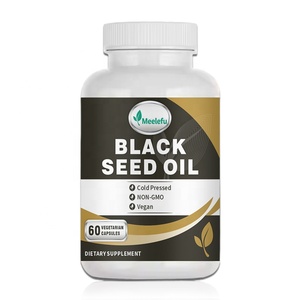
Yes. Beyond supplying raw standardized extracts in bulk drums, we operate high-capacity automated encapsulation and softgel rotary die lines. We manufacture private-label formulations—such as cold-pressed black seed oil softgels, standardized herbal veggie capsules in vegetarian pullulan or hypromellose (HPMC), and astaxanthin beadlets—packaged into bulk cartons or retail-ready bottles with custom desiccant integration suitable for Japan's high-humidity ambient climate.
Absolutely. We operate under strict zero-tolerance policies regarding toxic halogenated hydrocarbons or Class 1 solvents (such as benzene or 1,2-dichloroethane). Our extraction processing lines rely exclusively on deionized purified water and pharmaceutical/food-grade fermentation ethanol (Grain-origin, compliant with Japan's Positive List of Food Additives). Gas chromatography headspace testing verifies that residual ethanol remains well beneath the 500 ppm limit, far exceeding domestic Japanese market expectations.