Pharmacopoeia-grade standardized extracts, photoprotective botanical fractions, lipophilic carriers, and high-purity biopolymers validated for Italian registration protocols.
The metropolitan region of Milan and the broader industrial geography of Lombardy constitute the epicenter of the European Union's nutraceutical, food supplement, and functional nutrition marketplace. According to market data from FederSalus (now Integratori & Salute under Confindustria), Italy commands over 29% of the total European dietary supplement industry, outperforming long-established pharmaceutical markets including Germany, France, and the United Kingdom. Within this framework, Lombardy serves as the operational headquarters, R&D cluster, and contract development and manufacturing (CDMO) engine for more than 55% of the country’s finished product throughput.
For formulation scientists, regulatory affairs managers, and global procurement heads operating out of the Brianza chemical-pharmaceutical hub, Settimo Milanese, Segrate, and Bergamo, sourcing raw materials is no longer merely a commercial exercise in commodity procurement. The enforcement of European Community regulations—specifically Regulation (EC) No 178/2002 (General Food Law principles), Directive 2002/46/EC (harmonized supplement frameworks), and the rigorous oversight of the Italian Ministry of Health (Ministero della Salute)—requires unprecedented analytical traceability.
Under the Italian regulatory system, herbal ingredients must rigorously comply with the national guidelines on botanicals, harmonized historically through the BelFrIT project (Belgium, France, Italy) and formalized in the Ministerial Decree of 10 August 2018. Raw material suppliers must prove that plant species, plant parts used, physiological effects, and maximum extraction ratios precisely match national monographs while maintaining contaminant loads below the strictest European thresholds: Regulation (EU) 2023/915 for lead, cadmium, mercury, and polycyclic aromatic hydrocarbons (PAHs), and Regulation (EC) No 396/2005 for multi-residue pesticide limits.
Italian contract packagers and brand owners demand tailor-made physico-chemical properties designed for high-speed tableting, liquid-stick fills, and softgel encapsulation lines.
Milan's intersection with high fashion and dermo-aesthetics fuels massive domestic demand for ingestible beauty. Standardized cold-pressed Nigella sativa oils and high-ORAC photoprotective botanical extracts are integrated into dual-phase oral ampoules and microencapsulated softgels to protect against photo-aging, environmental particulate matter in urban Milan, and transepidermal water loss.
Driven by corporate workplace wellness and active aging demographics across northern Italy, formulators utilize our Rhodiola rosea root extract (guaranteed 3% Rosavins and 1% Salidroside via calibrated HPLC) paired with standardized Withania somnifera (Ashwagandha 5% withanolides) in two-piece vegetable capsules (HPMC) to mitigate adrenal fatigue without sedative contraindications.
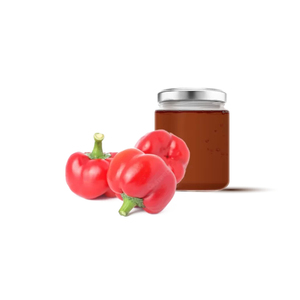
The Italian culinary tradition merges with health functionalization. Food-grade Paprika Oleoresins and standardized herbal extracts with guaranteed low microbiological counts are deployed in artisan olive oils, artisanal bakery functional premixes, and concentrated herbal syrups distributed exclusively through Lombardy's Farmacie and Parafarmacie networks.
Our functional biopolymers, such as non-animal derived high-deacetylation Chitosan, serve as biocompatible excipients, mucosal bio-adhesives, and controlled matrix formers for localized intestinal release. This protects active polyphenols and delicate botanical active metabolites from degradation in harsh gastric environments.
Procurement behaviors among Italian nutraceutical producers have shifted dramatically over the past 36 months, pivoting from general transactional purchasing to integrated regulatory partnerships. Several macro trends dominate raw material qualification audits in Milan:
Italian Quality Assurance departments reject ambiguous analytical claims. Historical UV-spectrophotometry assays often overstate active marker concentrations (such as total curcuminoids or polyphenols) due to non-specific optical absorption. Milanese CDMOs mandate validated high-performance liquid chromatography (HPLC) or ultra-high performance liquid chromatography (UHPLC) methods cross-referenced with United States Pharmacopeia (USP) and European Pharmacopoeia (Ph. Eur.) reference standards.
The Mediterranean diet philosophy demands uncompromised raw purity. Imports arriving at Milan Malpensa (MXP) Cargo City or the Port of Genoa are subjected to aggressive sampling by Italian sanitary authorities (USMAF and Dogana). Consignments must carry proactive pre-export screening for Ethylene Oxide (ETO) and 2-chloroethanol down to <0.01 mg/kg, ensuring zero border rejections under Regulation (EU) 2019/1793.
Italian consumers increasingly inspect the "Elenco Ingredienti" for synthetic flow agents. Raw material suppliers must deliver spray-dried botanical powders engineered with natural carriers (such as organic acacia gum, rice fibers, or zero-carrier native extract matrices), possessing tapped bulk densities (0.40–0.60 g/ml) and specific 80–100 mesh size distributions optimized for direct compression.
SV Botanica eliminates regulatory friction for Italian import directors. We contrast baseline global export specifications with our dedicated Milan-grade active standard:
| Evaluation Parameter | Standard Generic Export Quality | SV Botanica Milan Compliance Standard | EU / Italian Regulatory Benchmark |
|---|---|---|---|
| Assay Validation | Non-specific UV-Vis or Titration | Validated Isocratic/Gradient HPLC-DAD | Ph. Eur. / BelFrIT Monograph Matching |
| Ethylene Oxide (ETO) | Tested only upon special request | 100% Systematic GC-MS/MS Batch Clearance (<0.01 ppm) | Implementing Reg (EU) 2019/1793 & 2021/2246 |
| Heavy Metals (Pb, Cd, Hg, As) | Combined heavy metals < 20 ppm | Individual ICP-MS: Pb<1.0, Cd<0.5, Hg<0.1, As<1.0 mg/kg | Regulation (EU) 2023/915 strict dietary limits |
| Pesticide Multi-Residues | Organochlorine screening only | 450+ Active Compound LC-MS/MS & GC-MS/MS Screen | Regulation (EC) No 396/2005 default MRLs |
| Residual Solvents | Basic Class 3 declaration | Complete Class 1, 2, 3 GC-Headspace Quantification | European Pharmacopoeia (Ph. Eur. 5.4) |
| Regulatory Dossier | 1-Page standard Certificate of Analysis | Complete Qualification Dossier (TDS, SDS, Flowchart, TSE/BSE, Non-GMO) | Italian Ministero della Salute Pre-notification Ready |
Combining primary agricultural lineage in India with the precise compliance infrastructure demanded by European life sciences.
Our processing plants adhere directly to internationally recognized standards: ISO 9001:2015, ISO 22000, WHO-GMP, and FSSAI Central Licensing (License No. 11526999001161). Registered under India’s Ministry of Corporate Affairs (CIN: U21009MR2026PTC479885) and DGFT (IEC: ABUCS7891K), we offer total supply chain sovereignty.
Sourcing delays disrupt contract packaging schedules. Our dedicated export regulatory team handles Milan inquiries within 24 hours. We immediately provide comprehensive technical packets, representative lot chromatograms, and safety dossiers required for immediate R&D sample qualification.
By controlling our collection and farm networks across India's premier agricultural zones—from Nashik to Kerala—we ensure complete botanical origin traceability down to the harvest lot. This prevents raw adulteration, controls botanical chemotypes, and guarantees price stability against global commodity surges.
Consignments are packed in UN-certified fiber drums with heat-sealed food-grade polyethylene inner liners. We organize direct temperature-monitored air freight into Milan Malpensa (MXP) Airport or ocean freight into the Port of Genoa, complete with original Phytosanitary Certificates and pre-cleared EUR.1/REX preferential documentation.
Audit preparations require far more than basic specifications. We equip Italian Quality Directors with comprehensive qualification binders: Allergen Declarations (EU 1169/2011), Non-GMO Verifications, BSE/TSE-Free Certificates, Kosher/Halal certifications, and complete residual solvent breakdowns under Ph. Eur. limits.
We accommodate both agile pilot runs and commercial scale-ups. Our standard commercial order requirements begin at 25 kg per extract or oil, backed by pre-shipment pilot samples (100g–500g) directly accompanied by the batch's specific, binding Certificate of Analysis.
Direct technical answers addressing the operational, analytical, and customs compliance requirements of importing botanical raw materials into Milan.
The Italian Ministero della Salute permits only specific botanical species and plant parts referenced within the harmonized BelFrIT decree (DM 10 August 2018). For every shipment, we certify the precise Latin binomial, authority citation (e.g., Rhodiola rosea L., root), and solvent extraction system (water, ethanol, or hydro-ethanolic mixtures). We guarantee that no prohibited solvents or unauthorized plant organs are utilized, enabling immediate product notification via the Italian online supplement portal (Notifica Integratori).
Ethylene Oxide contamination is a primary reason for botanical customs detentions at European border control posts (BCPs). In strict adherence to Regulation (EU) 2019/1793 and Regulation (EU) 2021/2246, our facilities do NOT use ETO as a microbial sterilization agent. We implement high-temperature short-time (HTST) steam sanitation and gamma sterilization only when explicitly requested. Every European consignment undergoes third-party ISO 17025 accredited GC-MS/MS testing with a lower limit of quantification (LOQ) of <0.01 mg/kg for the sum of ethylene oxide and 2-chloroethanol.
Discrepancies often emerge when a buyer’s QC lab uses liquid chromatography while a supplier uses spectrophotometry. SV Botanica declares the specific analytical test methodology alongside each quantified active marker on our Certificates of Analysis. For our Rhodiola rosea, we determine 3% Rosavins and 1% Salidroside strictly by HPLC against USP analytical reference standards. For polyphenol complexes, we provide both UV-Vis and validated HPLC fingerprinted chromatograms to align with your incoming laboratory's standard operating procedures.
Shipments are cleared seamlessly through our established air cargo links directly to Malpensa (MXP) or ocean transport via the Port of Genoa. Each commercial package contains: an Original Official Phytosanitary Certificate issued by the National Plant Protection Organisation (NPPO), Batch-Specific Certificate of Analysis (CoA), Detailed Packing List, Commercial Invoice, Certificate of Origin (COO), and compliant Safety Data Sheet (SDS) formatted under Regulation (EC) No 1907/2006 (REACH) in English and Italian.
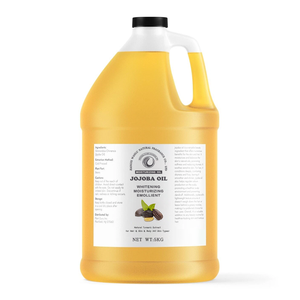
Yes. Italian contract manufacturers operate some of the world's most advanced high-throughput blister lines (e.g., IMA, Marchesini). Powder flowability, particle size distribution (PSD), and bulk density are engineered to prevent capping, sticking, and filling weight variations. We standardly mill our botanical powders through 80–100 mesh screens, maintaining moisture levels below 5.0% and tapped density between 0.45 and 0.58 g/ml. For lipophilic products like our cold-pressed Black Seed and Jojoba oils, we control viscosity, acid value, and peroxide value to ensure stable shell seals in softgel gelatin and vegan starch matrices.
Our baseline commercial MOQ for standardized extracts, herbal oleoresins, and cold-pressed oils is 25 kg, packaged in tamper-evident fiber drums. Stocked botanical active items typically dispatch from our central export hubs within 5–7 business days following commercial sign-off and QC release. Standard air-transit to Milan Malpensa requires approximately 3–5 working days, while ocean freight shipments to Genoa typically dock in 21–25 days from departure.
Connect directly with our technical export desk. Request full analytical dossiers, batch chromatograms, pricing matrices, and pre-shipment validation samples for qualification by your Milanese R&D team.