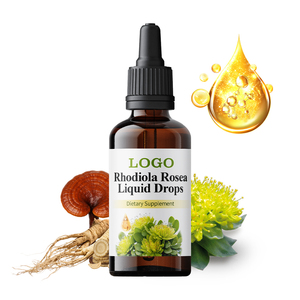
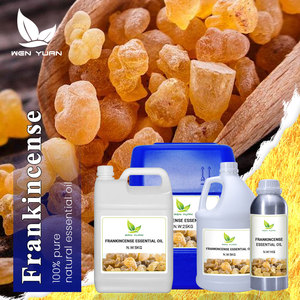
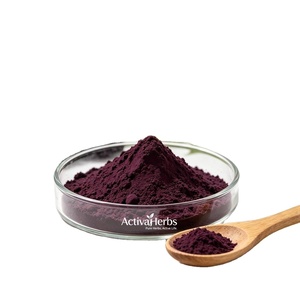
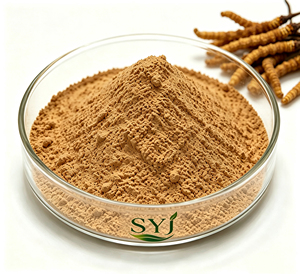
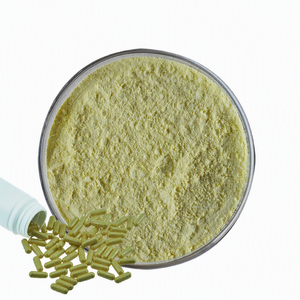
Pre-validated botanical solutions formulated to integrate seamlessly into Central European encapsulation, tableting, and liquid tincture production lines alongside pure Shatavari root powder.
A rigorous examination of root harvesting, saponin standardisation, solvent profiles, and stability preservation for Slovak pharmaceutical and nutraceutical processors.
Asparagus racemosus Willd., known internationally in classical pharmacopoeias as Shatavari, represents one of the most chemically sophisticated adaptogens native to the tropical and subtropical regions of India. For commercial entities manufacturing food supplements (*výživové doplnky*) and medicinal formulations within Slovakia and the wider Visegrád Group (V4), sourcing root material requires absolute analytical clarity. The therapeutic and nutritional efficacy of Shatavari root powder does not stem from a generic botanical mass, but from a precise cluster of steroidal saponins termed shatavarins (I through IV), complemented by Sarsasapogenin, asparagamine A, and diverse polyphenolic glycosides.
SV Botanica processes raw root materials cultivated under Good Agricultural and Collection Practices (GACP) across the premier agro-climatic belts of Maharashtra and Western India. Our manufacturing infrastructure in Nashik subjects harvested tuberous roots to rigorous destoning, washing, peeling (or unpeeled milling depending on client fiber requirements), low-temperature dehydration, and pulverization. For industrial buyers in Slovakia, establishing whether your production utilizes crude micronized whole-root powder or solvent-extracted, standardized saponin powder is pivotal to label claim substantiation, bioactivity profiles, and compliance with the Public Health Authority of the Slovak Republic (Úrad verejného zdravotníctva Slovenskej republiky – ÚVZ SR).
Analytical Specification Note: Saponin concentration claims must always correlate to the analytical method documented on the batch Certificate of Analysis (CoA). While gravimetric assays evaluate total alcohol-soluble and butanol-extractable glycosides (yielding 20% to 60% values), High-Performance Liquid Chromatography (HPLC) isolates specific Shatavarin IV markers against validated reference standards. SV Botanica provides dual-method visibility to prevent specification mismatches during European quality audit validations.
| Material Specification | Marker Concentration | Assay Method | Extraction Solvent | Primary Finished Applications (Slovakia) |
|---|---|---|---|---|
| Crude Shatavari Root Powder (Peeled) | Naturally Occurring (~2.5–4.5%) | Gravimetric / HPLC | None (100% Mechanical Milling) | Herbal Tea Infusions, Compressed Tablets, Whole-Food Blends |
| Standardized Shatavari Extract 20% | ≥ 20.0% Total Saponins | Gravimetric (USP/BP) | Hydro-Ethanolic (70:30) | Standard Hard-Gel Capsules, Women's Hormone Synergies |
| Standardized Shatavari Extract 40% | ≥ 40.0% Total Saponins | Gravimetric / HPLC Fingerprint | Pure Food-Grade Ethanol | High-Density Tablets, Compact Blister Pack Formulations |
| Pure Shatavarin IV Enriched 60% | ≥ 60.0% Saponins (Shatavarin IV Dominant) | HPLC (External Reference Standard) | Supercritical CO2 / Aqueous Ethanol | Clinical Grade Nutraceuticals, Concentrated Liquid Drops |
How SV Botanica's analytical validation protocols satisfy the criteria of ÚVZ SR, ŠÚKL, and stringent European contaminant thresholds.
Exporting botanical powders from India to the Slovak Republic demands technical fluency in both national transposition laws and European Union regulations. When a Slovak food business operator notifies a finished supplement containing Shatavari via the Informačný systém Úradu verejného zdravotníctva SR under Act No. 355/2007 Coll. on the Protection, Promotion and Development of Public Health and the relevant Food Code of the Slovak Republic (Potravinový kódex SR), the ingredient dossier must demonstrate unequivocal safety and trace chemical hygiene.
Strict ICP-MS screening ensures our Shatavari batches sit well below maximum permissible limits for lead (Pb < 3.0 mg/kg), cadmium (Cd < 1.0 mg/kg), mercury (Hg < 0.1 mg/kg), and arsenic (As < 1.0 mg/kg).
Under Implementing Regulation (EU) 2019/1793, Indian botanicals face strict scrutiny. SV Botanica enforces zero ETO and zero 2-chloroethanol treatment, relying on heat-controlled dry-steam sterilization.
Complete 500+ multi-residue GC-MS/MS and LC-MS/MS pesticide panels confirm absence of banned organochlorines, carbamates, and pyrethroids commonly flagged at European borders.
Furthermore, our production lots satisfy strict European Pharmacopoeia (Ph. Eur.) microbiological criteria. Aerobic Plate Counts (< 10,000 CFU/g), Yeast and Molds (< 100 CFU/g), and absence of enterobacteria, Escherichia coli, and Salmonella spp. in 25-gram composite samples are verified before any shipping documentation is stamped. This proactive analytical verification eliminates costly quarantine periods at ports of entry such as Bratislava Airport, Vienna Schwechat, or major sea container deconsolidation centers in Dunajská Streda.
Market segmentation, synergy matrices, and clean-label delivery channels accelerating shelf velocity in Slovak pharmacy chains and e-shops.
The consumer wellness market in Slovakia is experiencing rapid maturation. Modern Slovak consumers—whether browsing dedicated health food networks like Bioteka, major community pharmacies (*lekárne* such as Dr. Max and Benu), or digital nutraceutical platforms—increasingly seek transparent, natural adaptogens grounded in scientific backing. Shatavari root powder fulfills multiple vital formulation niches across the country:
In Slovakia, Shatavari is extensively registered in multi-botanical dietary supplements targeted at premenstrual tension, cycle regularity, and perimenopause comfort. Due to its phytoestrogenic saponins acting as natural estrogen receptor modulators, formulators frequently combine our 40% Shatavari Extract with Black Cohosh (*Cimicifuga racemosa*), Red Clover (*Trifolium pratense*), and Vitamin B6.
Central European phytotherapy holds a historical affinity for herbal infusions. Our micro-pulverized whole Shatavari root powder (80–100 mesh) possesses superior water-wetting and dispersion characteristics, making it an ideal bulk active for blending with regional carminatives like Fennel (*Foeniculum vulgare*), Anise (*Pimpinella anisum*), and Fenugreek for maternal recovery blends.
As professional burnout and chronic stress awareness rise in urban centers like Bratislava, Košice, and Žilina, adaptogens are no longer niche. Shatavari’s capacity to support adrenal gland resilience makes it a powerful functional pillar alongside Ashwagandha (*Withania somnifera* 5% Withanolides) and Rhodiola Rosea to regulate hypothalamic-pituitary-adrenal (HPA) axis balance.
Emerging cosmetic laboratories in Slovakia and the Czech Republic are leveraging the steroidal sapogenin and mucilage content of Shatavari for soothing topical serums, anti-inflammatory barrier creams, and restorative emulsions. Our ultra-fine cosmetic grade disperses smoothly without abrasive residue or phase separation in natural oil emulsions.
Vertical agricultural integration, cutting-edge extraction technologies, and uncompromised commercial reliability based out of Nashik, India.
By controlling sourcing across indigenous root-growing belts in Maharashtra, we guarantee uninterrupted supply without intermediate market inflation. Batch-specific GPS-mapped farm lot tracking ensures traceability from agricultural soil directly to European delivery.
Our manufacturing ecosystem incorporates 316-grade stainless steel continuous extractors, vacuum falling film evaporators, and aseptic spray drying towers. Low-temperature operations safeguard heat-labile glycosidic bonds against thermal degradation.
Whether contracting on CIF Koper/Rotterdam or DAP Bratislava terms, our export logistics team coordinates Phytosanitary Certificates, Certificates of Origin (COO), SDS/MSDS, and custom declaration documentation for prompt release at EU border inspection posts.
Transparent technical, regulatory, and logistics answers addressing real-world concerns when onboarding Indian botanical supplies.
Every consignment includes a batch-specific Certificate of Analysis (CoA) confirming assay percentages and test methodologies, complete microbiological and heavy metal profiles, a 16-point Safety Data Sheet (SDS/MSDS), Phytosanitary Certificate issued by Indian Plant Quarantine authorities, Certificate of Origin, and non-GMO/allergen statements.
We strictly enforce steam sterilization protocols without chemical fumigants. Before any export consignment departs our Nashik warehouse for Europe, samples undergo third-party LC-MS/MS testing at accredited European-standard laboratories to certify that ETO and 2-chloroethanol levels are below the 0.01 mg/kg limit of quantification.
Our standard commercial starting MOQ is 25 kg, packaged in tamper-evident fiber drums containing dual food-grade polyethylene heat-sealed liners. For new client trial batches or pilot commercial encapsulations in Slovakia, smaller qualification quantities (5 kg – 10 kg) can be arranged alongside full analytical documentation.
Yes. We mill and sieve our powders to defined mesh gradations (typically 80 to 100 mesh). We track tapped density, aerated bulk density, angle of repose, and flowability indexes to ensure minimal bridging, consistent weight uniformity, and clean feeding in automatic Bosch or Zanasi encapsulation machines.
*Asparagus racemosus* root is widely accepted across the European Union and recognized in traditional herbal compendia. It is regularly notified to the Slovak ÚVZ SR as a standard botanical ingredient in dietary supplements, provided daily intake thresholds comply with general safety principles and no unapproved medicinal claims are made on packaging.
Air freight consignments typically clear customs and land at Vienna (VIE) or Bratislava (BTS) within 4 to 7 business days from dispatch. Ocean freight routed via Port of Hamburg or Port of Koper, followed by bonded rail or road transport directly to Slovak logistics hubs (e.g., Senec, Dunajská Streda), requires approximately 26 to 32 days port-to-door.
Yes. We routinely dispatch 50g to 100g representative lot samples via international express courier (DHL/FedEx) accompanied by the corresponding lot-specific Certificate of Analysis. This allows your R&D and incoming quality control teams in Slovakia to verify identity, organoleptic profile, and saponin content prior to shipment release.
UV spectrophotometric assays frequently capture a broader group of plant chromophores, often reading higher percentages than HPLC. HPLC identifies individual active components (like Shatavarin IV) against specific chromatography reference peaks. We clearly state the testing method on every CoA so your analytical records match the exact testing protocol.
Connect directly with SV Botanica's international trade desk. Receive batch Certificates of Analysis, method validation summaries, EU pesticide dossiers, and volume-tiered CIF/DAP pricing within 24 hours.