
Engineering Pharmacopoeial-Grade Tongkat Ali for Thailand’s Formulators
As Bangkok consolidates its position as the premier nutraceutical innovation hub of Southeast Asia, original equipment manufacturers (OEMs), pharmaceutical conglomerates, and sports nutrition brands are recalibrating their raw material requirements. Tongkat Ali (Eurycoma longifolia, regionally known as Krachai Dam analogue or Pla Lai Phueak) represents one of the most commercially significant adaptogens across the Indochina corridor. However, procurement heads and QA directors across Greater Bangkok—from Samut Prakan to Pathum Thani—face pervasive supply hurdles: unstandardised root-to-extract ratios (e.g., claiming 100:1 or 200:1 without active quantification), adulteration with non-declared PDE-5 inhibitors, and non-compliance with strict Thai Food and Drug Administration (Thai FDA) contaminant limits.
As a vertically integrated manufacturer and dedicated B2B supplier, our processing operations resolve these structural vulnerabilities. We bypass ambiguous extraction ratios by standardising directly to the genuine analytical biomarker: Eurycomanone, assayed via High-Performance Liquid Chromatography (HPLC-DAD). By leveraging selective dual hydro-ethanolic extraction paired with low-temperature vacuum crystallization, we isolate authentic quassinoids, glycosaponins, and eurypeptides while systematically eliminating micro-contaminants, pesticide residues, and heavy metals to ensure seamless integration into Bangkok manufacturing pipelines.
1. Biomarker Chromatography: Eliminating the "Ratio Fallacy" (100:1 vs. HPLC Quantification)
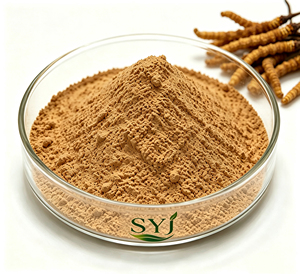
The global trade in botanical ingredients has long been obfuscated by "crude extraction ratios" such as 50:1, 100:1, or 200:1. For formulation scientists in modern Thai laboratories, these ratios carry zero pharmacological accountability, as an extract made from 200 kilograms of depleted, low-grade root material often contains less than 0.1% eurycomanone. In contrast, our export-grade Tongkat Ali extract powders are standardised to verified thresholds:
| Standard Specification | Bioactive Marker (HPLC) | Extraction Profile | Recommended Target Matrix |
|---|---|---|---|
| Tongkat Ali Standard Grade | 1.0% – 2.0% Eurycomanone | Aqueous / Hydro-ethanolic | Functional RTD Beverages, Energy Elixirs |
| High-Potency Sports Grade | 2.5% – 5.0% Eurycomanone | Low-temperature Hydro-ethanolic | Hard Gelatin/HPMC Capsules, Tablet Blends |
| Pharmaceutical / Clinical Grade | Up to 10.0% Total Quassinoids | Supercritical fractionation | Bioactive Sachets, Sublingual Formulations |
| Water-Soluble Instant Beverage Grade | 1.0% Eurycomanone (>99% clarity) | Micro-filtered Aqueous | Stick Packs, Instant Coffee & Tea Premixes |
By mandating HPLC testing with stated mobile phases and certified reference standards (CRS), we provide analytical predictability. Our Certificates of Analysis (CoA) document exact retention times matching reference eurycomanone at 254 nm, granting formulation teams ironclad validation prior to commercial batch blending.
2. Localization & Regulatory Alignment with the Thai FDA
Importing botanical extracts into the Kingdom of Thailand demands rigorous compliance with the Thai Food Act B.E. 2522 (1979) and corresponding Ministry of Public Health (MOPH) Notifications governing Novel Foods, Traditional Medicines, and Food Supplements. For Bangkok OEMs operating under GMP PIC/S guidelines, raw material qualification must document the absence of process contaminants.
Every consignment supplied to the Bangkok market is screened and certified against stringent parameters:
- Heavy Metals (ICP-MS): Lead (< 1.0 ppm), Arsenic (< 1.0 ppm), Cadmium (< 0.3 ppm), and Mercury (< 0.1 ppm)—surpassing both USP and MOPH tolerances.
- Ethylene Oxide (ETO) & 2-Chloroethanol: Fully tested below 0.05 mg/kg, ensuring total freedom from banned sterilizing residues.
- Pesticide Multi-Residue Screen (GC-MS/MS & LC-MS/MS): Compliance with 400+ pesticide limits under the Regulation (EC) No 396/2005 and Thai Agricultural Standards.
- Microbiological Purity: Total aerobic plate count < 1,000 CFU/g, yeast & mold < 100 CFU/g, with verified negative screens for Salmonella, E. coli, and Staphylococcus aureus.
3. Macro Consumer Trends Shaping Bangkok’s Functional Health Sector
Bangkok has evolved into an agile market driven by young professionals, fitness enthusiasts, and an increasingly health-conscious aging demographic. Three definitive market vectors are currently driving volume demand for our Tongkat Ali extract:
Muay Thai & High-Performance Athletics
With boxing gyms, cross-fit facilities, and athletic clubs proliferating across Sukhumvit, Silom, and Thonglor, formulators are engineering natural testosterone-support, free-cortisol mitigation, and muscular recovery complexes utilizing eurycomanone to replace synthetic ergogenic aids.
Healthy Aging & Andropause Therapeutics
Thailand’s transitioning demographics have spurred massive consumer interest in anti-fatigue, vitality, and hormonal health supplements. Private clinics, wellness resorts, and premium retail pharmacies in Bangkok increasingly specify botanical adaptogens that optimize the luteinizing hormone (LH) axis.
Functional RTD & Instant Herbal Premixes
The convenience retail ecosystem (7-Eleven Thailand, Lotus's, Tops) is dominated by functional beverages. Our ultra-purified, debittered, water-soluble Tongkat Ali allows RTD bottlers to maintain complete optical clarity without sedimentation or excessive bitterness.
4. Solving the Bitterness Hurdle in Ready-to-Drink Formulations
Genuine Eurycoma longifolia is intrinsically bitter due to its secondary metabolite profile, specifically quassinoid compounds. While bitterness is traditionally associated with efficacy in herbal pharmacology, modern consumer beverage formulations in Bangkok require palatable organoleptic characteristics.
To overcome this without introducing artificial masking agents that compromise clean-label initiatives, we utilize membrane molecular-weight cut-off (MWCO) filtration alongside specialized cyclodextrin complexation. This entraps intensely bitter bitter-tasting moieties without cleaving the biologically active ester bonds of eurycomanone, enabling local beverage innovators to develop smooth, pleasant-tasting functional teas, coffees, and canned health tonics.