
Verified plant extracts, botanical resins, and high-purity oleoresins engineered for dietary supplements, industrial flavorings, and functional cosmetic formulations.
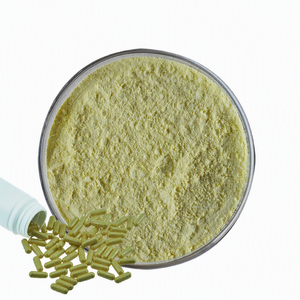
Ginger Oleoresin is a highly concentrated, viscous dark brown to golden fluid derived from the cured rhizomes of Zingiber officinale Roscoe. Serving as the primary functional ingredient for flavor houses, beverage developers, phytopharmaceutical producers, and nutraceutical formulators worldwide, pure ginger oleoresin captures both the non-volatile pungent resinous components and the volatile aromatic essential oils of freshly harvested ginger.
From an industrial perspective, selecting a bulk manufacturer requires assessing more than simple price-per-kilogram metrics. Commercial ginger oleoresin requires absolute consistency in total pungent compounds—predominantly [6]-gingerol, [8]-gingerol, [10]-gingerol, and [6]-shogaol—alongside calibrated concentrations of volatile terpenes including zingiberene, ar-curcumene, and β-sesquiphellandrene. Our manufacturing footprint pairs agricultural sourcing across premier Chinese cultivation provinces (such as Shandong and Guizhou) with advanced dual-stage extraction platforms to guarantee international regulatory compliance.
The modern procurement team must balance sensory notes, active compound recovery, cost efficiency, and residue liabilities. The table below provides verified engineering benchmarks comparing conventional organic extraction against green Supercritical Fluid Extraction (SFE-CO2):
| Analytical & Operational Parameter | Supercritical SFE-CO2 Extraction | Solvent Extraction (Ethanol / Hexane / Acetone) |
|---|---|---|
| Volatile Terpene Retention | Exceptionally high (preserves heat-sensitive monoterpenes) | Moderate (loss of top notes during thermal desolventization) |
| Pungency Profile (Gingerols : Shogaols) | Natural 10:1 ratio maintained without thermal degradation | Variable; elevated [6]-shogaol due to solvent stripping heat |
| Residual Solvent Limits | 0.0 ppm (Completely solvent-free process) | Regulated (typically < 10–50 ppm, requiring USP <467> validation) |
| Heavy Metal Migration | Insoluble in dense CO2; zero heavy metals carried into resin | Potential trace leaching dependent on polarity of matrix |
| Regulatory Clean-Label Standing | 100% Clean Label, certified organic compliant worldwide | Permitted but requires processing aid disclosures in target markets |
Batch-to-batch stability relies strictly on standardized analytical documentation. Because gingerol homologues thermally dehydrate into their corresponding shogaols during prolonged heat exposure or improper vacuum distillation, a reliable bulk supplier must evaluate active markers using validated Reverse-Phase High-Performance Liquid Chromatography (RP-HPLC) coupled with Diode Array Detection (DAD) or Mass Spectrometry (LC-MS/MS). Our release dossiers detail specific marker profiles, ensuring your R&D team avoids standard deviations across regional beverage and dietary supplement batches.
Market forces reshaping contract manufacturing, wholesale supply security, and specification demands across European and North American buyers.
Global beverage giants and functional supplement brands are rapidly eliminating petrochemical extraction aids. SFE-CO2 derived ginger oleoresin is expanding at a 7.8% CAGR as corporate buyers pivot toward solvent-free raw materials to fulfill US clean-label and EU non-novel botanical mandates.
Border Control Posts (BCPs) enforce strict multi-residue panels and mandatory ETO/2-chloroethanol screenings on imported spices under Implementing Regulation (EU) 2019/1793. Suppliers capable of providing certified third-party ETO-free documentation before shipment command long-term supply agreements.
Traditional oil-soluble ginger oleoresins separate in carbonated beverages and RTD wellness shots. The industry is seeing massive demand for water-dispersible, micro-encapsulated liquid suspensions and spray-dried ginger oleoresin powders with high active loads.
Climate unpredictability affecting Asian harvest yields has encouraged tier-1 buyers to move away from volatile spot markets. Multi-year volume hedging backed by direct agricultural cooperative agreements guarantees consistent pricing, non-GMO status, and reliable raw rhizome inventories.
Combining rigorous pharmacopoeial testing standards with scalable commercial manufacturing infrastructure.
Every shipment is delivered with comprehensive technical documentation: batch-specific HPLC Certificates of Analysis, technical specification data sheets, Safety Data Sheets (SDS), allergen certificates, non-GMO statements, and country-of-origin paperwork.
Our raw extracts undergo rigorous ICP-MS and GC-MS/MS testing for lead, arsenic, cadmium, mercury, and over 450 agricultural pesticide residues, matching Regulation (EU) 2023/915 and strict USP limits.
From standard 25 kg food-grade fluorinated HDPE carboys and 200 kg coated steel drums to customized oil standardizations and water-miscible emulsions, we meet specific factory line inputs.
Procurement teams communicate directly with phytochemists and international trade specialists, receiving pricing grids, formulation advice, and sample clearance within 24 business hours.
Complete traceability down to the raw agricultural lot ensures batch consistency, physical-chemical uniformity, and transparent sustainability credentials across all product categories.
Key technical, regulatory, and logistics answers for incoming inspection and category sourcing teams.
Our commercial-grade ginger oleoresin is available in standard grades ranging from 20% to 50% total gingerols (determined via RP-HPLC), with custom volatile oil concentrations ranging from 15% to 35% v/w to accommodate specific flavor pungency and aroma requirements.
Analytical quantification methods directly alter reported percentages. Non-specific spectrophotometric (UV) assays frequently over-report total pungent components due to background chromophore interference. We employ validated HPLC methods that isolate individual peaks for [6]-gingerol, [8]-gingerol, [10]-gingerol, and [6]-shogaol, ensuring an exact alignment between export CoAs and your receiving QC lab's results.
Yes. consignments bound for the European Union undergo accredited third-party laboratory screening for Ethylene Oxide (ETO & 2-chloroethanol limit < 0.02 mg/kg), polycyclic aromatic hydrocarbons (PAHs), and multi-residue pesticide panels compliant with Regulation (EC) No 396/2005.
Standard starting MOQs are 25 kg for in-stock standardized oleoresins and 100 kg to 500 kg for custom active concentrations. Inventory-backed orders dispatch within 7 to 14 business days, accompanied by complete export customs paperwork, phytosanitary certificates, and original bills of lading.
Ginger oleoresin should be stored in tightly sealed, nitrogen-flushed original containers in a cool, dry area away from direct sunlight (recommended 15°C–25°C). Exposure to high temperatures triggers thermal dehydration of [6]-gingerol into [6]-shogaol, which alters sensory heat profiles and shifts regulatory potency claims.